


The hidden force behind Kenya’s rising girls’ hockey giants
.jpg)
.jpg)




Reading Time: 6min | Sun. 31.08.25. | 17:10
As Kenyan hockey continues to grow, the quiet development revolution led by Rael Nyte stands as proof that in the rural heartlands, hockey is more than a sport
The recent dominance of Nyamira Girls, St. Joseph’s Girls Kitale, and Ng’iya Girls on the girls’ school games hockey pitch is no coincidence.
Behind their success lies the quiet but powerful influence of the Tunza Sports Foundation, a grassroots program that has turned rural schools into champions while reshaping the lives of young girls through hockey and education.
Follow our WhatsApp channel for more news
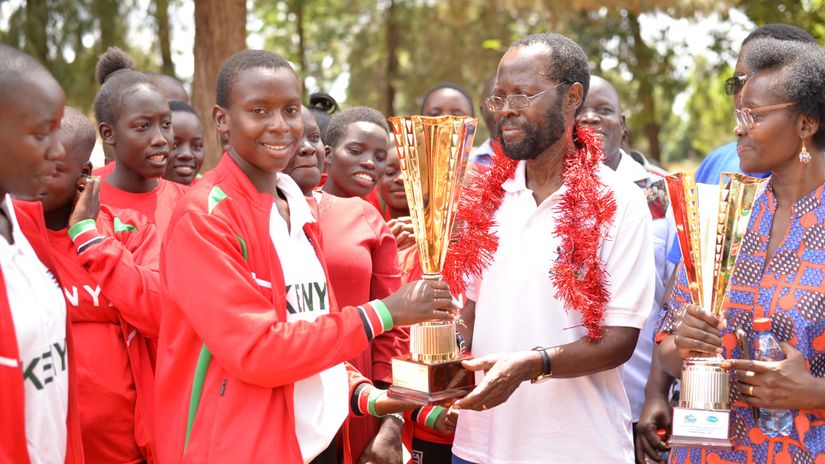
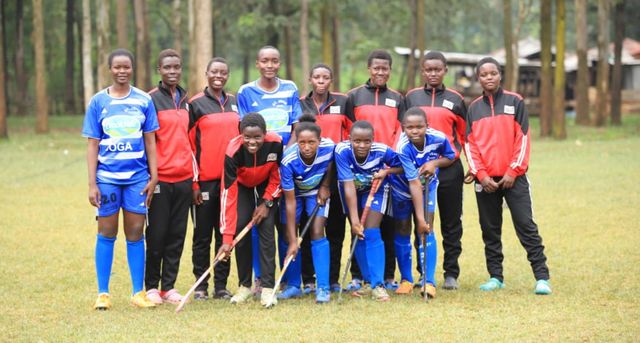
When Nyamira Girls stunned the nation by winning the Kenya Secondary Schools Sports Association (KSSSA) Nationals in 2023 and the Federation of East Africa Secondary Schools Sports Association (FEASSSA) title in Huye, Rwanda, it was a landmark moment for a program built far from the limelight.
Though dethroned by Tigoi Girls in 2024, their consistency at the highest level highlights Tunza’s long-term investment.
Meanwhile, St. Joseph’s Girls Kitale a partner since 2021,have established themselves as back-to-back FEASSSA champions, clinching gold in Mbale, Uganda (2024) and again this year in Kakamega.
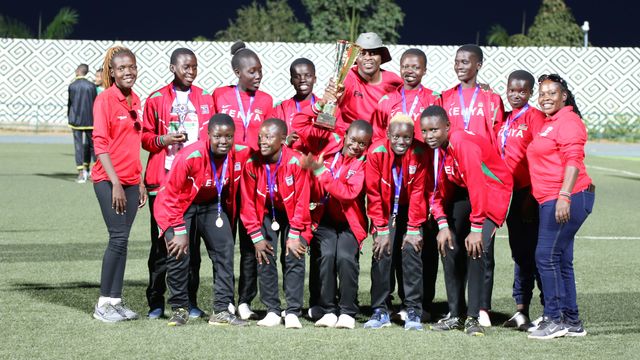
Ng’iya Girls, shocked many by eliminating Nyamira in the Nyanza region finals this season and went to secure bronze at both the KSSSA Nationals and FEASSSA Games.
Coach Anthony Nyadida of Ng’iya Girls was quick to credit Tunza Sports for this breakthrough.
“As the season ends, the Ng’iya Girls’ hockey team wishes to send our hearty appreciation to friends and partners who saw us reach this far. We managed to get bronze in the just concluded FEASSSA games. Being debutants we had some teething issues which are basically lessons learnt,” said Nyadida.
“Much appreciation to Tunza Sports for the support and guidance. Your dedication to this team is a blessing. You are always there for your partner schools. Because of you, we have this achievement.” he added.
Speaking to Mozzart Sport, Tunza Sports Foundation founder Rael Nyte, a former Kenyan international hockey player, the victories on the pitch are only half the story.
“At Tunza, our mission has always been clear - academic growth must go hand in hand with hockey development. We value education so highly that we aim for a fifty-fifty balance,” said Nyte. “Yes, a child may be talented in sport, but we insist they must also learn, be educated, and be well informed.”
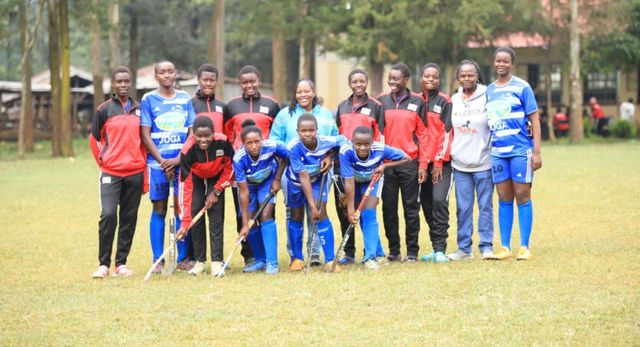
This belief is baked into the foundation’s model.
Alongside hockey training, Tunza offers tuition support and after-school lessons in under-resourced schools.
The combination of academic support and athletic opportunity has allowed many girls to access prestigious institutions that once seemed out of reach.
For the past six years, the foundation has partnered with 11 schools in ensuring their players get high school education as they play the sport.
Currently, they are partnering with; Nyamira Girls, Amaiko, St. Joseph Kitale, Ng' iya, Anjengo and Huma/Rae.
In the past they have partnered with Sinyolo Girls (2019 - 2023), Agenga (2020 -2024), Andingo (2021 -2024), Kamusinga (2021 -2023) and Ogande (2023-2025).
The Tunza effect does not stop at the school gates.
Over the years, 45 to 50 girls nurtured through the foundation have progressed into higher education.
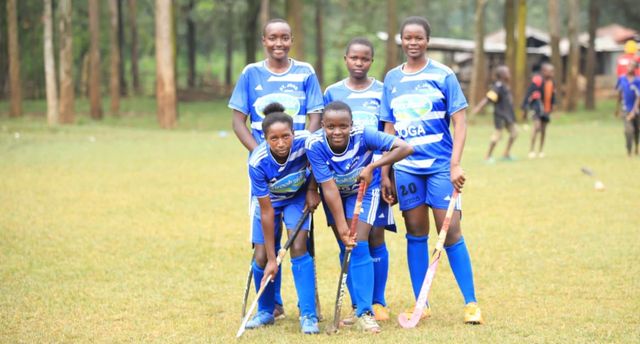
Six are now at Masinde Muliro University on partial hockey scholarships, while others have enrolled in other institutions.
They continue to train together as a Tunza squad, competing locally and even recently in the Uganda Hockey Association Easter Tournament earlier this year.
Still, the journey has not been without hurdles.
Some girls have unfortunately fallen into early marriages due to family pressures, while two dropped out after pregnancies.
One has since returned to thrive, while the other is still struggling. Yet Nyte insists the successes far outweigh the setbacks.
“Every time a girl steps into a college classroom because of hockey, it reaffirms what we are doing. The vision of education through sport is being realized.”
Lives transformed: Stories from the grassroots
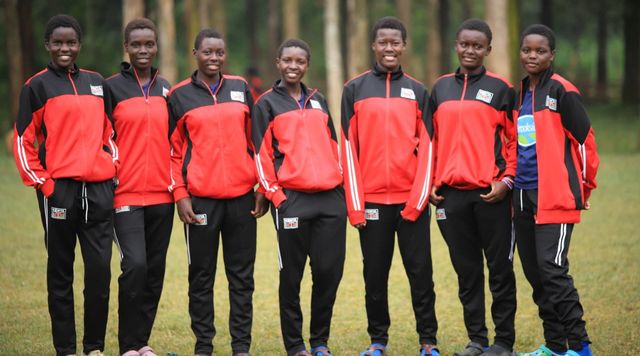
For Nyte, the heart of Tunza’s mission lies in the personal stories of transformation: A girl once at risk of ruin - sneaking into clubs, mixing with older men, failing in school — was given a lifeline through hockey.
Today, she is thriving both academically and socially.
An orphan raising siblings on one meal a day was relieved of her burden when Tunza placed her brothers and sisters in boarding school.
She finally got to live as a child again.
A girl with severe vision problems received glasses through Tunza, while her injured father was treated.
She is now pursuing higher education.
For the former Kenyan international , these are the real victories.
“That these girls, many from the poorest and most forgotten corners of our society, can believe again — that is the real victory. They can say to themselves: I can still make it.”
Tunza’s impact goes beyond sport and schooling. It has changed family and community dynamics, instilling discipline and respect.
“Too many children are abused in silence. We tell them: if something is wrong, say it. Because of this, we have confronted cases of abuse. The community now knows Tunza is watching,” said Nyte.
Today, boda boda riders, teachers, and men in these rural communities know that predatory behavior will be challenged.
Tunza has become not just a sports program but also a watchdog for girls’ dignity.
The challenges and sacrifices
Despite its remarkable success, Tunza faces daunting challenges, hockey’s obscurity in rural Kenya made convincing parents and schools difficult.
High costs of equipment from shoes to sticks to uniforms since many girls arrive barefoot and ill-equipped.

The rural playing grounds are uneven and unsuitable for hockey, which demands well-kept fields.
Tunza receives no government, federation, or corporate support and equipment donations from Rael’s hockey network in the USA must be shipped at her own expense.
School politics is also a big challenge, leadership changes in partner schools sometimes undo scholarship agreements, forcing girls to relocate midstream.
“It has been a solo drive. I fund it myself from my job, from any proceeds I make through hockey, and sometimes even from loans. Since 2016, this is how I have kept it alive.”

Despite the struggles, Rael treasures the small wins: free sanitary towels for girls, first-time train or plane rides, and the joy of parents seeing new possibilities for their daughters.
These moments fuel her dream of a future where Tunza not only produces elite hockey players but also leaders in all sectors of society.
“The transformation we are seeing through Tunza is about more than hockey. It’s about dignity, opportunity, and breaking the cycle of poverty.”
From six hockey sticks to national champions, FEASSSA medals, and college scholarships, the Tunza Sports Foundation has become the hidden force behind the success of some of Kenya’s most formidable girls’ hockey teams.
But beyond the medals, it is the changed lives — the child who returned to school, the orphan who became a child again, the father who walked after treatment, the families who now dare to dream — that define Tunza’s true impact.
As Kenyan hockey continues to grow, the quiet development revolution led by Rael Nyte stands as proof that in the rural heartlands, hockey is more than a sport — it is hope, education, and transformation.