


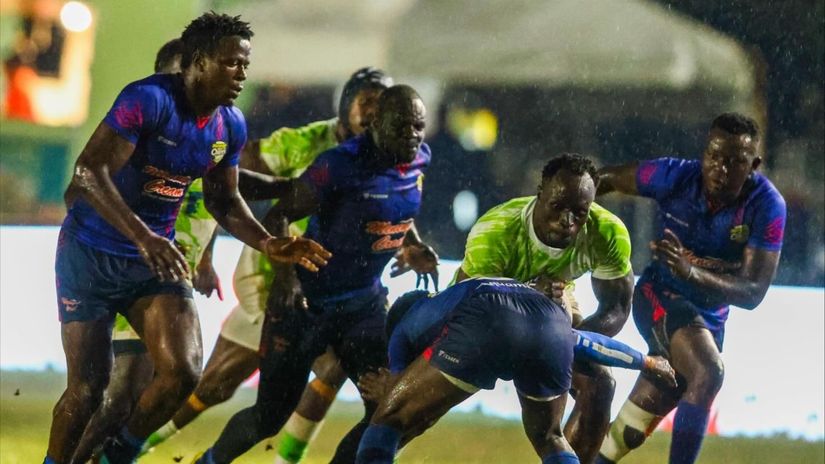
How Menengai Oilers turned rain-soaked chaos into victory over KCB Rugby


.jpg)


Reading Time: 4min | Mon. 27.10.25. | 16:33
The downpour rendered the pitch slippery and the ball difficult to handle, and as a result, both teams shifted away from expansive play, relying instead on the kicking game to gain territory
When torrential downpour began pounding Impala Club just before kickoff, the Impala Floodlit quarterfinal clash between Menengai Oilers and KCB Rugby instantly changed course.
Follow our WhatsApp channel for more news
What was expected to be a structured, fast-paced contest turned into a tactical battle dictated by territory, composure, and adaptability.
In the end, the Oilers’ ability to adjust both their strategy and personnel proved decisive in their narrow 16-13 win, a result that sent the defending champions into the Floodlit semifinals and eliminated the Bankers for the second year running.
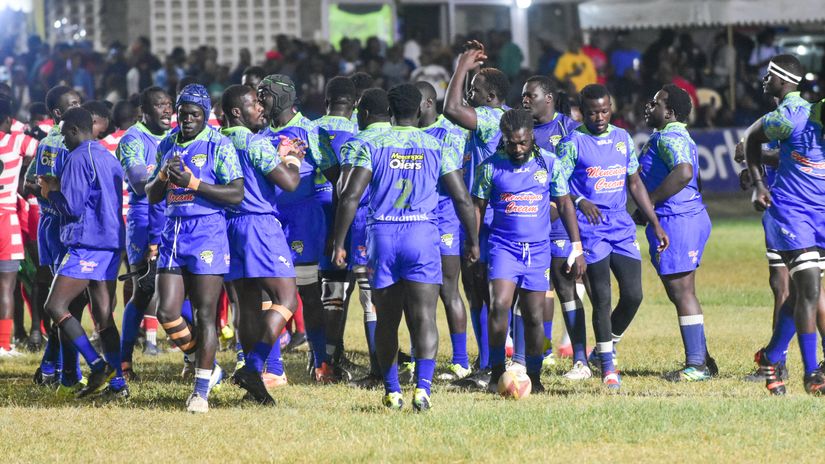
The downpour rendered the pitch slippery and the ball difficult to handle, and as a result, both teams shifted away from expansive play, relying instead on the kicking game to gain territory.
Handling errors became costly, and the match evolved into a test of discipline and game management.
Oilers were quick to recognise this change in dynamics. Their early decision to take points when available, through Timothy Omela’s penalty, set the tone for a pragmatic performance.
Instead of forcing risky passes, they prioritised territory and pressure, keeping the contest within reach even as KCB took a 10-6 halftime lead.
One of the key pre-match tactical decisions from head coach Gibson Weru was to start scrum-half Samson Onsomu at fly-half, with Andrew Odero filling in at nine. The adjustment seemed experimental, but under the wet conditions, it provided stability in the early stages.
However, Onsomu’s job was no walk in the park. He was up against one of Kenya’s finest scrum-halves, Samuel Asati, who dictated KCB’s rhythm from the base, while the Bankers’ playmaker Brian Wahinya operated at fly-half.
.jpg)
This meant the Oilers had to match not just structure but also experience and tactical intelligence across the halves.
Onsomu handled the challenge well. His tactical kicking from hand allowed the Oilers to relieve pressure and maintain structure despite the disrupted flow.
His familiarity with controlling tempo from the base translated effectively to the pivot role, ensuring that the Oilers were not overwhelmed by KCB’s kicking response.
KCB initially adapted well, using their superior kicking range to pin the Oilers deep.
A well-placed tactical kick from Wahinya led to a try for William Opaka, which, combined with a penalty, gave the Bankers a 13-6 lead heading into the final quarter.
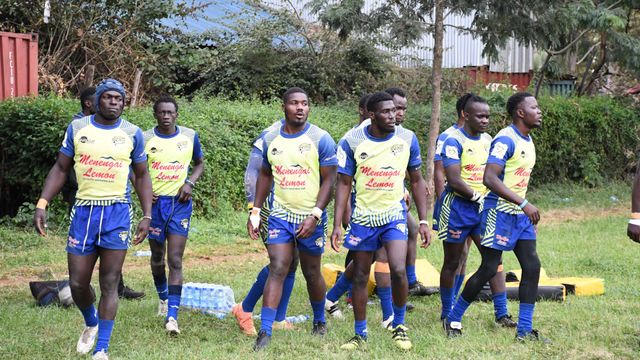
At that stage, KCB looked comfortable; controlling possession, applying pressure in the Oilers’ half, and capitalising on territory.
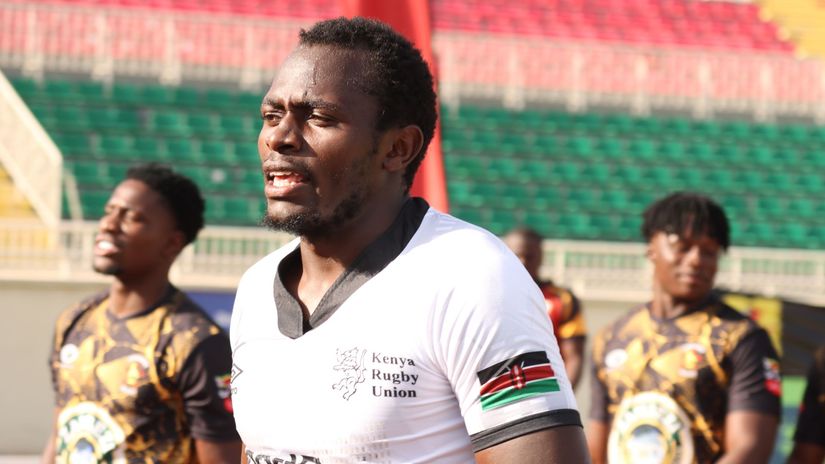
However, their inability to convert prolonged periods of pressure into points would later prove costly.
The turning point came through Weru’s mid-game adjustments. Recognising that the opening backline was struggling to handle the slippery conditions, he reverted Onsomu to his natural scrum-half role, introducing Philip Okeyo and Dave Mwaura in the backs.
Speedster Beldad Ogeta, whose pace was nullified by the wet surface, was withdrawn.
These changes strengthened the Oilers’ composure in contact situations. With Okeyo providing better defensive coverage and Mwaura adding fresh energy, the Oilers began to win crucial breakdown duels and slow down KCB’s momentum.
Instead of forcing expansive plays, the Oilers relied on short pick-and-drives and controlled phases. Their equalising try under the posts came after a sustained spell of forward pressure, showcasing their tactical patience.
Fullback Abutwalib Wesonga, who had been steady under the high ball all evening, converted to make it 13-13 before holding his nerve to slot in the match-winning penalty, a kick that brushed the upright before sailing through.
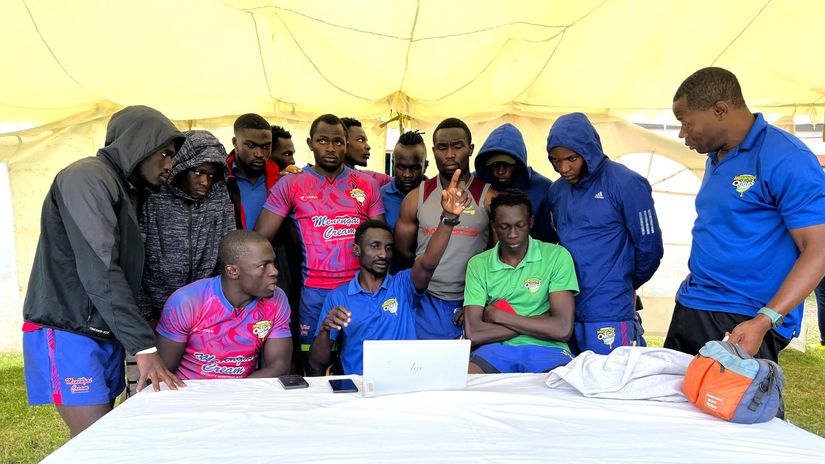
Both sides traded errors in the wet conditions, but the Oilers’ discipline in the final 10 minutes stood out. They avoided risky turnovers, maintained structure, and forced KCB into mistakes inside their own half.
That composure under pressure, aided by Weru’s timely substitutions, ultimately defined the outcome.
Speaking to Mozzart Sport after the match, Weru acknowledged that adaptability was the key difference.
“The dynamics of the game changed right before kickoff because of the rain. It is very hard to play a structured game when there is a lot of kicking involved. We had to bring on players who were able to deal with such conditions,” he said.
Up next, the Oilers will face hosts Impala RFC in the semifinal match slated for Saturday, 1 November. The match will be a repeat of the 2024 Impala Floodlit final, where Oilers emerged 42-3 victors to clinch their maiden title.