


 T. Nashipae
Kenya Lionesses ace reflects on eight-year growth since making national team debut
.jpg)
.jpg)
.jpg)



Reading Time: 4min | Mon. 18.05.26. | 14:53
Wafula entered the rugby scene as a rookie but has since grown significantly, progressing to play the sport at a professional level
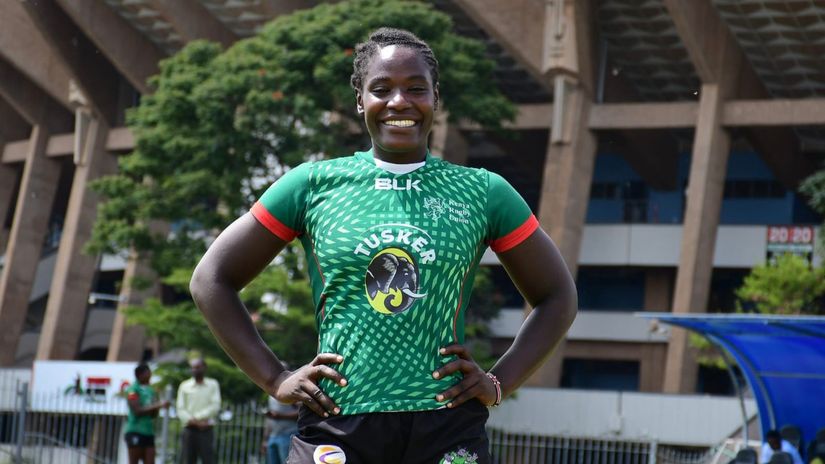
Eight years after making her debut for the Kenya Lionesses, Stellah Wafula has grown into one of the most decorated and influential players in the squad, with international exposure and high-performance training shaping her journey on and off the pitch.
The powerful forward has become a key figure in the Lionesses' setup, especially after returning from a high-performance camp in the United States that transformed her outlook on the game and elevated her standards.
Download our Mozzart Sport App for more news
Last year, Wafula joined the Rhinos High-Performance Camp, a professional rugby development programme run by Rhinos Rugby in partnership with the Rugby Tens Championship.
The programme, based in San Clemente, California, and parts of South Africa, is designed to prepare elite players for professional and international rugby through intensive training and exposure across the 15s, 7s, and Tens formats.
Her stint abroad meant she missed key national assignments, including the Safari 7s tournament, where Kenya edged Uganda 14-10 to reclaim the title, as well as the Africa Women’s 7s campaign that ended with a 22-0 loss to South Africa.
Reflecting on her time in the United States, Wafula described the experience as a turning point in her career.
“The experience was really good. I learnt a lot from different players, especially during the high-performance camp in the United States. It was a great opportunity to interact with players from different countries like the USA, Canada, Samoa, Brazil and Argentina. That exposure really helped me grow,” she said.
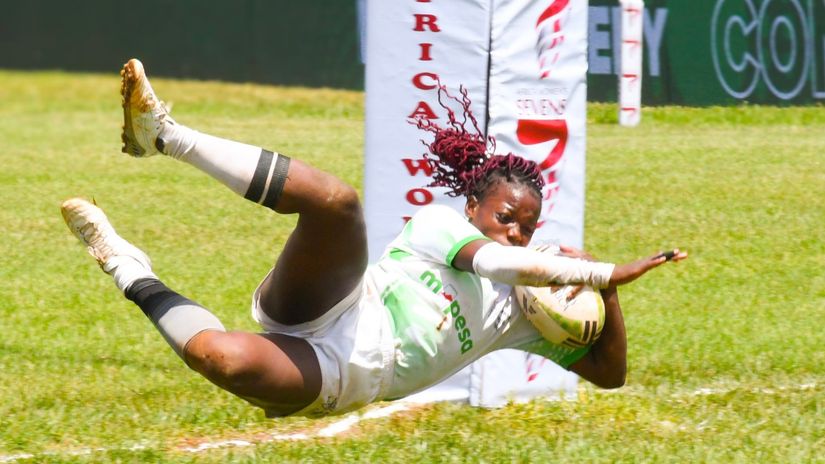
Wafula noted that training and interacting with elite players from different rugby cultures challenged her to improve both physically and mentally.
“What stood out most was the training environment and the people I met. There were experienced players, including a former 15s player, a player from Samoa, South Africa, and a Canada 7s player. You learn so much just by being around such talent,” she continued.
The Lionesses star admitted that competing against stronger opposition in the HSBC Challenger Series also exposed areas she needed to improve.
“During the HSBC Challenger, playing against teams like South Africa really helped me improve. Their speed and passing game challenged me and pushed me to raise my level,” she explained.
.jpg)
According to Wafula, one of the biggest eye-openers abroad was the structure and consistency of training compared to what players are accustomed to locally.
“One of the biggest differences is the training structure. In Kenya, training intensity can vary, sometimes high, sometimes low. But when you go abroad, especially in high-performance environments, the consistency is different.
“We were used to playing teams like South Africa, Spain, and Samoa, and it can be tricky adjusting to different styles. The gym work, active recovery, and overall load management were also different. At first, it was challenging, but it really helped my body adapt and improve,” she offered.
She believes the growing number of Kenyan players gaining international exposure is slowly transforming the standards within women’s rugby in the country.
“I’d say the exposure has helped a lot of us. Some players even earned call-ups after those experiences. It opens your mind and shows you what is required at the highest level,” she added.
.png)
Looking back on her eight-year journey with the national team, Wafula said patience and persistence have played a huge role in her growth.
“A lot has changed. For the first four years, I wasn’t playing as much as I do now. But being in high-performance environments gave me the chance to play with different players and improve.
Earlier, I was mainly playing at club level, but now there are more opportunities through national call-ups and international exposure. I’ve really grown as a player over the years,” she said.
Wafula also acknowledged the gradual progress women’s rugby has made in Kenya, particularly in terms of recognition, sponsorship, and opportunities.
“What keeps me going is the support and recognition we are starting to get. Being valued as women athletes means a lot. In the past, it wasn’t like this.
We are now getting opportunities to travel and play in places like Spain and Tunisia, and that motivates me to keep pushing.”

Still, the journey has not been without challenges.
“One of the biggest challenges early on was intimidation, especially when it came to physical training. There were also issues with delayed payments and lack of sponsorship, which made things difficult,” she revealed.
With Kenya set to host the upcoming Rugby Africa Women’s Performance Division tournament at the RFUEA Grounds, Wafula believes playing at home will provide extra motivation for the Lionesses.
“It means a lot to host such a tournament at home. It gives us the chance to play in front of our fans, friends, and family who may not always afford to travel and watch us abroad,” she said.
Wafula credits her fellow teammate, Janet Okello, as one of the players who inspired her journey.
.jpg)
Okello became the first Kenyan female rugby player to play professional rugby in Japan.
“For us, it is also a reminder to keep dreaming and keep pushing. I always tell myself when I look in the mirror that I am a different person from who I used to be.
“I was encouraged a lot by senior players like Janet Okello, who told me not to give up. That pushed me to shine, and I hope to also inspire others in the same way,” she concluded.