


.jpg)
Coach, retired athlete sentenced for forgery, presenting false picture of Kenya's doping situation
.jpg)
.jpg)
.jpg)



Reading Time: 3min | Tue. 09.04.24. | 18:30
The duo, with the help from influential and powerful people outside Kenya’s borders, attempted to present a picture that there was government sponsored doping
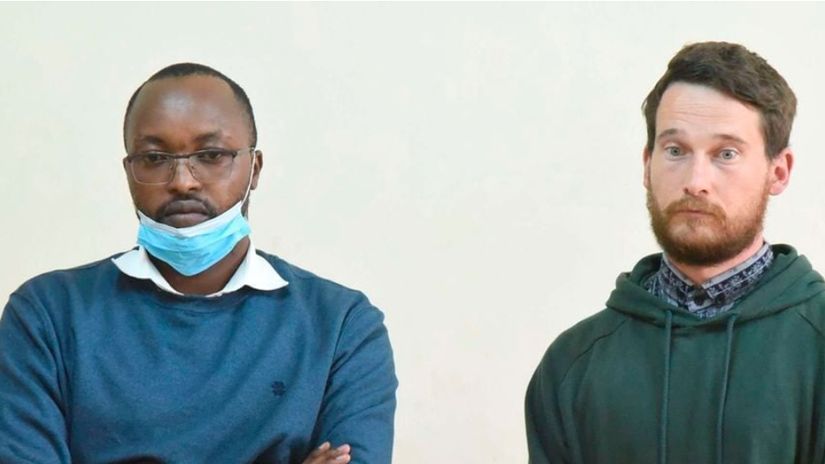
On Tuesday, April 9, a Jomo Kenyatta International Airport Chief Magistrates Court sentenced retired athlete Elias Kiptum Mainidi and coach Paul Kibet Simbolei to one-and-a-half and one year in jail, respectively, for forgery and conspiracy to cause injury.
The charges, brought before Senior Principal Magistrate Njeri Thuku, emanate from offenses in September 2019 and April 2020, where the two, plus a third individual, John Katio Maluni, who passed on through a road accident while the trial was ongoing and thus had charges withdrawn, were found guilty of portraying Kenya’s doping situation as “state-sponsored.”
Elias Kiptum Maindi, a retired athlete, and coach Paul Kibet Simbolei were found guilty of fabricating doping allegations against the county’s top athletes and sharing them with foreign media. They've been sentenced to one and a half years and one year in jail, respectively, pic.twitter.com/LzZ8uavUfl
— Archibald Jura (@Archie_jura) April 9, 2024
In the report, the duo, with the help of influential and powerful people outside Kenya’s borders, attempted to present a picture that there was government-sponsored doping, all to show that Kenyan athletes competed and won using performance-enhancing drugs.
Further reports indicate that Kiptum and Kibet forged documents purportedly signed by Athletics Kenya and the Anti-Doping Agency of Kenya officials, and circulated them to a wider pool of European-based journalists who ran the supposed narrative of Kenya facing a ban.
“It is important to set the record straight - Kenya has never had state-sponsored doping. That was the picture that Elias and Paul intended to portray to the sports world,” part of the sentencing read.
While pointing out that Kenya has more than 60 athletes banned for doping-related offenses, the court noted that the government established a task force led by Prof. Dr. Moni Wekesa to look into allegations first written by a German broadcaster ARD in 2012 that purported that “Kenyan athletes were being supplied with banned substances in exchange for a percentage of the prize money won.”
The result of the investigations was a report that confirmed that the performance-enhancing drug EPO (Erythropoietin) was “easily available from chemist shops located in the areas where athletes train.”
In addition, the report stated that the two main drugs that Kenyan athletes tested positive for were Norandosterone and Triamcinolone acetonide.
The court also noted that ADAK - the complainant in this case - after its formation, identified in 2015 that reports indicating that Kenya’s athletes would be banned from participating in the 2016 Rio Olympic Games “was just not a notion but a large and present looming reality.”
“The consequences of a ban for Kenya are as real in 2024 as they were in 2016,” the court said. “Worse still is that a ban on Kenya as a country would affect all sports and not just those caught in doping. The threat came close to being effected in 2022 but the government put in all efforts to ensure that it was complying to the standards established by WADA (World Anti-Doping Agency) on addressing doping.”
Sentencing
Kiptum, who maintained his innocence in the case as a whistleblower—that the aforementioned Katio forwarded to him letters extracted from his phone—was sentenced with thirteen counts (12 of forgery and one of conspiracy to cause injury) that amounted to one and a-half years in jail, open to an appeal within 14 days.
His mitigation, delivered by his representative, Mr. Masika, was that he had shown remorse and was the sole breadwinner of his family.
His plea for a non-custodial sentence was deemed unsuitable given the gravity of the reputational damage to Kenya.
-min.jpg)
As for Kibet, the court found him guilty of one count of conspiracy to cause injury and was sentenced to a year in jail.
However, given the fact that he had been in custody since 27 April 2021 - when he was arraigned - the court ordered his release for his time in pre-trial detention, as a misdemeanour charge carries a maximum of two years.