


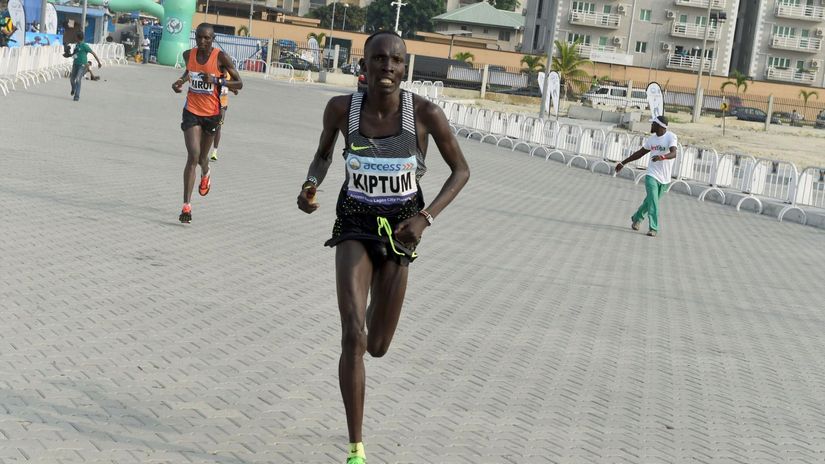
Former World Half Marathon record holder seeking redemption after completing doping ban


.jpg)





Reading Time: 3min | Fri. 20.06.25. | 21:11
Reflecting on his rise and fall, Kiptum admits the experience has taught him hard life lessons, especially about money and relationships
Former world half-marathon record holder Abraham Kiptum is hoping to bounce back to the athletics scene in fashion after close to six years on the sidelines.
The 34-year-old, who was slapped with a four-year ban in 2019, is slowly making his return to competitive running.
He has set his sights on the Nairobi City Marathon and the Kericho Half Marathon.
Follow Our WhatsApp Channel For More News
How it happened
April 26, 2019, was a day that changed everything.
Just a day before he was set to compete in the prestigious London Marathon, the Athletics Integrity Unit (AIU) dropped a bombshell.
Kiptum was provisionally suspended over irregularities in his Athlete Biological Passport (ABP).
The ABP, unlike traditional drug tests, tracks an athlete’s biological variables over time to spot the indirect effects of doping.
For Kiptum, the news was shocking.
“I was so surprised about ABP because I had never heard about it in my entire life,” he admitted.
Stripped of the opportunity to race in London, Kiptum returned home not just to shame, but to a new life.
His once-promising future was in limbo, and with it, the relationships he had built.
He admits he spent his time farming and herding animals in Nandi County.
His friends and wife all deserted him, and he was left at the mercy of his close family members.
So bad was the situation that he could not walk freely in public like he once did.
“I was sent back home, and I stayed there until I completed my ban. When I returned, I was welcomed by my parents and brothers, who advised me to stay positive. To make matters worse, my wife and friends deserted me. I was only left with my parents and brothers. In that situation, I was depressed, but I got to know who my true friends were,” he admitted.
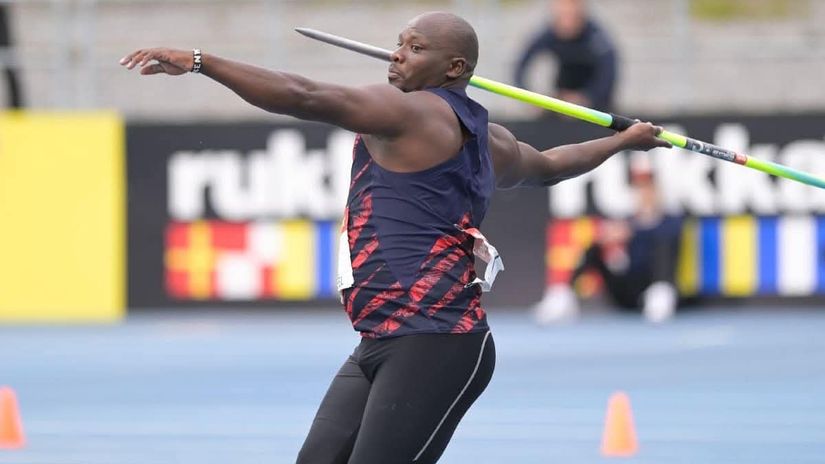
After serving his four-year ban, his younger brother urged him to join a training camp and begin rebuilding his career from the ground up.
He has since been training, with his body apparently responding well.
“After serving four years, I have returned to action, doing what I know best, running. I knew I was good enough. My brother urged me to join a training camp, and he even took me there. My body is responding well, and I feel ready,” he said.
Reflecting on his rise and fall, Kiptum admits the experience has taught him hard life lessons, especially about money and relationships.
“Yes, I had money when I set the world record. I even bought land and helped change the lives of my family. But I have learnt that money comes and goes. What matters most is staying around the right people,” he said.
The 2025 Nairobi City Marathon is slated for Sunday, 5 July at the Uhuru Gardens, and Kiptum is confident of at least a podium finish.

“The days are few, but with the right training and rest, I believe I can make it to the podium,” he confidently said.
Kiptum’s running journey began with football in primary school and quickly shifted to track at St. Peter's Secondary School. By Form Two, he was already turning heads, pacing elite women in marathons and finishing third at the Rabat Marathon as a pacesetter.
From 2016 to 2018, he raked up wins in Lagos, Casablanca, and Madrid, with a breakthrough at the 2017 Amsterdam Marathon, where he clocked a personal best of 2:05:26.
His crowning moment, however, was the world record in Valencia.
The @WorldAthletics Disciplinary Tribunal has banned long-distance runner & former half-marathon world record holder Abraham Kiptum of Kenya for four-years with effect from 28 April '19.
— Athletics Integrity Unit (@aiu_athletics) November 11, 2019
Read the full decision here ⬇️https://t.co/cBkQOqSHT4#AIUNews #CleanSport@athletics_kenya pic.twitter.com/vkOdBEYmA7
In 2018, he stunned the world by breaking the long-standing half-marathon world record at the Valencia Half Marathon, clocking 58:18, five seconds faster than the previous record held by Eritrea’s Zersenay Tadese since 2010.
However, the ban saw his results going back to 13 October 2018, including the half-marathon world record, disqualified.