



Will Usain Bolt’s 100m record be broken soon? scientists weigh in








Reading Time: 2min | Mon. 19.05.25. | 22:00
Bolt first announced himself to the world with his astonishing double sprint gold at the 2008 Beijing Olympics
More than 15 years since Usain Bolt lit up the track at the 2009 World Athletics Championships in Berlin, Germany, with a blistering 9.58 seconds in the 100 metres, his world record remains untouched.
Follow our WhatsApp channel for more news
The Jamaican icon, nicknamed "Lightning Bolt," dominated three consecutive Olympic Games and wrote history with eight Olympic gold medals and multiple world records. That, without a doubt, cemented his place as the fastest man in history.
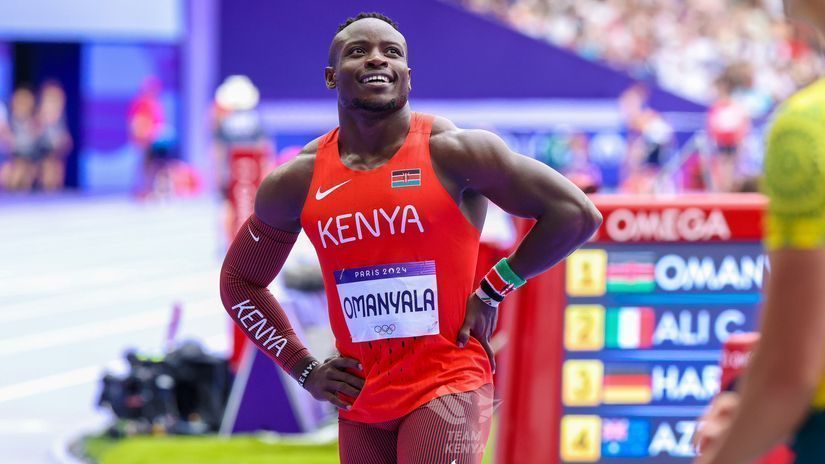
Bolt first announced himself to the world with his astonishing double sprint gold at the 2008 Beijing Olympics, breaking the then-world record in the 100m final with a 9.69-second run, famously easing up before the finish line.
A year later, he stunned the world again in Berlin, taking 0.11 seconds off his own time to set the current world mark of 9.58 seconds. This is the feat that no one has come close to replicating since.
In fact, since 2012, no athlete has dipped below the 9.70-second mark.
At the most recent Olympics in Paris 2024, Olympic champion Noah Lyles clocked 9.79 seconds to win gold, a mind-blowing time but still two-tenths slower than Bolt’s record.

Even Bolt himself has expressed doubt that the current generation has what it takes to surpass his mark.
However, scientists Polly McGuigan and Aki Salo believe that breaking Bolt’s record and even running under nine seconds is not impossible.
In a 2022 study, the duo suggested that with the right combination of genetics and training, humanity might one day produce a sprinter capable of achieving the unimaginable.
Their research emphasised the importance of muscle composition, particularly the presence of large, fast-twitch muscle fibres in the bum, thighs, and calves as a key factor in sprinting performance.
.jpg)
"A combination of genetics and training would need to produce bum, thigh, and calf muscles that are a little bit stronger and faster than the current best sprinters.
A muscle with a high proportion of large, fast-twitch muscle fibres will be able to generate larger amounts of force more quickly than a muscle with a lower proportion,” the research read.
However, the feat is not impossible.
"It's safe to say that someone will break the nine-second barrier - not necessarily in our lifetime, but it will happen one day."