


2025 REVIEW: Nairobi United's remarkable rise from NSL to CAF Confederation Cup




Reading Time: 5min | Sun. 28.12.25. | 17:28
They are no longer simply a fast-rising club. They are an ongoing project, moving in real time between past lessons and present demands, with Kenyan football watching closely to see whether this ascent can be sustained
On December 15, 2024, Nairobi United fell 3–1 to Kibera Black Stars at Dandora Stadium.
At the time, the defeat looked like a familiar setback for a young club still finding its feet in the National Super League. What followed over the next twelve months, however, has since redefined both the club’s trajectory and its place in Kenyan football.
Follow our WhatsApp channel for more news
In the weeks after that loss, Nairobi United were regrouping rather than retreating. They went on to win four of their next five matches, travelling across Kiambu, Machakos, Vihiga and Kisumu, steadily tightening their grip on the NSL summit. By the turn of the year, they were sitting atop the table with a consistency that marked them out as promotion favourites.
The Mozzart Bet Cup had not yet been drawn. A year later, Nairobi United are competing in the FKF Premier League, juggling domestic football with continental commitments, and sitting 13th with five games in hand on Tusker, who have played the most matches so far.
That arc, from a December stumble to continental relevance, is best understood by moving between where the club came from and where it now finds itself.
Nairobi United were founded in 2018 as 360 Media FC under chairman Samwel Born Maina. They entered the Kenyan football pyramid in 2019 from the fifth tier, the Regional League, and were promoted at the first attempt.
The COVID-19 pandemic and Football Kenya Federation restructuring slowed momentum, but by 2021 the club had acquired a Division One slot and later rebranded as Nairobi United.
In the 2022/23 Division One Eastern Zone season, they finished second behind Rainbow FC and beat Zoo FC 1–0 in the play-offs to reach the National Super League.
Their first NSL campaign in 2023/24 ended just short of the target. Fourth place, one point off the promotion play-offs, exposed gaps in experience rather than ambition.
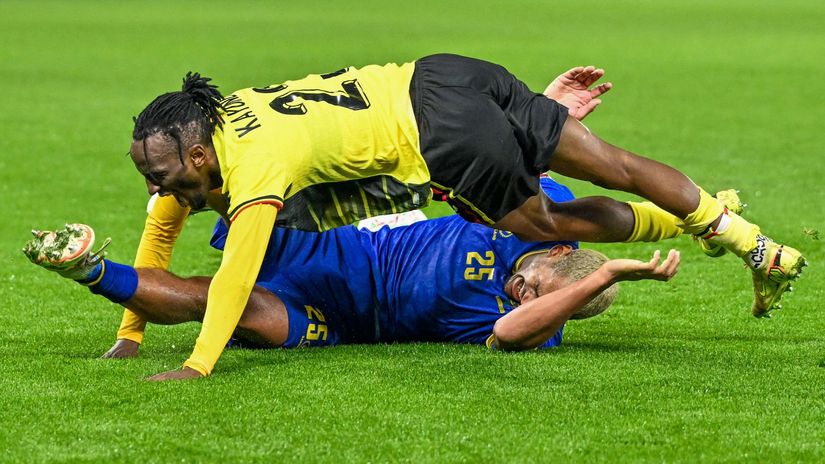
Those shortcomings shaped the decisions that followed. In September 2024, Salim Ali was appointed technical director. In January 2025, Nicholas Muyoti, a former Kenya international with top-flight experience, took over as head coach.
By the time Muyoti arrived, Nairobi United were already building momentum in the league. What unfolded next elevated the club from fast risers to one of the most talked-about teams in the country.
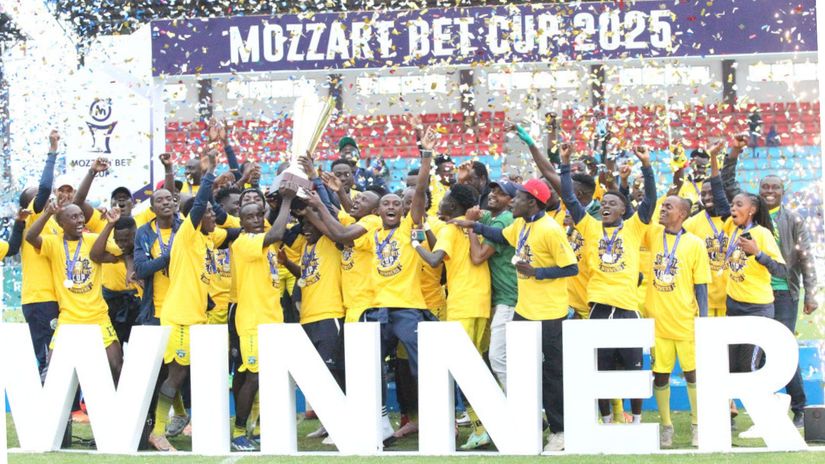
The Mozzart Bet Cup became the centrepiece of their year.
Their campaign began in the round of 64 with a 3–1 win over lower-tier Global Connection. In the round of 32, they faced FKF Premier League opposition in Tusker. A 1–1 draw forced penalties, which Nairobi United won 5–4.
The round of 16 brought another top-flight test against KCB, and again the tie ended goalless before Nairobi United advanced 6–5 on penalties. In the quarter-finals, they asserted authority, beating former cup winners Kakamega Homeboyz 2–0. The semi-final against Mara Sugar followed a familiar pattern: a 1–1 draw, then a 3–1 win in a shootout.
Each round reinforced a defining trait. Nairobi United were not simply surviving; they were managing pressure, learning quickly, and executing plans with growing assurance.
The final, played at a packed Ulinzi Sports Complex on June 29, 2025, pitted them against Gor Mahia, Kenya’s most decorated club. Nairobi United scored early through Frank Ouya in the sixth minute. Gor Mahia equalised via Ben Stanley Omondi in the 37th. Enock Machaka then struck the decisive goal, sealing a 2–1 victory. Late drama followed when Gor Mahia were awarded a penalty, but goalkeeper Ernest Mohammed saved Alpha Onyango’s effort, preserving the lead.
The win delivered Nairobi United their first major trophy. They became only the second second-tier club in two decades to lift the domestic cup, after Sofapaka in 2007. The prize included Sh2 million in winnings and qualification for the 2025/26 CAF Confederation Cup.
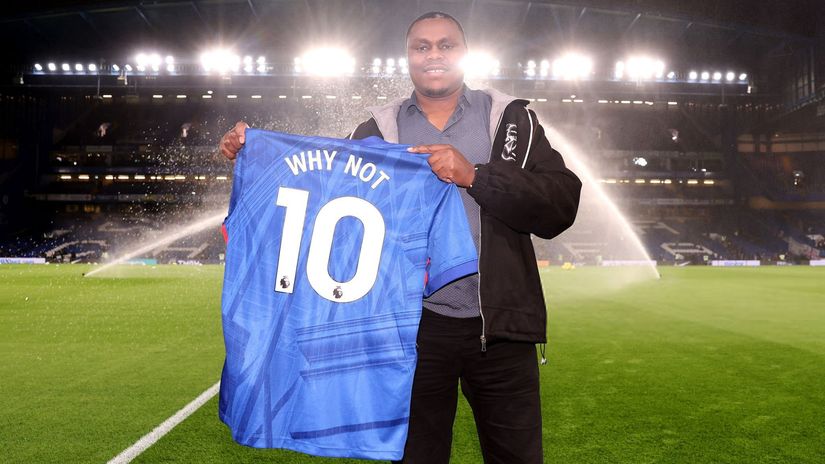
Muyoti attributed the run to a shift in mentality. Confidence, preparation and learning from setbacks became central themes. Even a heavy league defeat to Naivas near the end of the NSL season was framed internally as a lesson rather than a warning sign.
Domestically, the season closed with Nairobi United being crowned 2024/25 NSL champions, securing promotion to the FKF Premier League. Almost immediately, attention shifted to continental competition.
Their CAF Confederation Cup debut has since added another layer to the story. Nairobi United negotiated the preliminary round against Uganda’s NEC FC on away goals after draws in both legs.
Then came Étoile Sportive du Sahel, one of Africa’s most decorated clubs. The Tunisian giants boast one CAF Champions League title, two CAF Cups, two CAF Super Cups, two CAF Confederation Cups and two African Cup Winners’ Cups. They arrived as overwhelming favourites.
In Nairobi, United stunned them with a 2–0 first-leg victory at the Ulinzi Complex. In Sousse, Étoile responded with fierce pressure, scoring through Mohamed Anani early in the second half and Ghofrane Naouali deep into stoppage time to level the tie 2–2 on aggregate.
With no extra time, penalties decided the contest. Nairobi United held their nerve to win 7–6, eliminating the North African heavyweights and advancing to the group stage on their first attempt.
The result left Tunisia without a representative in the Confederation Cup groups and confirmed Nairobi United as Kenya’s sole continental representatives that season. It also carried significant financial implications.
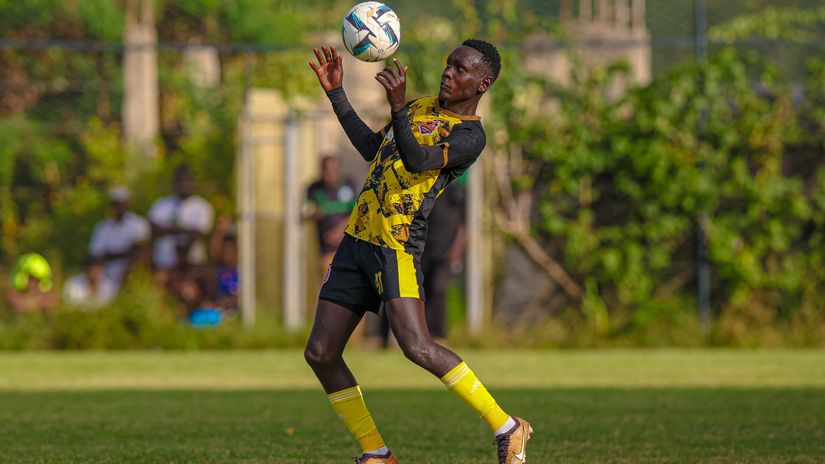
CAF’s revised prize structure guaranteed the club USD 50,000 for reaching the preliminary rounds and a further Ksh51 million for group-stage qualification, with the prospect of more should they progress.
As Nairobi United are stepping into the FKF Premier League and African competition, their rise is also attracting scrutiny.
Critics have raised questions about the blurred lines between political backing and club sustainability, pointing to the involvement of the Johnson Sakaja Foundation and the wider history of Kenyan clubs that rose quickly with political or corporate support before collapsing. Comparisons are being drawn with past projects that struggled to outlast their initial momentum.
For now, Nairobi United are operating within that tension, balancing ambition with the challenge of long-term stability. On the pitch, the signs remain positive. They are competing in the top flight, managing squad depth, and preparing for continental group-stage matches against established opposition.
The memory of that December afternoon at Dandora still lingers, not as a cautionary tale, but as a reference point. From a 3–1 defeat to a season defined by promotion, a domestic cup, and continental qualification, Nairobi United’s year has unfolded as a study in acceleration.
They are no longer simply a fast-rising club. They are an ongoing project, moving in real time between past lessons and present demands, with Kenyan football watching closely to see whether this ascent can be sustained.