


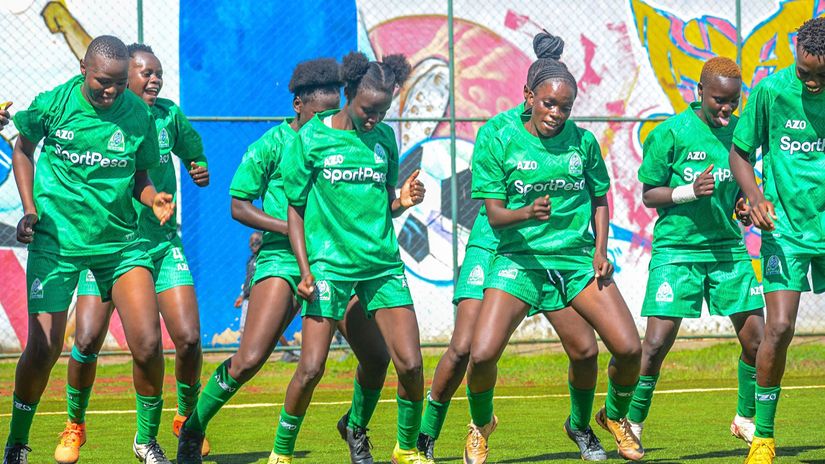
A new chapter? What Gor Mahia Queens' promotion could mean for women's football



.jpg)



Reading Time: 6min | Fri. 05.06.26. | 20:57
Imagine having the men's side dominate the FKF Premier League and the Queens challenging Bullets, Vihiga and Ulinzi Starlets
If Gor Mahia Queens complete the job in this weekend's promotion playoff contest against Trans Nzoia Elim White Ladies, their arrival in the FKF Women's Premier League will represent far more than another team joining Kenya's top flight.
It will be a statement. One of ambition, of the growing importance of women's football and about what can happen when one of the country's most recognisable sporting institutions decides to invest seriously in the women's game.
Download our Mozzart Sport App for more news
For Gor Mahia, promotion would mark the beginning of a new chapter.
For Kenyan women's football, however, it would also expose an uncomfortable truth: while the sport has made undeniable progress over the past decade, it still operates in a world vastly different from the one enjoyed by its male counterparts.
That reality is impossible to ignore.
The contrast begins with the name itself.
Few sporting brands in East Africa carry the weight of Gor Mahia.
The men's team is the most successful club in Kenyan football history, boasting a record collection of league titles, continental appearances and one of the largest fan bases in the region.
The club's identity is built on winning and expectations follow wherever the green jersey goes.
It is therefore unsurprising that when Gor Mahia Queens were established, they immediately set their sights on promotion rather than participation.
The team entered the Women's National Super League determined to emulate the standards established by their male counterparts. In many respects, they have done exactly that.
Yet promotion will also place Gor Mahia Queens at the centre of a broader conversation about the future of women's football in Kenya.
Because while the men's and women's teams share a badge, they do not share the same reality.

The men's side operates in a football ecosystem that, despite its challenges, still attracts greater sponsorship, media attention, commercial opportunities and public interest.
Matches involving Gor Mahia routinely dominate sports headlines. Their transfer business is scrutinised.
Their coaching appointments spark national debate. Their sponsors understand the visibility that comes with association to the club.
Women's football, by contrast, continues to fight for recognition.
The FKF Women's Premier League has produced national-team players, CAF Women's Champions League participants and footballers who have gone on to build successful careers abroad.
.jpg)
Yet despite that success, the league has often struggled with visibility, sponsorship and financial sustainability.
As recently as this year, clubs threatened to boycott league fixtures over concerns regarding funding, support structures and uncertainty surrounding financial commitments.
The situation reflects a wider challenge across the game.
Although FIFA and FKF have invested in women's football development through strategic programmes, club licensing initiatives and league support mechanisms, stakeholders continue to raise concerns about whether resources are sufficient to sustain long-term growth.
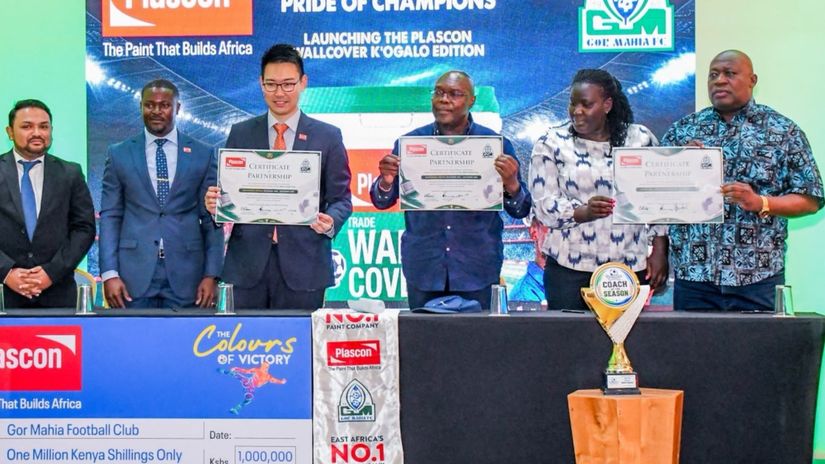
Financial sustainability remains one of the biggest challenges facing women's clubs across Kenya.
That is why Gor Mahia Queens' potential promotion matters.
Successful football clubs do more than win matches. They attract attention. They create narratives.
They draw supporters who may otherwise never engage with a competition. When Gor Mahia enters a league, people notice.
The hope among women's football advocates is that the same phenomenon can occur in the Women's Premier League.
Imagine league fixtures involving Gor Mahia Queens against established powerhouses such as Vihiga Queens, Kenya Police Bullets or Ulinzi Starlets.
Imagine the increased media attention, the larger crowds and the greater commercial interest that could follow.

Even if the effect is gradual, the presence of one of Kenya's most recognisable sporting institutions has the potential to raise the profile of the entire competition.
This is not a uniquely Kenyan phenomenon.
Across the world, some of the most successful women's teams have benefited from connections to major men's clubs.
Clubs such as Barcelona, Arsenal, Chelsea and Lyon have used their established brands, infrastructure and commercial power to accelerate the growth of their women's sections.
While those teams still face financial challenges, their visibility has helped transform perceptions of women's football and attract new audiences.
Globally, revenues in women's sport continue to rise, with analysts projecting record growth driven by increased investment, sponsorship and media exposure.
.jpg)
Kenya is not yet operating on that scale. But the principle remains the same.
The arrival of Gor Mahia Queens would bring one of the country's strongest football brands into the women's game at its highest domestic level. That alone carries value.
However, promotion should not be viewed as a solution to every challenge. There is a tendency within football to assume that growth happens automatically. It does not.
A club can attract attention, but sustainable progress requires investment. Players need better remuneration.
Clubs require stable sponsorship arrangements. Leagues need reliable broadcasting opportunities.
Supporters must be given reasons to attend matches and follow teams consistently.
These are not uniquely Kenyan problems. Women's football across the world continues to grapple with questions of sustainability, investment and commercial viability.

Yet the global trend is clear. The game is growing. Audiences are expanding. Sponsors are becoming increasingly interested in a market that was overlooked for decades.
The challenge for Kenya is ensuring that local football benefits from that momentum.
In this regard, Gor Mahia Queens could become an important test case.
If the club reaches the Women's Premier League, how aggressively will it market the team? Will supporters embrace the women's side with the same passion shown to the men's team?
Can sponsors be persuaded that investment in women's football is not merely a social responsibility exercise but a genuine commercial opportunity?
The answers to those questions may shape more than the future of Gor Mahia Queens. They may influence how other major clubs approach women's football in the years ahead.

Because ultimately, promotion is not the destination. It is the beginning.
The real significance of Gor Mahia Queens entering the FKF Women's Premier League lies not in the league table or the playoff result.
It lies in the possibility that their arrival could help narrow the gap between aspiration and reality within Kenyan women's football.
For years, stakeholders have spoken about the need for greater investment, improved structures and stronger visibility.
The presence of Gor Mahia Queens offers an opportunity to move that conversation forward.
The men's team built its reputation over decades through success, support and sustained relevance. The women's team is only beginning its journey.
But if promotion is secured this weekend, Gor Mahia Queens will arrive in the Premier League carrying more than the expectations of a football club.
.JPG)
They will carry the hopes of many who believe women's football in Kenya deserves a bigger stage, greater respect and a future that more closely reflects its enormous potential.
That is what Gor Mahia Queens' entry into the Premier League truly means.