


Ex-Tusker defender dedicates life to preventing injuries after suffering career ending knock
.jpg)
.jpg)
.jpg)


Reading Time: 6min | Thu. 30.04.26. | 19:33
The injury that once took something from him has, in its own way, become the reason others get to keep theirs
Vincent Ngesa does not tell his story like a man who lost something, but rather he narrates it as someone who was redirected—firmly, painfully, but ultimately with purpose.
Download our Mozzart Sport App for more news
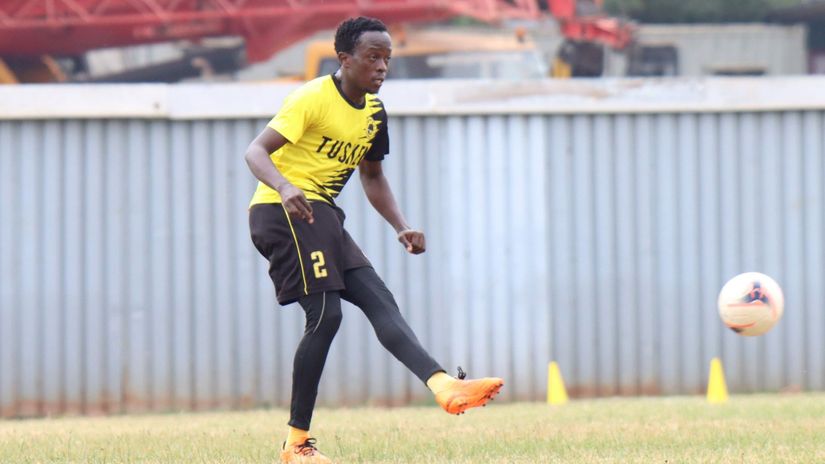
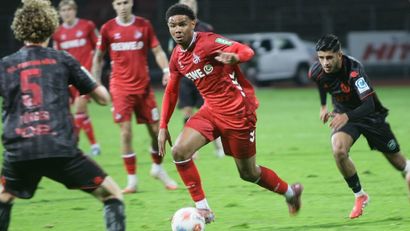
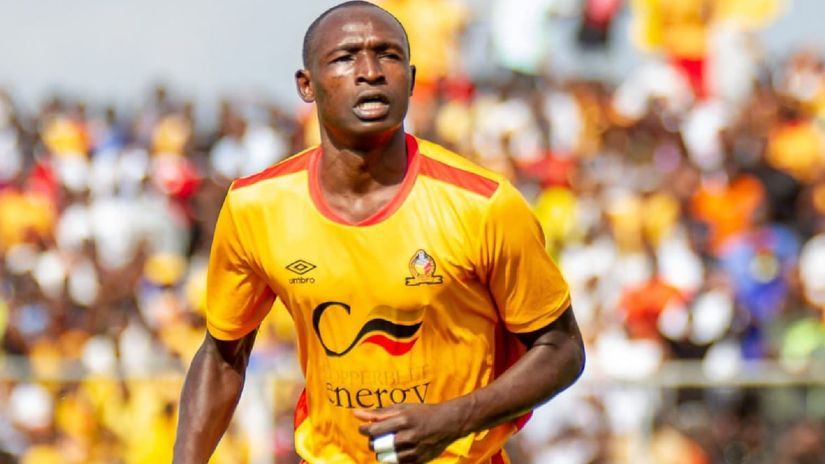
There was a time when his identity was simple and certain: a commanding centre-back, reading the game in seconds, holding defensive lines together at clubs like Tusker FC and Nzoia Sugar FC.
Football, he says, gave him everything—an identity, structure, and a lens through which to understand life. At the top level, growth is unavoidable. “You grow mentally and physically,” he reflects, “Whether you realise it at the time or not.”
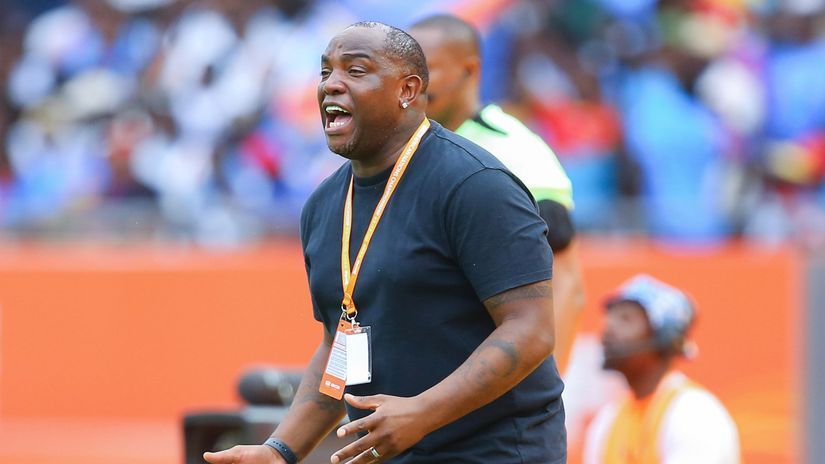
But growth is rarely comfortable.
The moment his career began to slip away did not arrive with spectacle. It came quietly, like most endings do—through a body that no longer responded the way it once had. He was in top form, at a top club, doing everything right. And then, suddenly, he was not.
“It was frustrating,” he admits. “You know your capabilities, but your body doesn’t respond the same way.”
There is a particular cruelty in that kind of injury—not the dramatic, one-off break, but the nagging, persistent kind that chips away at confidence as much as it does at muscle.
It follows you off the pitch, settles into your thoughts, and refuses to be ignored. For Ngesa, it became a weight he carried both physically and mentally.
And yet, even now, he resists the temptation to romanticise what might have been. “Yes, I feel like I had more to give,” he says, almost matter-of-factly. “But I don’t dwell on that.”
#kpltransfers Vincent Oyuyo Ngesa is a Brewer💪 . He will don the Brewers jersey for the next 3 years after sealing his move from @NzoiaFC Welcome to Tusker FC.#TFC #Brewers4life #oneteamonedream pic.twitter.com/GPYJya1uZX
— Tusker FC (@tusker_fc) August 5, 2019
Instead, he did something far more difficult: he reimagined himself.
The transition from player to something else is often described as a void. For many athletes, it is exactly that—a sudden absence of routine, purpose, and belonging.
But Ngesa approached it differently. During his recovery, he travelled to Kristiansand, Norway, immersing himself in the science behind the sport he once played instinctively. Strength and conditioning, coaching badges and a new framework for understanding performance.
Where others might have seen an ending, he began to see patterns.
“I started to understand the game from a coaching perspective,” he explains. “It gave me a new purpose.”
Purpose, in this case, came with clarity—and with a certain urgency. Because if his own career had been cut short by injury, he began to ask a simple question: how many others were heading down the same path, unknowingly?
The answers, he realised, were everywhere.
Athletes rushing recovery. Ignoring proper rehabilitation. Chasing shortcuts out of fear—fear of losing their place, their form, their future. It is a cycle driven as much by pressure as by misinformation, and one Ngesa knew intimately.
“The process is not only physical,” he says. “It’s mental too.”
That realisation became the foundation of something new.
Carbon Fitness was not built as a business first. It was built as a response.
Inspired by his own journey and conversations with close friends, Ngesa set out to create something he felt had been missing during his playing days: a structured, athlete-centred approach to fitness and rehabilitation. Not generic programs. Not one-size-fits-all solutions. Something tailored, deliberate, and grounded in real experience.
Great to see Vincent Ngesa back on the grass again after a lengthy injury lay-off.#KenyaMilele #Brewers4Life pic.twitter.com/07bLN36Riv
— Tusker FC (@tusker_fc) July 5, 2021
At Carbon Fitness, the work is specific. Strength and conditioning designed for sport, not aesthetics. Rehabilitation that respects timelines instead of rushing them. Mobility, movement correction, performance development—each element shaped around the individual athlete, not the system.
“My experience shapes everything I do,” he says. “I’ve been through it. I understand what players face.”
That understanding is what separates theory from trust. Because when an athlete walks into his facility—out of form, recovering, uncertain—they are not just following a program. They are being guided by someone who has lived the consequences of getting it wrong.

And sometimes, the results speak loudly.
He mentions players who have rediscovered confidence, who have rebuilt not just their bodies but their belief. Among them are Lewis Bandi and Jackson Dwang, whose performances have risen alongside a renewed focus on staying injury-free.
For Ngesa, those moments are not just successes. They are confirmations.
Even so, football itself never really left him.
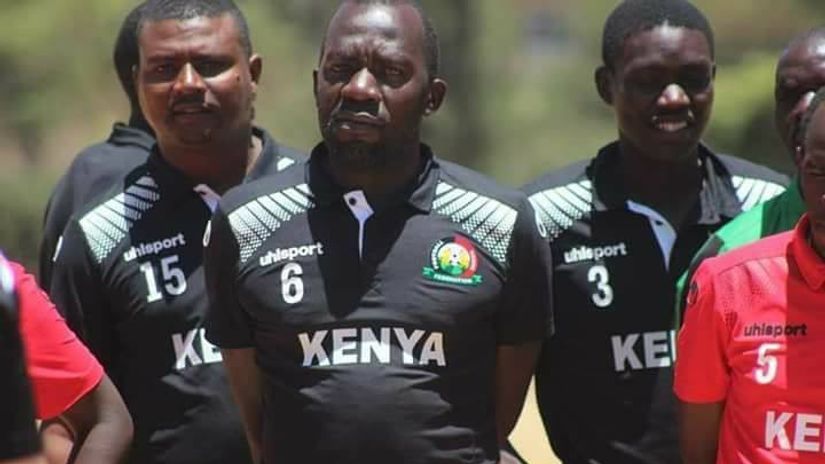
Today, you will still find him close to the touchline, part of the technical bench at BB Bread FC. It is a different vantage point, but one that suits the evolution he has undergone.
He no longer sees the game purely in terms of tactics or positioning. He sees the layers beneath it—the physical preparation, the load management, the small details that determine whether a player lasts a season or fades halfway through it.

His coaching philosophy reflects that dual perspective. Structure matters. Discipline matters. But so does adaptability. So does understanding how to keep players available, not just effective.
“We believe in being strong defensively, intelligent in positioning,” he explains. “But also managing players so they can perform consistently.”
That balance—between ambition and sustainability—has quietly shaped one of the most compelling underdog stories in recent Kenyan football history.
When the Mozzart Bet Cup began its latest edition, few would have predicted the journey BB Bread FC were about to embark on. Lower-league teams are often expected to participate, not disrupt.
But from the inside, the story felt different.
“It was discipline, commitment, and hard work,” Ngesa says. “The players approached every game with humility and determination.”
💪| Teddy Osok and Vincent Ngesa making good progress in their recovery and rehabilitation after both underwent knee surgery.#KenyaMilele #Brewers4Life pic.twitter.com/oLYiN1YJgE
— Tusker FC (@tusker_fc) June 8, 2022
That mindset carried them, past giants. Past history. Past expectation.
They stunned AFC Leopards. Then they did it again against Gor Mahia—two of the country’s most established sides, both undone by a team that simply refused to break structure.
Organisation. Detail. Discipline without the ball. Efficiency in transition. It was not magic—it was execution.
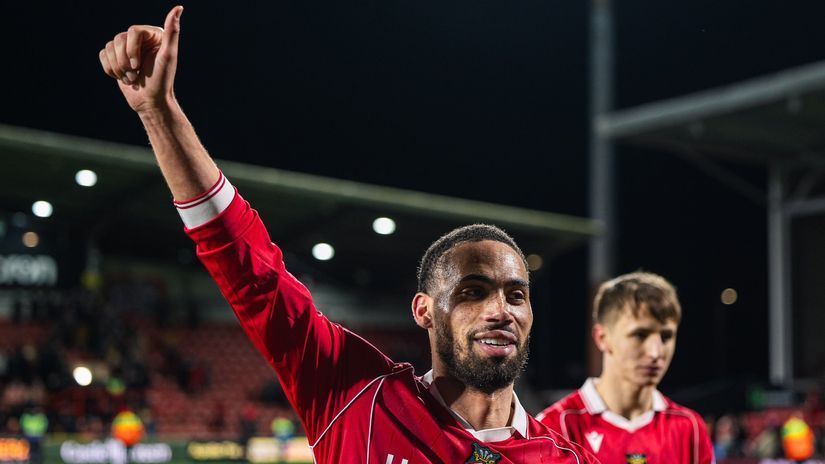
“They believed in the plan,” he says.
The run would eventually end against Kenya Police FC, decided by the finest of margins. A single goal. A narrow exit. But not, in any meaningful sense, a failure.
Because something had shifted.
For Ngesa, that cup run was about more than results. It was proof of a larger idea—that the gap between lower-league and top-tier football is not always about talent.
“There is quality,” he insists. “There is discipline. The difference is professionalism—consistency, structure, recovery.”
In other words, the very things he now spends his life building.
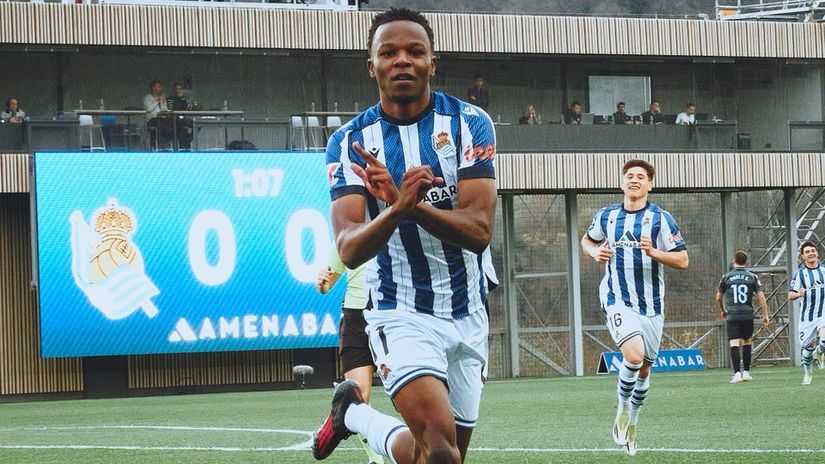
It is tempting to frame his story as one of reinvention. But that would miss something important. Vincent Ngesa did not abandon football when his playing days ended. He deepened his relationship with it. He moved from instinct to insight, from performance to preservation.
And in doing so, he found a different kind of impact.
Not in the tackles he makes, but in the careers he helps extend. Not in the matches he plays, but in the systems he builds. Not in what might have been, but in what now becomes possible for others.
There is a quiet symmetry in that.
The injury that once took something from him has, in its own way, become the reason others get to keep theirs.