


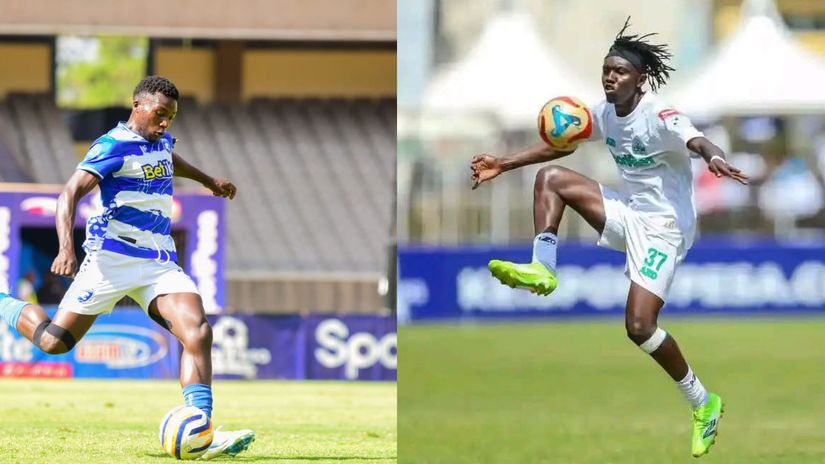
PLAYER COMPARISON: Two right backs shaping the FKFPL title race

.jpg)
.jpg)
.jpg)

Reading Time: 6min | Fri. 27.03.26. | 13:34
Physically, Ojok possesses excellent agility and acceleration. His quick directional changes allow him to mirror dribblers and prevent them from turning into dangerous areas
Modern football has transformed the right-back position from a purely defensive role into one of the most influential engines of tactical progression.
In contemporary systems, fullbacks are often responsible for stretching defensive blocks, sustaining attacking width, and protecting transitions through intelligent positioning.
Download our MozzartSport App For More News
Within the Gor Mahia and AFC Leopards systems, two players embody the modern “Flyer Archetype” fullback: Paul Ochuoga and Brian Ojok.
Both players thrive on vertical thrust and high-intensity running down the flank, yet their interpretations of the role differ significantly.
One acts as an attacking conduit and creative hub, while the other functions as a stabilizing defender who selectively contributes to attacking phases.
Their contrasting profiles offer a fascinating study of how individual traits influence team structures and tactical balance.
At a structural level, both Ochuoga and Ojok belong to the same broad type.
The Flyer fullback is defined by relentless forward movement, overlapping and underlapping runs, and the ability to stretch opposition defensive blocks in wide channels.
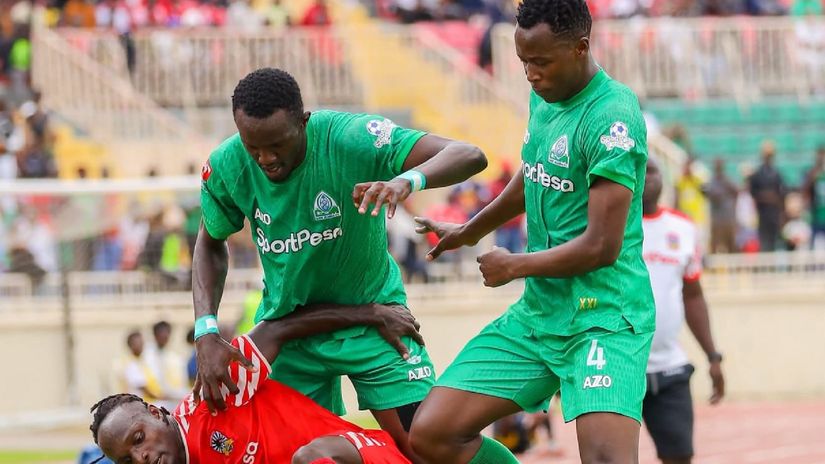
In tactical terms, these players provide width during positional attacks while also acting as accelerators in transitional phases.
Their sprint capacity and timing allow them to move from defensive zones to attacking corridors within seconds.
This constant shuttle between phases gives their teams a numerical advantage in wide areas and enables quick progression into the final third.
However, the similarities begin to diverge once their teams’ strategic frameworks are considered.
Paul Ochuoga: The Attacking Conductor
Within Gor Mahia’s tactical ecosystem, Paul Ochuoga operates almost like a hybrid between a fullback and a wide playmaker.
His role frequently places him in the last attacking zone, effectively functioning as the team’s primary wide creator.
.jpg)
Statistically, his influence is clear. Ochuoga is currently one of the most productive assisting defenders in the league, ranking joint second with five assists.
His crossing volume and chance creation underline his offensive importance, highlighted by his January Player of the Month performance where he recorded a goal, three assists, and 28 cross attempts.
Technically, Ochuoga is defined by an impressive range of distribution.
His crossing repertoire includes whipped deliveries, lofted balls over defensive lines, and cutbacks toward runners arriving in the box.
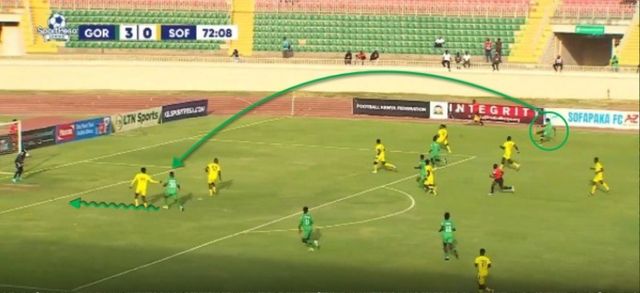
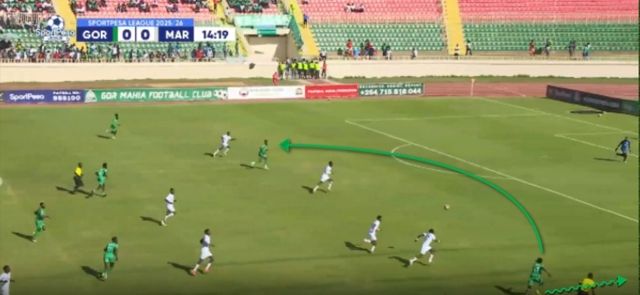
This passing versatility allows Gor Mahia to attack multiple vertical lanes simultaneously.
Equally important is his dribbling capacity. Ochuoga is comfortable carrying the ball forward and isolating defenders in one-versus-one situations.
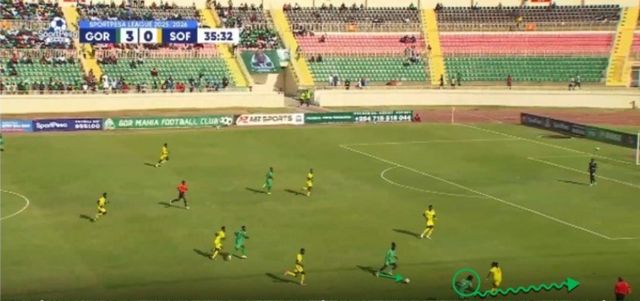
By creating separation through quick footwork and changes of direction, he can deliver crosses or slip passes into the half-space for underlapping/overlapping teammates.
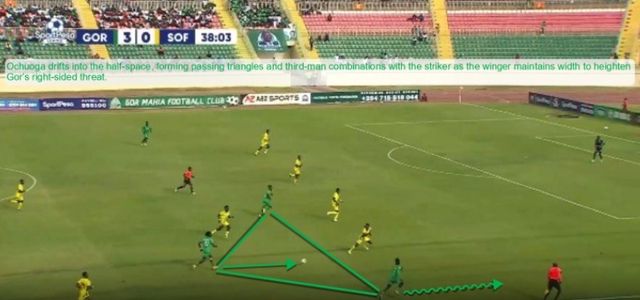
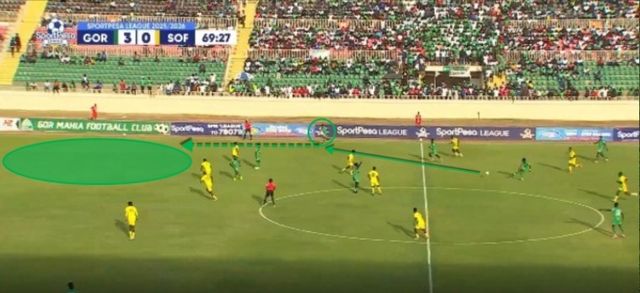
His spatial intelligence also shapes Gor Mahia’s attacking patterns. The team frequently employs an overload-to-isolate strategy, concentrating players on the left side before switching play quickly to the right flank where he operates in space.
Once isolated against a single defender, his pace and crossing quality become decisive attacking weapons.
Despite his offensive orientation, Ochuoga also displays strong defensive instincts.
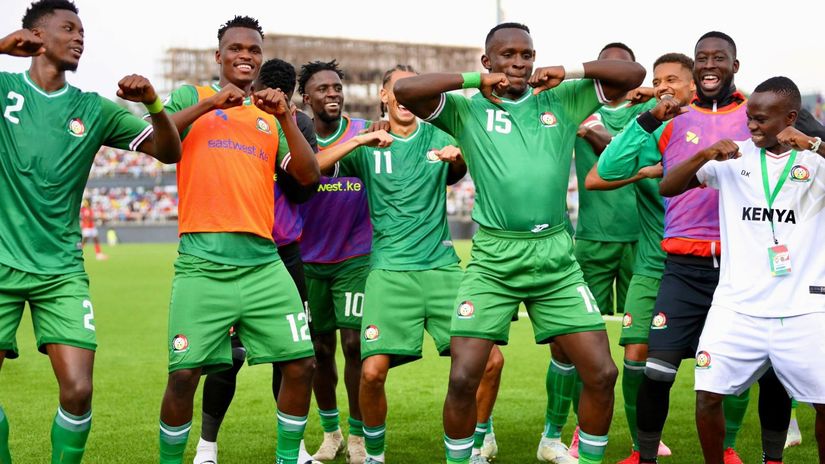
One notable aspect of his defensive play is his ability to judge aerial trajectories at the back post.
By tracking wingers and timing his jumps, he prevents opponents from converting crosses.
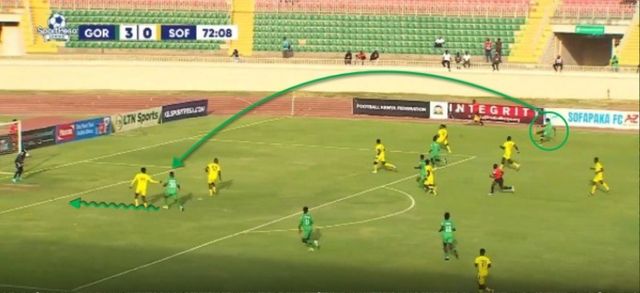
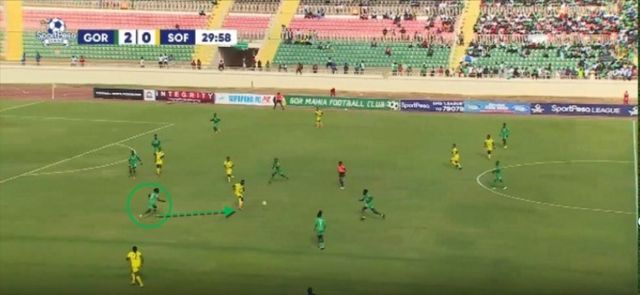
In one-versus-one defending, Ochuoga relies heavily on timing and body orientation rather than reckless tackling.
He positions his body to force opponents wide or backwards, effectively delaying attacks until defensive support arrives.
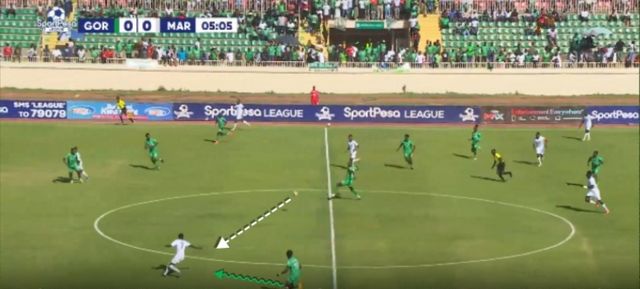
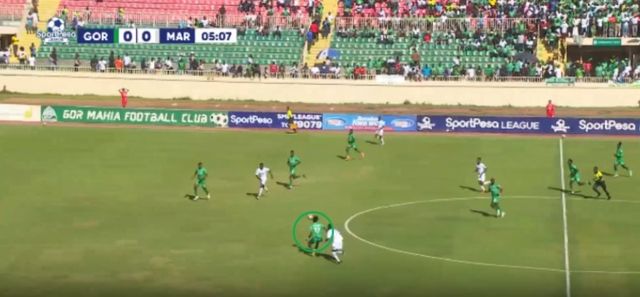
His anticipation and sprint recovery speed also enable him to intercept passes and track runners during transitions.
When Gor Mahia’s left back Bryton Onyona pushes forward aggressively, Ochuoga occasionally remains deeper as part of the team’s rest-defence structure, protecting the defensive line from counterattacks.
However, his attacking ambition sometimes exposes one limitation: ball retention under intense pressure.
When pressed aggressively in advanced areas, he can occasionally lose possession, creating transitional risks.
Brian Ojok: Defensive strategist
While Ochuoga embodies attacking creativity, Brian Ojok represents defensive control and tactical discipline within AFC Leopards’ structure.
Ojok’s primary responsibility is defensive security. Unlike Ochuoga, who frequently occupies advanced attacking zones, Ojok often remains slightly deeper to maintain structural balance while the team’s left back, Samuel Semo, advances
This asymmetry allows AFC Leopards to attack with width on the left while maintaining stability on the right.
Ojok effectively acts as a transitional safeguard, protecting spaces behind attacking teammates and preventing counterattacks from developing.
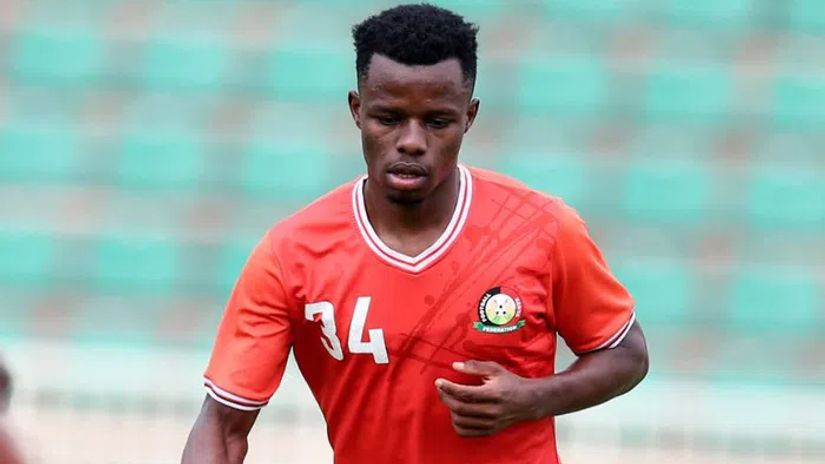
Technically, Ojok is an extremely composed defender. His tackling ability, aerial timing, and interception awareness make him highly effective in neutralizing opposition wingers.
Notably in their first leg match against Bandari FC, he recorded 27 defensive actions including tackles, interceptions, and recoveries.
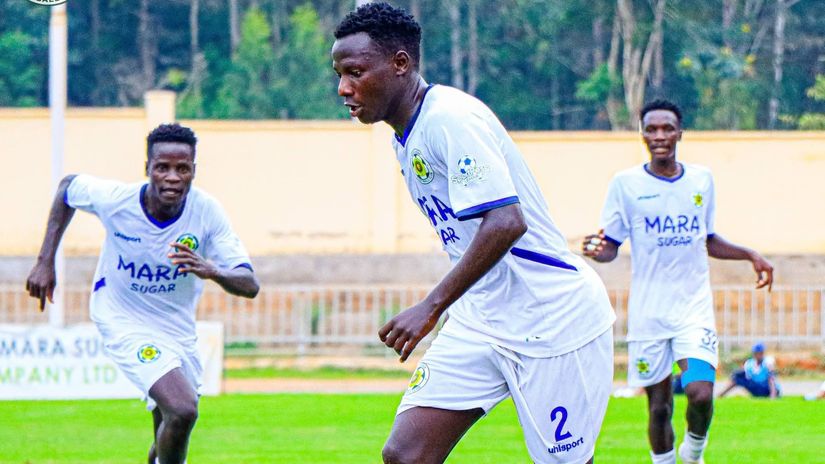
Physically, Ojok possesses excellent agility and acceleration. His quick directional changes allow him to mirror dribblers and prevent them from turning into dangerous areas.
When engaging opponents, he positions his body compactly, shielding the ball and forcing attackers toward the touchline.
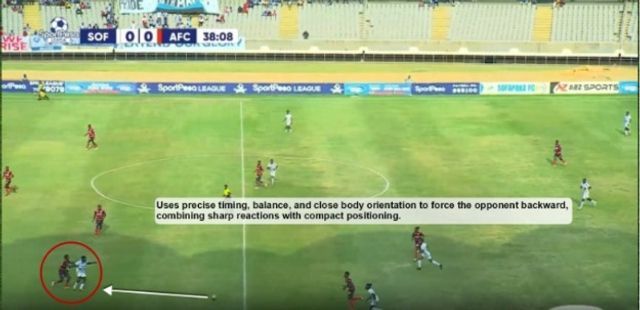
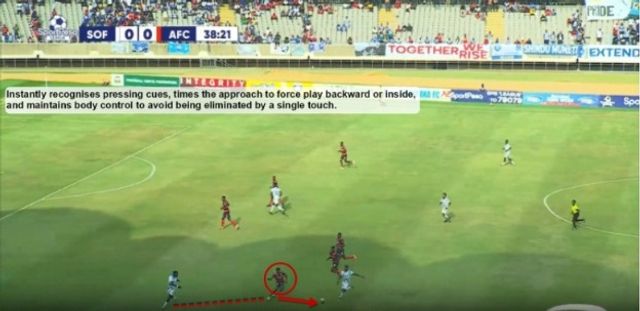
Although his role prioritizes defence, Ojok still contributes meaningfully to attacking sequences.
His ball-carrying ability allows him to advance through the right half-space, linking play between the defence and midfield.
He frequently forms passing triangles with the right winger and central midfielder, enabling patient build-up through short combinations and third-man runs.
This structure helps AFC Leopards progress methodically into the attacking third.
Ojok also provides variation through both overlapping and underlapping runs.
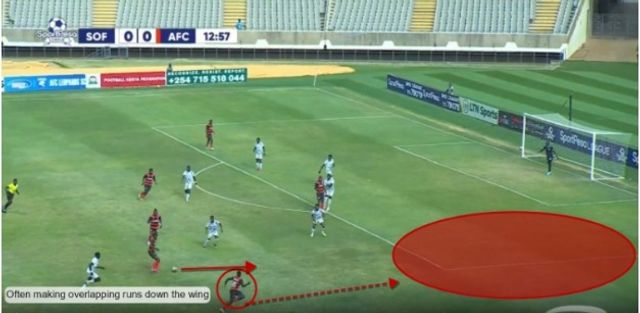
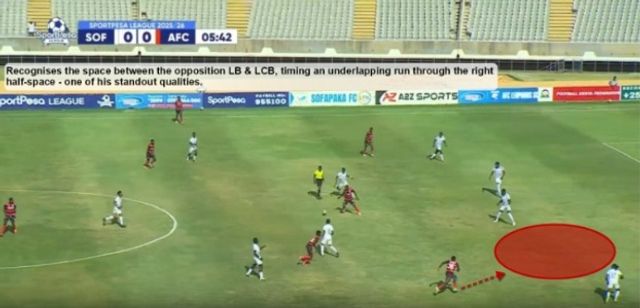
When the opposition defence stretches horizontally, he bursts through central channels to receive through balls or deliver cutbacks into the penalty area.
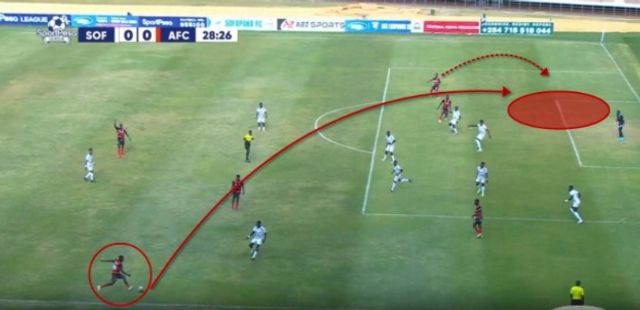
His crossing ability and long-range passing further expand the team’s attacking options.
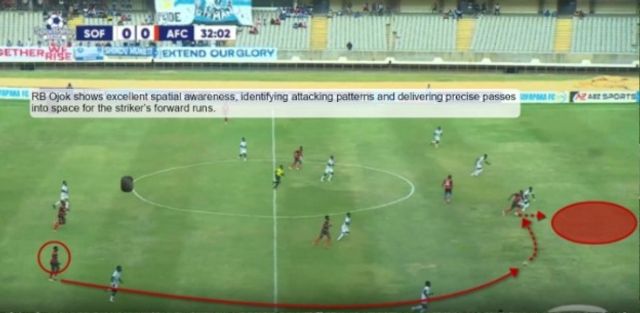
He is capable of switching play diagonally to the opposite wing or delivering accurate crosses after advancing into wide areas.
Importantly, his positional awareness ensures that he quickly returns to his defensive role after attacking movements.
This balance between forward support and defensive coverage is central to his tactical value.
Beyond technical and physical traits, both players demonstrate strong psychological attributes that influence their playing style.
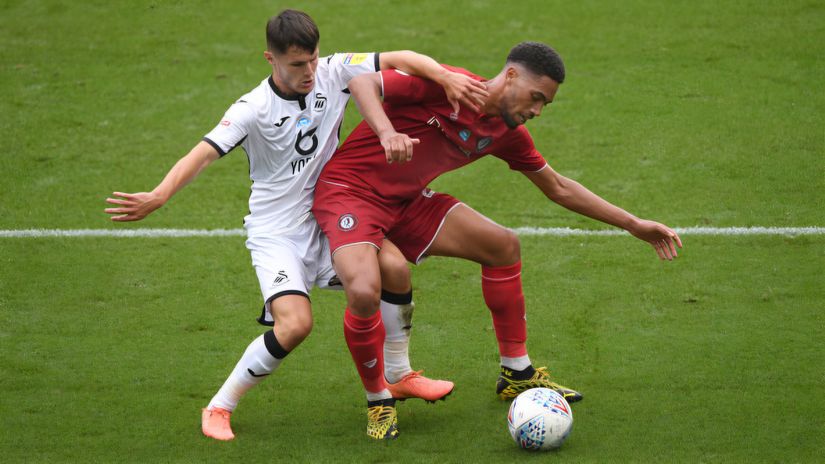
Ochuoga’s mentality is shaped by attacking ambition. His confidence in delivering crosses and taking on defenders reflects a proactive mindset. He thrives in situations where he can impose himself offensively and create decisive moments for his team.
Ojok, by contrast, exhibits a more measured and analytical approach.
His game revolves around anticipation, positional discipline, and calculated engagement.
Rather than seeking constant attacking involvement, he prioritizes maintaining the team’s defensive integrity.
These psychological differences reflect their teams’ tactical philosophies.
Gor Mahia encourage adventurous fullback play and wide overloads, while AFC Leopards emphasize structural stability and controlled progression.
The impact of these two players extends beyond individual performances; it shapes how their teams function collectively.
Ochuoga’s aggressive forward positioning allows Gor Mahia to maintain constant width and attacking pressure.
His presence in advanced areas forces opposing wingers to track back, reducing their attacking threat and enabling Gor Mahia to dominate territorial control.
Ojok’s disciplined positioning, meanwhile, provides AFC Leopards with defensive balance.
By staying deeper during attacks, he ensures the team maintains numerical superiority during defensive transitions.
In essence, Ochuoga expands attacking possibilities, while Ojok stabilizes the team’s structural framework.
Both players embody the Flyer Archetype but express it through contrasting interpretations of the right-back role.
Paul Ochuoga is the attacking catalyst - an aggressive wide creator whose overlapping runs and crossing ability make him a primary offensive weapon for Gor Mahia.
Brian Ojok, on the other hand, is the defensive strategist - an intelligent, disciplined fullback who anchors AFC Leopards’ defensive structure while still contributing selectively to attacking phases.
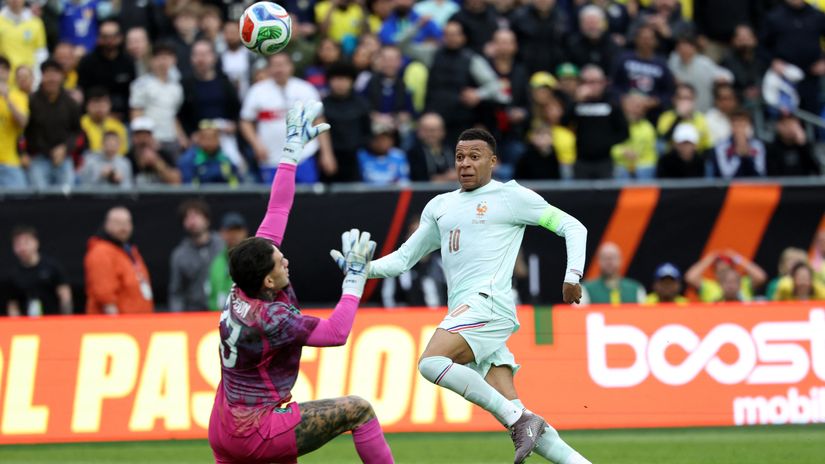
In terms of tactical fit, each player perfectly suits his team’s system. Gor Mahia benefit from Ochuoga’s offensive dynamism, while AFC Leopards rely on Ojok’s defensive reliability and transitional awareness.
Ultimately, their contrasting styles highlight the evolving complexity of the fullback position: one built on explosive creativity, the other on calculated control.
Both, in their own ways, embody the modern game’s demand for intelligent, multidimensional defenders.