


TACTICAL ANALYSIS: How Cape Verde came close to upsetting Argentina


.jpg)



_(1).jpg)

Reading Time: 6min | Mon. 06.07.26. | 15:36
Argentina’s superior individual quality and relentless pressure eventually proved decisive, yet this was far from a comfortable victory
Argentina survived one of the biggest scares of their FIFA World Cup title defence following a dramatic 3-2 extra-time victory over Cape Verde in Miami, advancing to the last 16 after an enthralling tactical battle.
Download our Mozzart Sport app for more news
Lionel Messi marked his historic 30th World Cup appearance with another record-breaking goal, while Lisandro Martínez and an unfortunate Diney Borges own goal eventually secured progression for Lionel Scaloni’s side.
However, beyond the result, the contest exposed both Argentina’s strengths in settled possession and several vulnerabilities without the ball.
Cape Verde, competing in the knockout stages of their first-ever World Cup, produced an outstanding tactical display that repeatedly unsettled the reigning champions through their defensive organisation and composed possession.
Argentina were listed in a nominal 4-4-2. Emiliano Martínez started in goal behind Nahuel Molina, Cristian Romero, Lisandro Martínez and Facundo Medina.
Rodrigo De Paul and Thiago Almada occupied the wider midfield positions, while Enzo Fernández partnered Alexis Mac Allister centrally.
Lionel Messi operated as a free operator behind Lautaro Martínez.
Cape Verde maintained their familiar 4-1-4-1 with Vozinha in goal, Steven Moreira, Roberto Lopes, Diney Borges and Sidny Cabral across the back, Kevin Lenini shielding the defence, Deroy Duarte and Laros Duarte in midfield, Ryan Mendes and Jovane Cabral providing width, and Nuno da Costa leading the line.
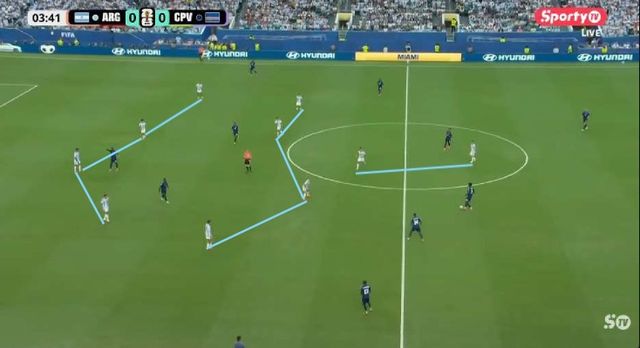
As always under Scaloni, Argentina’s positional structure looked very different once possession was established. Their build-up regularly resembled a 3-1-6/3-2-5.
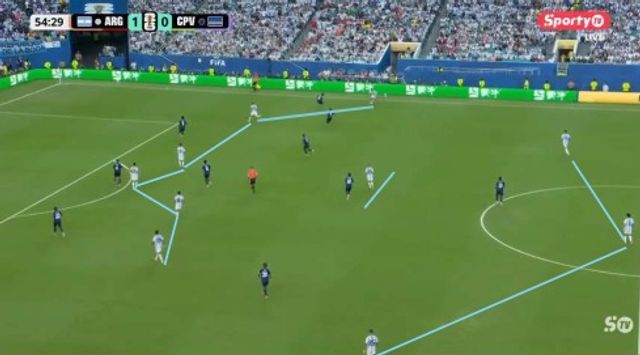
Mac Allister frequently positioned himself ahead of the back three as the primary circulation point, while either Enzo Fernández or Medina remained deeper on the left, depending on the phase.
Molina consistently pushed high on the right to provide width, while Medina advanced more selectively from left-back.
This aggressive occupation of the final third saw Argentina commit numbers forward, often leaving only both centre-backs alongside Mac Allister behind the ball as part of their expansive rest-defence.
Cape Verde defended with remarkable flexibility throughout the match. Higher up, they initially pressed in a 4-2-3-1 before retreating into compact 4-5-1 and 4-4-2 mid-to-low blocks when Argentina established sustained possession.
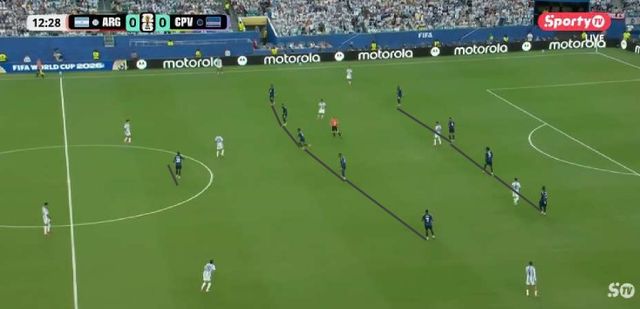
In even deeper phases, Ryan Mendes regularly tracked Medina all the way back, temporarily transforming the defensive shape into a back five. Rather than engaging Argentina aggressively from goal kicks,
Bubista’s side waited for specific pressing triggers, most notably passes into the full-backs, wide midfielders or dropping pivots. This selective pressing prevented Argentina from exploiting central spaces too easily while maintaining impressive compactness around their own penalty area.

Cape Verde’s defensive organisation became the defining tactical problem Argentina had to solve. Their 4-1-4-1 mid-block remained exceptionally narrow, protecting central access and forcing Argentina towards the flanks.
Although the wide spaces were theoretically available, Argentina’s full-backs were not consistently effective enough in the final third to fully capitalise.
Instead, Scaloni’s side sought to overload central areas through fluid rotations involving Messi, De Paul, Enzo Fernández and Mac Allister, constantly attempting to manipulate Cape Verde’s disciplined midfield line.
Much of Argentina’s best attacking play emerged down the right side. Messi repeatedly drifted wider to combine with De Paul and the advanced Molina, creating positional dilemmas for Cape Verde’s left side.
Whenever Messi moved towards the touchline, he occupied left-back Sidny Cabral, while Molina’s overlapping runs simultaneously forced difficult decisions for Cape Verde’s left winger.
If the winger followed De Paul inside, Molina became free on the outside. If he remained wide, De Paul could receive between the lines.
.jpg)
Argentina’s fluid positional play ensured these relationships continually changed depending on the ball’s location, creating different overloads despite Cape Verde’s excellent defensive discipline.
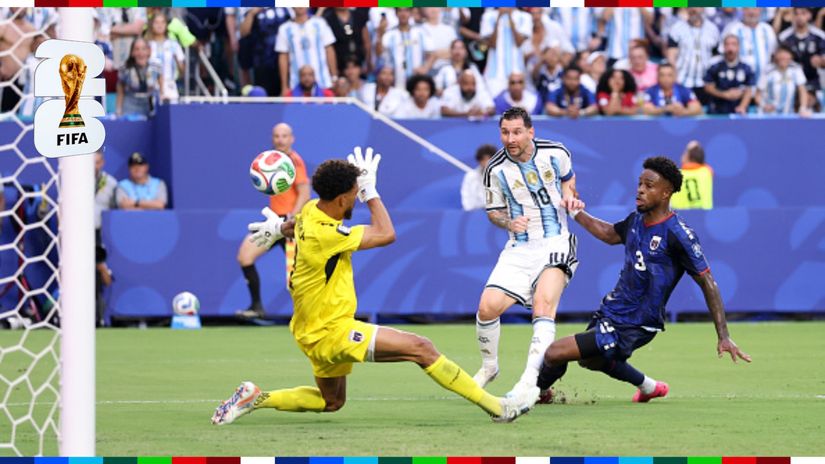
The opening goal perfectly illustrated how Argentina sought to exploit Cape Verde’s relatively high defensive line. Having noticed the lack of penetrating runs during the opening exchanges,

Argentina’s staff appeared to encourage greater vertical movement after the cooling break. Shortly afterwards, Lisandro Martínez demonstrated his exceptional passing range by delivering an outstanding long ball over the defence for Messi, who timed his run brilliantly off Borges’ shoulder before producing a sublime finish.
The goal underlined Argentina’s desire to combine deep progression with well-timed runs beyond the last line rather than relying exclusively on patient possession.
Despite taking the lead, Argentina never established complete control. Cape Verde remained composed in possession, often building in a 4-3-3 before Lenini dropped into defence to create an occasional 3-1-6 structure higher up the pitch when the right-back Moreira pushed high.
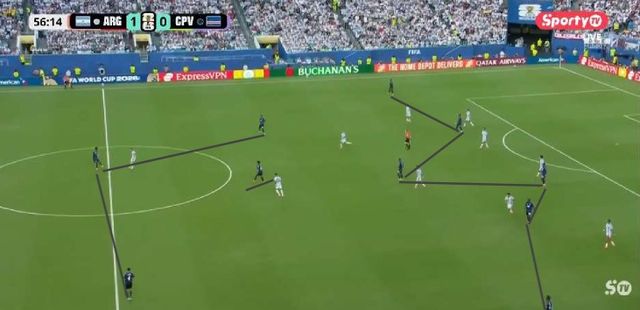
Their willingness to retain possession rather than immediately forcing transitions proved particularly important. Instead of attacking recklessly after regaining the ball, they attempted to bypass Argentina’s first pressing line before circulating possession, gradually pinning Scaloni’s side deeper.
This approach exposed one of Argentina’s defensive weaknesses.
Out of possession, Argentina defended in a compact 4-4-2 mid-block designed to close central pockets and force Cape Verde towards wide areas.
Their first line attempted to block interior passing lanes while the midfield stayed narrow to deny progression through the centre. However, when Cape Verde successfully bypassed Argentina’s counter-press and sustained attacks, the world champions looked significantly less comfortable.
Argentina frequently defended with eight players inside their own defensive third, many possessing naturally offensive profiles, leaving considerable space ahead of the midfield line.
Cape Verde’s equaliser was therefore far from unexpected, with Deroy Duarte exploiting these spaces before finishing clinically after Argentina failed to regain control.
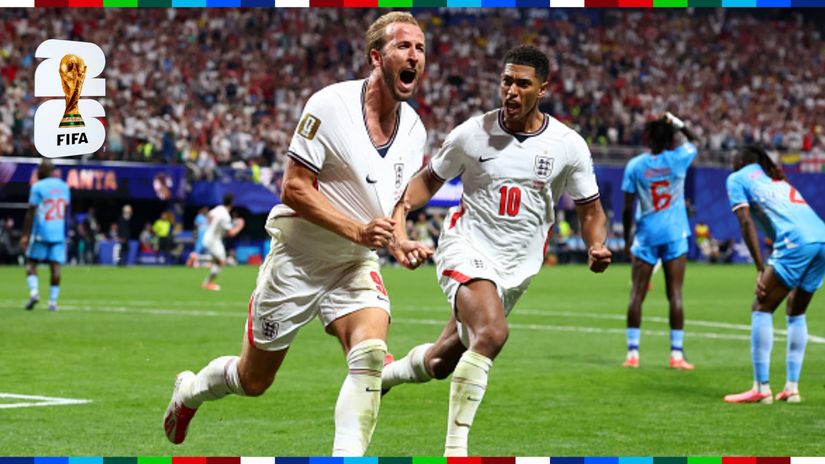
Argentina’s biggest defensive weapon remained their counter-press. Their aggressive attacking structure naturally positioned numerous players close to the ball after losing possession, allowing immediate pressure on Cape Verde’s first pass.
Since Cape Verde committed so many players behind the ball defensively, they often lacked numbers to launch quick transitions once possession was recovered.
Argentina’s expansive 2-1/ 3-1 rest-defence looked vulnerable on paper, but Cape Verde’s deep positioning reduced opportunities to exploit the spaces behind.
Whenever Argentina sustained territorial pressure, their counter-press repeatedly prevented dangerous counter-attacks and allowed them to recycle possession quickly.
Nevertheless, Cape Verde increasingly demonstrated they could trouble Argentina whenever they retained possession rather than rushing forward.
Their only limitation was occasional hesitancy in the final third.
Too often, safer passes replaced riskier forward balls that could have exploited Argentina’s defensive spacing. The best example arrived before half-time when a quicker pass into the right channel created their clearest opportunity.
Had Cape Verde consistently shown that level of vertical ambition, Argentina’s defensive problems may have become even greater.
Extra time followed a similar tactical pattern. Argentina continued relying on settled possession and set-piece pressure, with Lisandro Martínez scoring after reacting quickest from Messi’s corner.

Yet Cape Verde again demonstrated their resilience through longer spells of composed possession before Sidny Cabral produced a magnificent equaliser.
Their refusal to abandon their tactical principles continually stretched Argentina’s defensive organisation, illustrating that structured possession, rather than pure transition football, represented the most effective method of challenging Scaloni’s side.
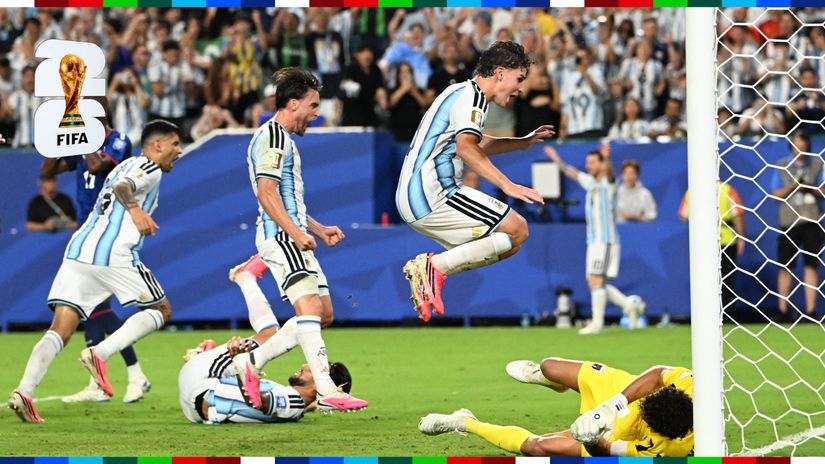
Ultimately, another Messi delivery from a corner settled the contest. Romero escaped his marker before Borges inadvertently diverted the header into his own net, ending one of the World Cup’s most captivating tactical battles.
Although Argentina progressed, the performance highlighted areas requiring improvement, particularly their vulnerability when forced into prolonged defensive phases and their occasional lack of attacking runners beyond Messi.
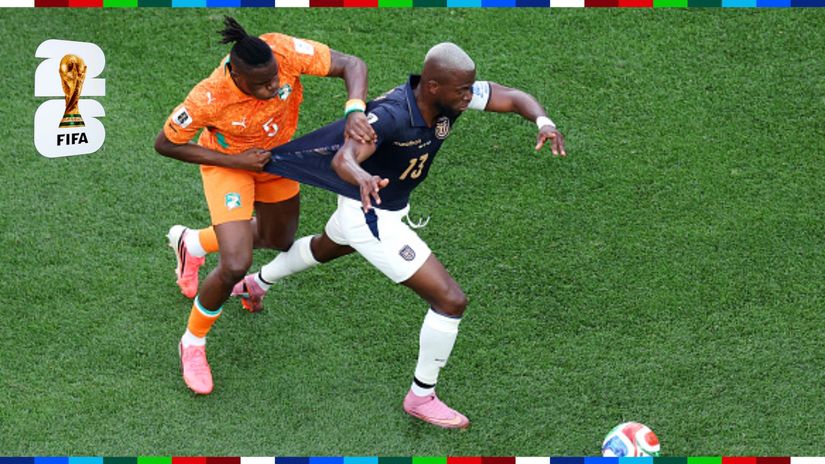
For Cape Verde, elimination brought heartbreak but also enormous credit.
Their adaptable defensive structures, intelligent pressing triggers and composed possession repeatedly disrupted one of the tournament favourites.
Argentina’s superior individual quality and relentless pressure eventually proved decisive, yet this was far from a comfortable victory.
Instead, it was a reminder that even the reigning world champions can be stretched when opponents combine tactical discipline with bravery on the ball, making this one of the standout tactical contests of the 2026 FIFA World Cup so far.