


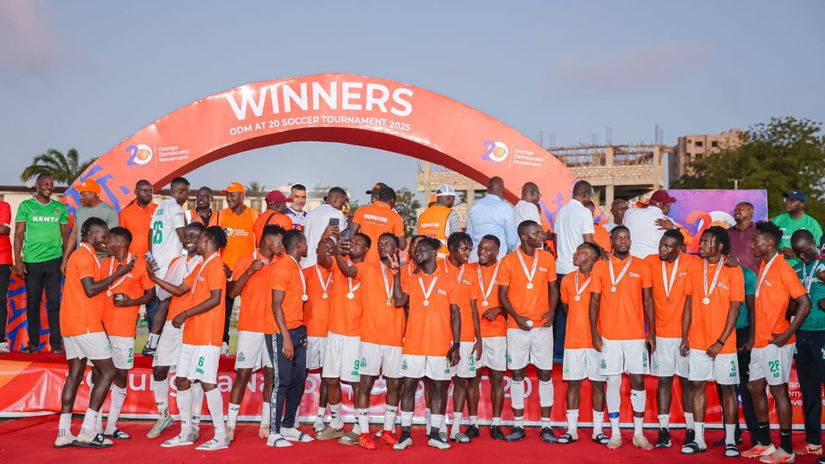
TACTICAL ANALYSIS: How Gor Mahia outwitted Bandari to lift ODM@20 trophy

.jpg)

Reading Time: 6min | Sat. 11.10.25. | 12:16
After a finely balanced contest in the first half, K'Ogalo made impactful changes at the break to disrupt Bandari's resilience
The clash between Bandari and Gor Mahia offered a compelling tactical contest, albeit one short on clinical execution in the final third with the few chances witnessed.
Follow our WhatsApp channel for more news
Gor Mahia emerged victorious with a narrow 1-0 win, courtesy of a sublime second-half free-kick from substitute Ebenezer Adukwaw.
While the match lacked the end-to-end flair often expected in top-tier football, it was an intriguing chess match full of subtle shifts in tactical dynamics.
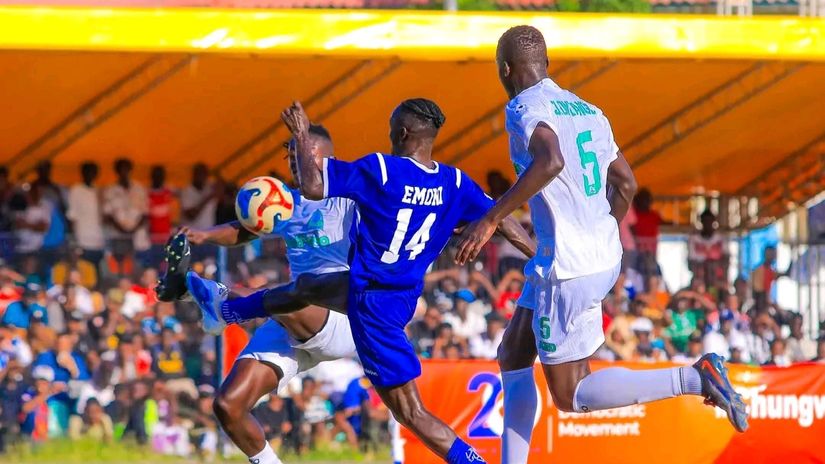
Bandari started in a classic 4-4-2 formation with Levis Opiyo in goal, and a back four comprising of Joseph Otieno as the left-back, Shariff Amubwombe and Andrew Juma as the central defensive duo, and Erickson Mulu on the right.
Interestingly, Otieno played a more reserved role, holding back to provide defensive cover, while Mulu pushed higher, contributing width and stretching Gor’s left flank.
The centre-back pairing of Amubwombe and Juma often split wide during build-up phases, inviting goalkeeper Opiyo to participate in the first phase of play, effectively forming a back three to help circulate possession and draw out Gor Mahia's press. However, Bandari rarely played through the thirds.
After baiting Gor’s press with lateral passes, they often went long, targeting the physical presence of their strikers up front.
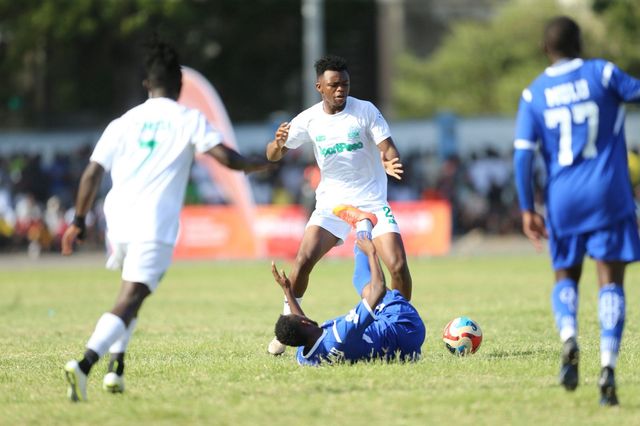
These long diagonals were typically aimed towards Alfred Emoni, with the intention of winning aerial duels and relying on the wingers - Darius Msagha and Hassan Abdalla - to pick up second balls.
In midfield, Geoffrey Ojunga and Said Tsuma played pivotal roles.
The pair struck a fine balance between shielding the backline and progressing the ball forward.
Tsuma often dropped deeper to support the defence during transitions, while Ojunga provided more forward thrust.
William Wadri, although nominally a striker, frequently dropped into the spaces between Gor Mahia’s midfield and defence, linking play and acting as a pseudo-attacking midfielder during Bandari’s build-ups.
Gor Mahia, on the other hand, approached the match with a 4-1-4-1 structure.
Kevin Omondi started in goal, with Samuel Kapen at right-back and Levin Odhiambo on the left.
Odhiambo played a key attacking role, pushing high up the pitch to support the front line during offensive sequences.
The central defensive duo of Joshua Onyango and Ernest Wendo provided a solid, if unspectacular, backbone.
Lawrence Juma operated as the lone pivot, anchoring midfield and serving as the main fulcrum in transitions.
 ©Gor Mahia FC/X
Ahead of him were Fidel Origa and Mark Shaban, operating as interior midfielders.
On the wings, Sharif Musa (right) and George Amonoo (left) were instrumental in stretching Bandari’s backline.
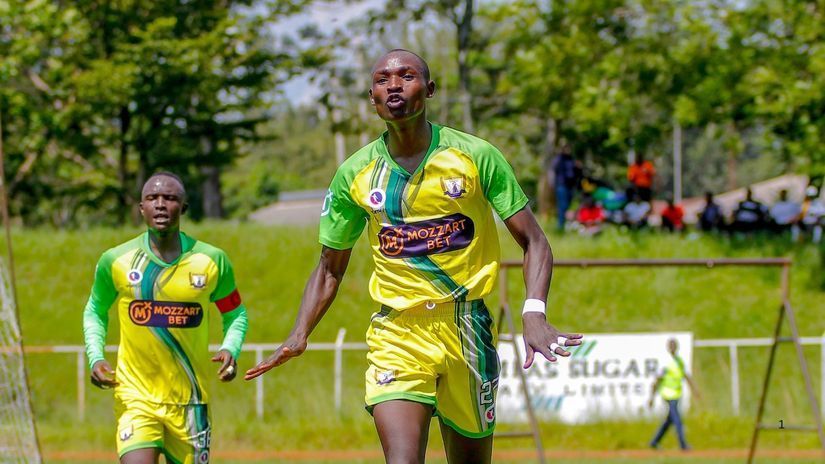
Christopher Ochieng played as the lone striker, often isolated but relied upon to chase down long balls and disrupt the Bandari defence with his pace and strength.
From the outset, Gor Mahia's attacking strategy was clear: overload one wing, drag Bandari’s compact block across, then quickly switch play to the opposite flank to exploit space.
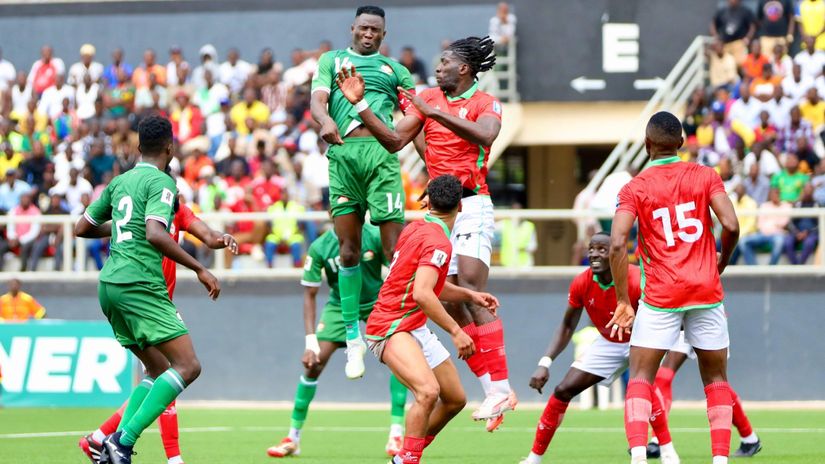
Odhiambo and Musa were especially crucial in this, frequently providing width and delivering early crosses into the box. Gor leaned heavily on wing play and direct transitions, especially after regaining possession in Bandari’s attacking phases or set-piece situations.
Kapen’s high positioning early in the game left gaps that Bandari looked to exploit, particularly through Wadri and Abdalla drifting into that vacated right-back area.
However, Gor’s defensive transitions were relatively well-coordinated, with Juma always dropping back to cover when the fullbacks ventured forward.
The first 45 minutes were marked by discipline from both sides, but also a lack of real penetration in the final third.
Bandari’s long passes rarely led to sustained attacking spells, while Gor's preference for bypassing the midfield with direct balls saw them miss opportunities to build controlled possession.
🔵 | ZEGEDEE
— Bandari Football Club (@BandariOfficial) October 10, 2025
Ndungu zetu Gor Mahia FC sai wameamua mechi ni Aviator tu, Kila pasi ni JKIA, Kila crosi ikija, Kenya Airways.
Ata pass tatu basi jamaa?
Duh! Balaa gani hizi 😅
20 | Bandari FC 0 V 0 Gor Mahia #BandariNiYetu #SettingTheStandards
Gor Mahia’s best moment of the half came around the 20th minute when Ochieng struck the crossbar - a moment born from a quick transition and a slightly disjointed Bandari backline. Other than that, both teams relied on set pieces, long throws (notably from Kapen), and tactical fouls around the penalty area to generate chances.
Bandari remained solid in their 4-4-2 defensive shape out of possession and shifted to a 4-2-4 in attack.
Gor Mahia maintained their 4-1-4-1 out of possession and compacted the midfield during transitions. However, there was a noticeable disconnect in Gor’s shape at times, especially between their striker and the midfielders. This created isolation for Ochieng and made it difficult to hold up play or connect centrally.
The half ended goalless, with both teams displaying structure but lacking sharpness and ingenuity in the attacking third. Gor had the slight edge due to their fluid transitions and wing play, but neither goalkeeper was truly tested.
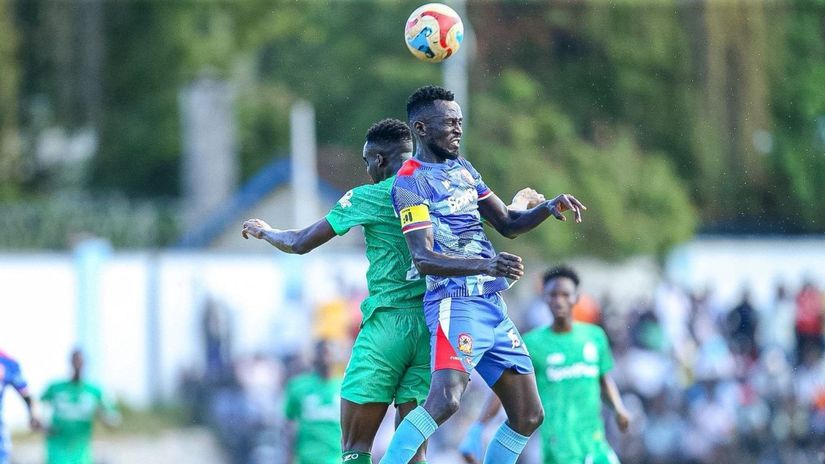
The second half saw both teams make early changes that shifted the tactical dynamics.
Bandari replaced Mulu with Rajab Omar, likely looking for more stability on the flanks, while Gor Mahia made more impactful changes, bringing on Enock Morrison, Adukwaw, and Patrice Essombe for Shaban, Amonoo, and Ochieng.
These changes added energy, directness, and tactical variety, particularly with Morrison providing vertical thrust from midfield and Adukwaw injecting fresh impetus on the left wing and forward.
Gor’s rest defence transitioned to a two-man structure, allowing more players to push higher and create overloads. Their defensive line also pushed up, compressing space and making it easier to win second balls and counter-press.
A key moment came in the 65th minute when Adukwaw was fouled few metres outside the box by Juma. He stepped up to take the free kick and capitalized on a poor positional read from goalkeeper Opiyo to score what would become the winning goal. The goal was a testament to individual quality rather than team superiority but shifted the momentum firmly in Gor’s favor.
🟢 | THE GOAL 🔥🔥
— GOR MAHIA FC (@OfficialGMFC) October 11, 2025
The goal that made the difference in ODM@20 final... Ebenezer Adu-kwaw's free-kick against Bandari in Mombasa. 🚀#Sirkal | #SportPesaNaGor pic.twitter.com/W9MwaFIPDb
Bandari reacted by bringing on Izzadin Mohammed and Mohamed Barisa to bolster their midfield and wing options, replacing Abdalla and Tsuma.
They switched to a more aggressive posture, leaving a two- or three-man rest defence, and committing more bodies forward. Gor, in turn, dropped into a deeper block, sacrificing attacking numbers to protect their lead.
As fatigue set in, both teams struggled to maintain tempo. Bandari pushed forward relentlessly, now enjoying the lion’s share of possession and territory.
However, their efforts lacked precision, and Gor Mahia were content to kill the game’s rhythm through controlled defending and tactical fouling when necessary.
Despite Bandari’s late push, Gor's compact shape and tactical fouls managed to disrupt the flow enough to maintain their narrow lead.