


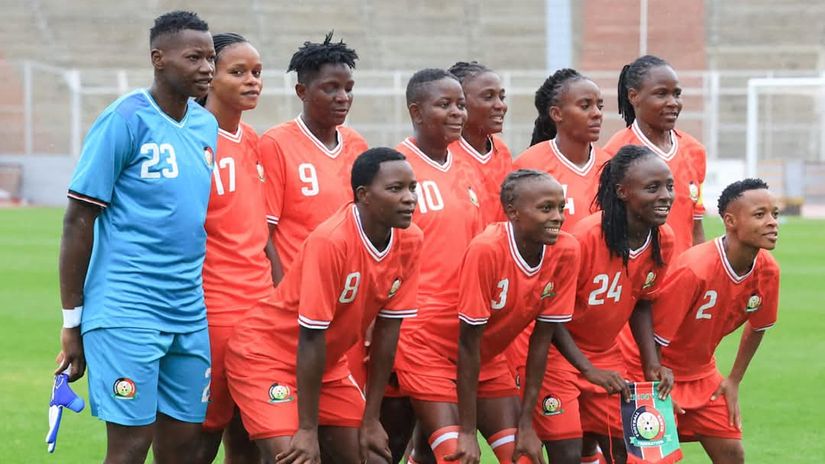
TACTICAL ANALYSIS: How Harambee Starlets' key switch secured historic victory over Tunisia




Reading Time: 5min | Thu. 27.02.25. | 17:00
Despite some vocal criticism from fans on social media regarding coach Beldine Odemba's team selection, the tactical adjustments proved crucial for the win
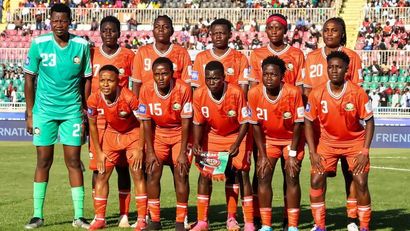
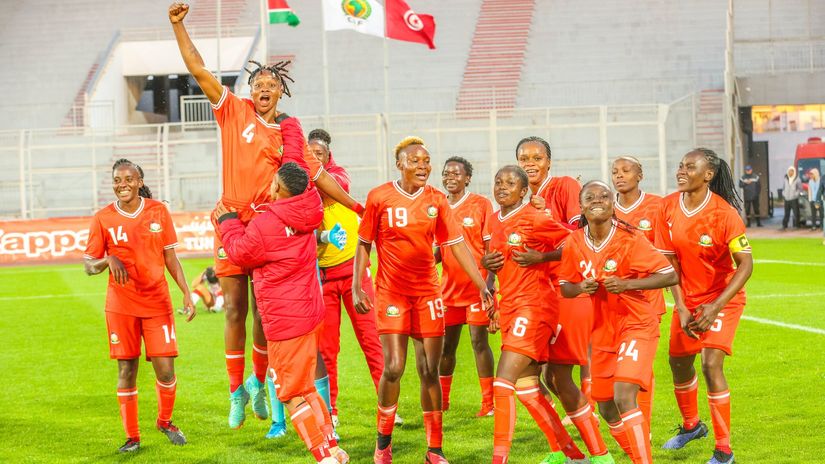
Harambee Starlets defeated Tunisia 1-0 on Wednesday night, advancing to the second round of the 2026 WAFCON Qualifiers.
Having drawn 0-0 in Nairobi, the Starlets had to battle through a hostile atmosphere in Tunisia, a country where Kenyan sides have traditionally struggled.
Despite some vocal criticism from fans on social media regarding coach Beldine Odemba's team selection, the tactical adjustments proved crucial for the win.
Tactical Setup
Odemba made just two changes to the starting lineup from the first leg, sticking with the 4-2-3-1 formation. Lillian Awuor kept her place in goal, and Jane Mumo, Enez Mango, Dorcas Shikobe, and Ruth Ingosi formed the defence.
Lavender Akinyi and Corazone Aquino played as the double pivot in midfield, with Tereza Engesha linking up with Jentrix Shikangwa, who led the attack. Mwanahalima Adam and Elizabeth Wambui were positioned as wingers.
We are through to next round of the WAFCON qualifiers! 👏#HarambeeStarlets pic.twitter.com/RLG3Ygmvyw
— Harambee Starlets (@StarletsKE) February 26, 2025
Tunisia’s Setup
Tunisia opted for a 3-4-3 formation, with Zohra Jelassi in goal and a back three consisting of Samia Ouni, Chaima Alabbassi, and Rania Aouina. Guermazi Sana and Myriam Bayahia operated as wingbacks, while Ella Kabaachi and Chirine Lamti controlled the midfield.
The front three, featuring Kabaachi, Salma Zemzem, and Sabrine Elouzi, posed a constant threat.
Odemba’s Tactical Change
Odemba switched from a more aggressive style to a more conservative approach for this decisive match. Kenya ceded possession to Tunisia, opting to hit on the counterattack, using the pace of Wambui, Mwanahalima’s 1v1 skills, Shikangwa’s goal-scoring ability, and Engesha’s physicality and long-range shooting.

This change was evident in Kenya’s passing statistics. In the first leg, Kenya attempted 329 passes, completing 305 (93%), while in the second leg, they only attempted 260 passes, completing 186 (72%). This drop reflected a more direct style and a higher degree of sloppiness in possession.
Exploiting Jelassi’s Weakness
One key adjustment was targeting Tunisia’s goalkeeper, Jelassi, who struggled with long-range shots in the first leg. In the second leg, Kenya attempted 7 shots from outside the box with a 29% accuracy, a marked improvement over their 14 shots in the first leg with just 14% accuracy.
Engesha, known for her long-range ability, was included in the starting lineup, and it was her powerful shot in the 9th minute that led to the only goal of the match.
Build-up Play and Possession
While Kenya began their build-up play from the back, utilizing Shikobe and Ingosi to split wide and form a 3v2 advantage, they opted for long balls after the initial phase.
This shift led to frequent turnovers, allowing Tunisia to exploit spaces left open by the advancing fullbacks. Ingosi, who had the most passes in the match (46), exemplified Kenya's deeper involvement in the defensive third, with both Shikobe and Aquino also contributing significantly.
🛫 | On our way back home 🇰🇪#HarambeeStarlets #WAFCONQualifiers pic.twitter.com/TaVAeQfk9H
— Harambee Starlets (@StarletsKE) February 27, 2025
Defensive Organization
Defensively, Kenya formed a solid block of 9 players behind the ball, with Shikangwa staying forward as the outlet for transitions.
Engesha, Wambui, and Mwanahalima joined the midfield pivot to form a 5-player block in front of the defence. However, their passive approach allowed Tunisia to easily progress the ball and create chances, particularly through Zemzem, who consistently troubled the Kenyan defence with her runs behind the backline.

Tactical Substitutions
At halftime, Odemba made two important changes. Sheryl Angachi replaced Engesha in a tactical substitution, bringing more steel and physicality to the midfield. Violet Nanjala replaced Shikangwa in a like-for-like swap, providing fresh legs and pace to trouble Tunisia’s defence.
Another key tactical switch involved Mumo’s defensive positioning. Odemba instructed her not to overlap as she had done in the first half, as her advanced positioning was leaving space for Tunisia to exploit.
Mumo stayed deeper in the second half, forming a rested defence of three with Shikobe and Ingosi whenever Kenya attacked, which helped neutralize Tunisia’s threat on the left wing.
Tunisia’s Approach
Tunisia preferred direct play, often bypassing the buildup from the back by going long. The front three put pressure on the ball, hoping to create chances from the counter-press.
When they did attempt to build from the back, their center-backs split wide, with one pushing forward to form a triangle. Kenya's passive pressing allowed them to progress the ball easily.
Zemzem and Elouzi frequently worked in the channels and half-spaces, creating overloads with the wingbacks. Kabaachi also dropped into midfield to create central overloads, allowing Zemzem and Elouzi to make runs behind the defence.
This strategy caused problems for Mumo, who was often left exposed, though Tunisia failed to capitalize on these situations.
Goal and Missed Chances
Kenya’s transition strategy paid off early when Engesha’s shot from outside the box beat Jelassi to give Kenya the lead. Tunisia responded well, dominating possession and relying on Zemzem’s pace to create dangerous moments.
They earned a penalty after a foul by Mumo on Zemzem, but Kabaachi missed the chance. Later, Awuor fouled Mariem Houij in the box, but again, Tunisia failed to score as Awuor redeemed herself with a crucial save.
Lillian's penalty save from the first half 🙌#HarambeeStarlets pic.twitter.com/sBLo3FKZvZ
— Harambee Starlets (@StarletsKE) February 26, 2025
Conclusion
Despite their defensive vulnerabilities, Kenya’s tactical discipline, combined with key individual performances and crucial substitutions, ensured they held on for a vital 1-0 victory. Odemba's tactical shift, moving from a high-pressing to a more conservative approach, was instrumental in securing the result.
The Starlets will now face Gambia in the final qualifying round in October.
OFFICIAL
— Luhya_Dollar (@Dollar__SM) February 26, 2025
Head Coach Beldine Odemba leads Kenya to its first ever away win in the Wafcon Qualifiers.
After 19 Years (since 2006 ) and 10 attempts( 3 Draws,7 losses ) Harambee Starlets finally secure victory
📷 @LiamLikesnonee#FootballKE pic.twitter.com/blQ48SlHeN