



TACTICAL ANALYSIS: How Tusker left it late to down Ulinzi Stars in Mozzart Bet Cup quarters

.jpg)
.jpg)
.jpg)




Reading Time: 5min | Tue. 05.05.26. | 22:00
Ultimately, Tusker’s superior tactical coherence and adaptability across all phases of play secured their progression in dramatic fashion
The quest for Mozzart Bet Cup glory reached fever pitch as Tusker FC booked their semi-final slot with a resilient 2-1 victory over a disciplined Ulinzi Stars side, in a tactical duel which pitted the Brewers' expansive ball circulation against the Soldiers' rigid defensive organisation.
Download our Mozzart Sport app for more news
Ulinzi Stars began in a 4-3-3 structure, with Sylvaine Ricks in goal behind a back four of Brian Birgen, Andrew Otunda, Bildad Abonga, and Bonaventure Muchika.
Emilio Brian operated as the deeper midfielder, with John Kago and Staphord Odhiambo ahead of him, while Boniface Muchiri and Kelvin Musambai provided width on either side of striker Paul Okoth.
Tusker, by contrast, set up in a 4-4-2, with Pavel Ndzhila in goal, a defensive line of Eugene Ikutwa, Servyl Akouala, Thomas Teka, and Charles Momanyi, a midfield pairing of Chrispine Erambo and Fabian Adikiny, flanked by Erick Kapaito and Yakeen Mutheleli, and a front two of Ian Simiyu and Bless Selasie.
Out of possession, Ulinzi initially adopted a man-oriented pressing approach, particularly in the first phase of Tusker’s build-up.
Their front three, supported by an advanced midfielder, pressed aggressively against Tusker’s backline, attempting to disrupt the initial circulation.

Tusker’s response was to build in a 5-2 shape, dropping the goalkeeper between the centre-backs and positioning full-backs wider to stretch the press.
This created a numerical superiority in the first line, allowing Tusker to circulate possession despite Ulinzi’s pressure.
However, this approach was not without risk - early in the match, a misplaced pass from the goalkeeper under pressure led to a turnover, allowing Staphord Odhiambo to test the keeper before a rebound chance was cleared.
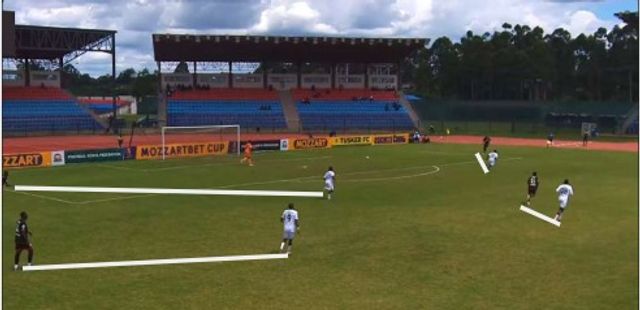
Tusker’s defensive scheme without the ball revolved around a high, man-oriented press. The front two curved their runs inward to block passing lanes into Ulinzi’s centre-backs, while the wingers and full-backs pushed high and wide to engage Ulinzi’s wide players early.
This aggressive approach frequently forced Ulinzi into rushed decisions or long balls, limiting their ability to build cleanly.
However, Ulinzi gradually adapted by dropping Emilio Brian deeper into the first phase, effectively creating a temporary outlet providing an additional passing option.
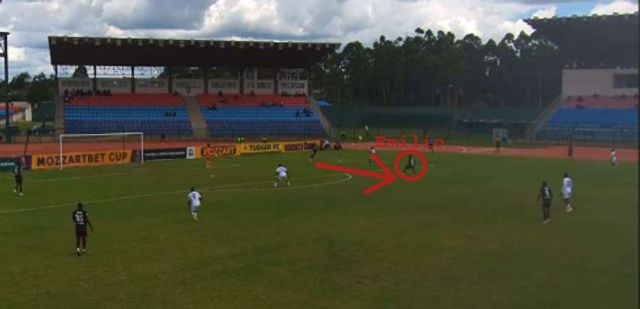
Combined with the goalkeeper acting as a +1, this adjustment occasionally allowed Ulinzi to bypass the press.
A key tactical theme in Tusker’s build-up was the use of Kapaito’s dropping movements from the left wing into midfield.
This movement disrupted Ulinzi’s man-marking scheme by pulling defenders out of position and opening passing lanes for diagonal balls.
Tusker exploited this by playing direct diagonals from deeper areas toward their forwards, particularly Simiyu and Selasie, establishing a reliable outlet when central progression was congested.
This pattern highlighted a clear cause-and-effect relationship: Kapaito’s movement created space, which Tusker then attacked with direct distribution.
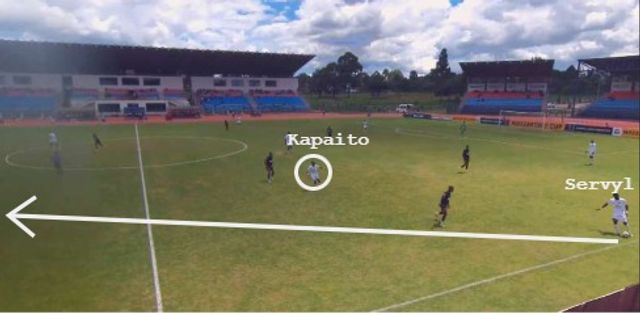
The breakthrough goal in the 24th minute encapsulated Tusker’s approach.
Fabian Adikiny initiated the move with a diagonal pass to Kapaito on the left. Servyl Akouala’s overlapping run created a 2v1 overload against Ulinzi’s right-back, a recurring structural weakness due to insufficient tracking from the winger.
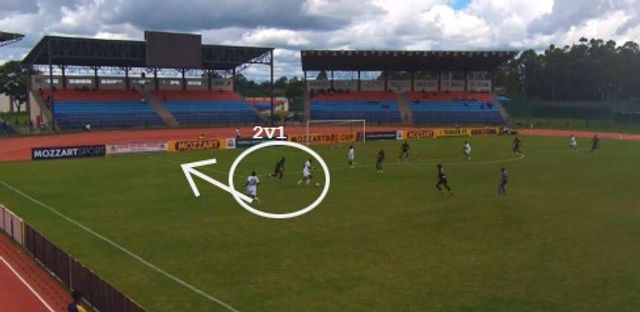
After a quick combination, Akouala delivered a cross into the box. Although the initial shot by Yakeen was saved, Kapaito reacted quickest to convert the rebound.
This sequence demonstrated how Tusker consistently targeted wide overloads to destabilise Ulinzi’s defensive shape.
Ulinzi’s attacking threat in the first half largely stemmed from transitions and opposition errors rather than sustained positional play.

Many of their early chances came from high turnovers forced by Tusker’s build-up mistakes. When in settled possession, Ulinzi attempted to exploit wide areas through crosses aimed at Paul Okoth.
They also introduced rotational mechanisms on the flanks, with the right-back occasionally inverting into midfield as the winger dropped deeper. This created temporary central overloads, allowing midfielders to switch play toward the opposite flank.
Tusker’s rest-defence structure played a crucial role in limiting Ulinzi’s transition threat.
With players like Fabian Adikiny maintaining positional discipline behind the ball, Tusker were able to quickly suppress counterattacks at their source.
This ensured that even when Ulinzi regained possession, they struggled to generate momentum in forward transitions.

The equaliser for Ulinzi came just before halftime from a set-piece, rather than open play. A short corner routine led to a cross toward the back post, which was redirected into the six-yard box, where Staphord Odhiambo finished.
This goal underlined Ulinzi’s reliance on dead-ball situations to create high-quality chances, as Tusker had largely controlled open-play dynamics.
In the second half, both teams adjusted their build-up strategies. Ulinzi increasingly used Kelvin Musambai’s dropping movements to support the first phase of build-up, similar to Kapaito’s earlier role for Tusker.
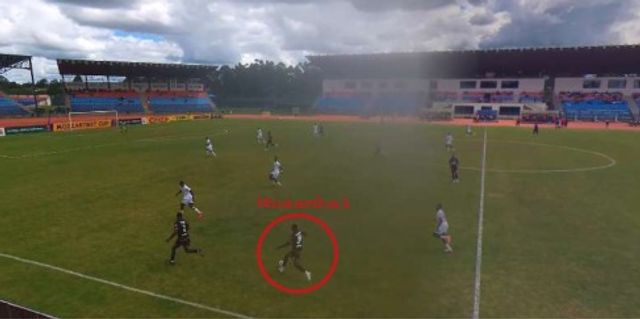
This helped them bypass Tusker’s initial press and opened passing lanes in the half-spaces. Tusker, recognising their midfield numerical disadvantage in a 4-4-2 against Ulinzi’s three-man midfield, also adopted wider progression routes, focusing attacks down the flanks rather than through central areas.
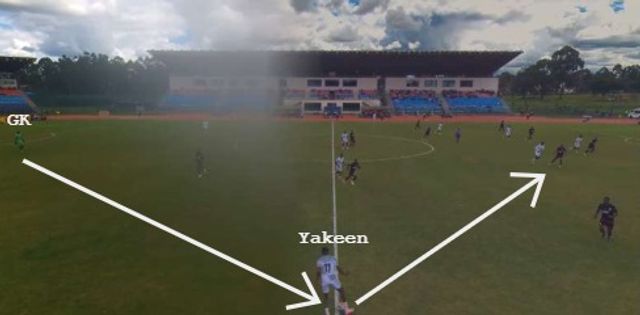
Tusker’s structural limitation in midfield - frequently outnumbered 3v2 - meant they relied heavily on wide combinations and direct play.
This became even more pronounced after the introduction of Ibrahim Joshua and Thomas Omole in the 75th minute. Joshua, in particular, provided a focal point for long balls, using his physical presence to win aerial duels and create second-ball opportunities.
Tusker’s attacking sequences increasingly involved third-man combinations and crosses, with Joshua acting as a connector between phases.

The decisive moment in stoppage time illustrated Tusker’s late-game tactical evolution.
Following a second-ball situation from an Ulinzi restart, Ibrahim Joshua dropped deep to win an aerial ball and direct it into Ian Simiyu’s path.
Simiyu drove into the left channel, stretching the defensive line before delivering a low cross across the six-yard box.

Joshua, having continued his run, arrived late to convert. This goal encapsulated Tusker’s direct, transition-oriented approach in the latter stages - winning duels, exploiting space in wide channels, and attacking the box with coordinated movement.
Defensively, Tusker maintained a compact 4-4-2 mid-block when Ulinzi progressed beyond the first phase.
This shape allowed them to protect central areas while forcing Ulinzi wide, where their attacks became more predictable. Ulinzi, despite showing moments of structural adaptation, struggled to consistently break down this organisation in open play.
The match was shaped by Tusker’s ability to identify and repeatedly exploit Ulinzi’s structural weaknesses, particularly in wide areas and defensive tracking. Their use of overloads, direct play, and effective rest-defence provided a balanced platform for both control and penetration.
Ulinzi, while competitive and tactically flexible, relied heavily on transitions and set-pieces, lacking the sustained positional threat needed to dominate.
Ultimately, Tusker’s superior tactical coherence and adaptability across all phases of play secured their progression in dramatic fashion.