


TACTICAL ANALYSIS: Inside the setup that earned Senegal Ksh90 million in CHAN playoff

.jpg)

Reading Time: 5min | Sat. 30.08.25. | 16:50
Senegal’s persistence and control earned them a deserved third-place finish, while Sudan’s disciplined, well-structured performance showcased their growing competitiveness
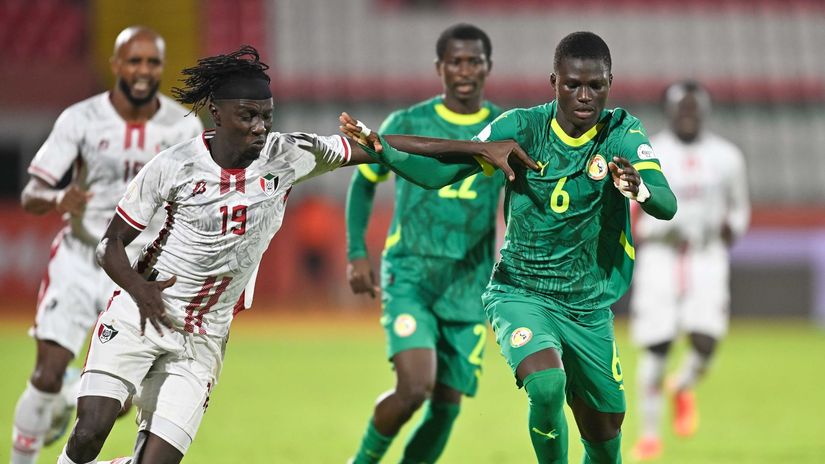
In a gripping 2024 African Nations Championship (CHAN) third-place playoff at Mandela National Stadium in Kampala, Uganda, Senegal's Teranga Lions clinched bronze with a 4-2 penalty shootout victory over Sudan following a 1-1 draw.
Follow our WhatsApp channel for more news
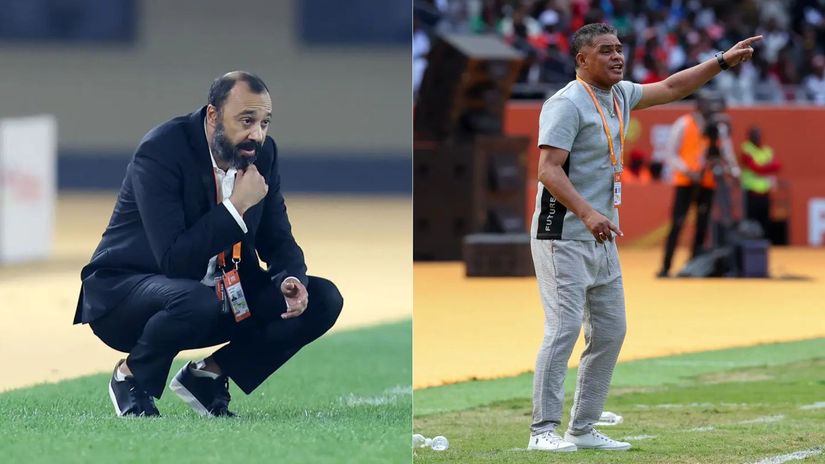
Both nations brought distinct approaches to the game. Senegal, under coach Souleymane Diallo, relied on high-possession football with structured wide play and dynamic buildup.
Sudan, managed by Kwesi Appiah, banked on defensive resilience, quick transitions, and a continued emphasis on set-piece mastery, the same formula that propelled them into the semifinals.
First Half: Control vs Counter
Senegal immediately asserted control with patient possession and structured buildup, forming a flexible 4-2-3-1 shape that smoothly transitioned through their goalkeeper and centre-backs.
Their full-backs provided width, supporting the wingers in stretching Sudan’s compact defensive shape. Gueye, operating on the right flank, quickly became a key outlet, frequently finding space and isolating defenders to deliver crosses or initiate overlaps.
Sudan, in contrast, played to their strengths: verticality and set-pieces. Their early goal stemmed from a rehearsed corner routine.
Musa Ali’s clever movement drew defenders out of position, allowing Mohamed Teya a free header to convert from Abdelrazig Omer’s delivery, exposing Senegal’s vulnerability in zonal marking.
That moment showcased Sudan’s reliance on deceptive dead-ball delivery and physicality in aerial duels.
From there, the match evolved into a tactical chess game. Sudan dropped into a deep midblock, often defending man-to-man out of possession.
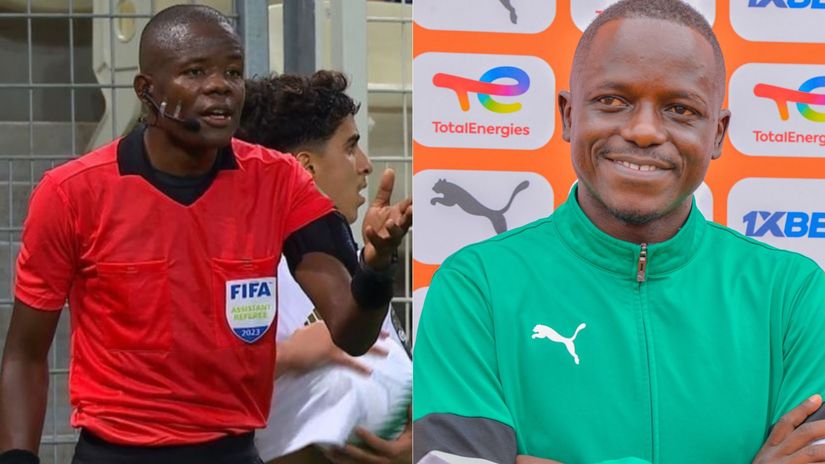
Their 4-4-2 shape was compact and narrow, aiming to congest the centre and force Senegal wide, where they were comfortable defending.
Appiah's plan disrupted Senegal’s rhythm by denying them central penetration and capitalising on turnovers.
Senegal responded by focusing their attack through the flanks. Gueye combined effectively with midfield pivots Mbaye Yaya Ly and Fonseca, attempting to break Sudan's compactness through wide overloads and quick passing triangles.
The Teranga Lions controlled possession convincingly, but their final-third decisions lacked sharpness.
Defensively, Senegal maintained a high line, catching Sudan offside multiple times. However, Sudan created chances through long throw-ins, early crosses from Fadul on the right or Ali Musa on the left, and quick counters aimed at exploiting spaces left behind by Senegal’s advancing full-backs.
Midway through the half, Fonseca’s injury disrupted Senegal’s buildup rhythm, with Colly coming on to fill the role.
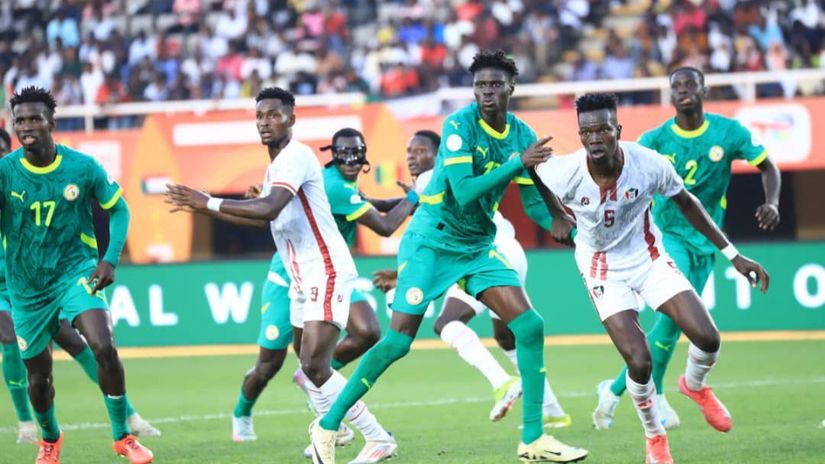
Despite this setback, Senegal continued to probe, winning set-pieces around the edge of the box and generating pressure through late-half corners and combinations between Gueye and Seck.
A brilliant save by Elnour denied Ba at point-blank range just before halftime, preserving Sudan’s lead.
The first-half statistics emphasised Senegal's dominance: 64.7% possession, more shots, higher pass accuracy, and superior territory.
Yet, Sudan’s defensive discipline and early set-piece conversion held firm, sending them into halftime with a 1-0 lead despite being under sustained pressure.
Second Half: Tactical Shifts and the Equaliser
Senegal made two midfield substitutions at halftime, Sembene and Issa, for renewed energy and vertical progression.
The team resumed their front-foot approach, attacking through wide areas, while Sudan’s out-of-possession shape stayed disciplined in a tight 4-4-2 block.
Appiah’s men remained committed to their counter-attacking identity, using speedy transitions and direct balls to the wings to relieve pressure.
Senegal pushed their full-backs even higher in the second half to create numerical superiority on the flanks. Gueye and Seck continued to test Sudan's defenders, and eventually, the pressure paid off.
Seck delivered a deep cross from the right that Sudan's goalkeeper misjudged. The ball found Ndiaye, who nodded it into the net to equalise.
With the score level, Senegal adopted a 4-1-4-1 out-of-possession shape to control midfield transitions and regain dominance.
Their attacks began focusing more centrally, mixing long-range shots with vertical through balls, while still drawing defenders out wide before switching play.
Set-pieces continued to play a role, with Cisse earning multiple fouls around Sudan’s penalty area. While Senegal kept control in open play, Sudan remained dangerous on the break.
One of the most notable moments came late in the game when Sudan’s Maaz nutmegged two defenders and nearly scored into an empty net, only to be denied by a last-ditch clearance.
To increase attacking presence, Senegal reshaped their build-up into a 3-2 structure, dropping a pivot between the centre-backs while pushing full-backs even higher.
Gomis replaced Ba to add fresh legs to the forward line. Sudan, now under siege, sat deeper, but still threatened through long-range shots and wide transitions, particularly from their right flank.
In stoppage time, Sudan earned a dangerous free-kick on the edge of the box. Waliedlin’s strike took a deflection but was dealt with, and regular time ended 1-1.
Despite Senegal’s territorial and technical superiority, Sudan's defensive organisation and quick transitions had kept the game finely balanced.
Penalty Shootout: Senegal’s Composure Under Pressure
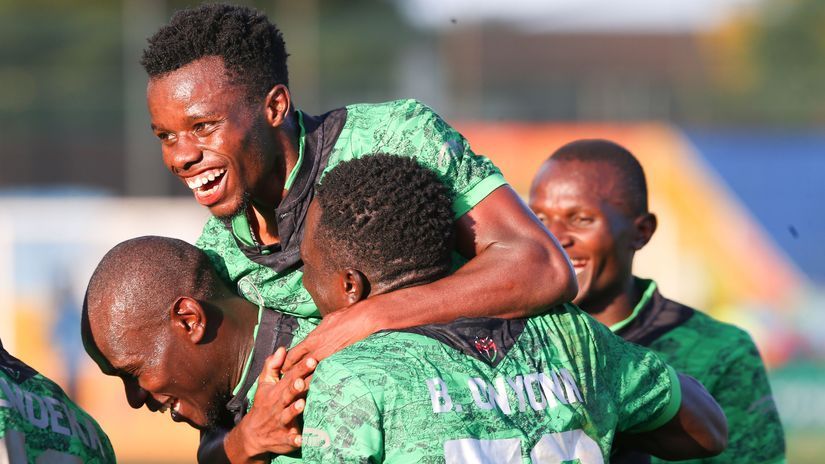
The shootout was tense but cleanly executed by Senegal. Sudan’s captain, Waliedlin, missed their first effort, setting the tone. Senegal converted confidently-Layouse, Issa, Cisse, and finally Gueye, all finishing with poise.
_(1).jpg)
Sudan netted two, but a saved effort from Musab left them chasing. With a 4-2 win on penalties, Senegal secured third place-adding to their CHAN 2022 title and affirming their position among the continent's top domestic squads.
Tactical Takeaways and Broader Implications
Senegal’s 4-2 shootout win over Sudan in the CHAN 2024 third-place playoff served as a showcase of African football’s growing sophistication.
Senegal, under Souleymane Diallo, dominated with 65.4% possession and 79.1% pass accuracy, utilising wide play through Gueye and Ba Oumar to stretch Sudan’s defense.
Their tactical flexibility-shifting from flank attacks to central penetration-proved key in breaking down Sudan’s compact block, especially after halftime adjustments.
Sudan, led by Kwesi Appiah, employed disciplined man-marking, an intense midblock, and sharp set-piece routines. Their defensive structure frustrated Senegal for long periods, and Teya’s opener from a rehearsed corner underscored their aerial threat.
Despite limited possession, Sudan’s transitions and strategic efficiency kept them competitive, though a lack of finishing in key moments, such as Maaz’s missed chance, proved costly.
The match revealed two strategic lessons: possession without precision can be wasteful, and set-piece innovation is now a vital weapon.
As CHAN evolves, these tactical battles emphasise the tournament’s role in developing not only players but coaches and systems.
In conclusion, Senegal’s persistence and control earned them a deserved third-place finish, while Sudan’s disciplined, well-structured performance showcased their growing competitiveness.
The match balanced possession against precision, with both sides highlighting different but effective tactical strategies.
As CHAN 2024 moves toward its final, this third-place playoff stands out as a high-quality contest that tested adaptability, execution, and resilience on both sides.