



Why replacing Enock Morrison will hand Gor Mahia a headache




.jpeg)


_DURING_TRIALS.jpg)
Reading Time: 7min | Thu. 25.06.26. | 17:12
For Gor Mahia, however, Morrison's departure raises uncomfortable questions at a time when the club should be preparing for its biggest challenge yet.
There is a tendency in football to measure departures through numbers. Goals scored, assists registered, minutes accumulated, and trophies won. But some exits cannot be quantified so neatly.
Download our Mozzart Sport app for more news
Gor Mahia lost more than the reigning FKF Premier League Most Valuable Player (MVP) with Enock Morrison’s recent departure to Al Merreikh of Sudan.
They lost a footballer who held the rhythm of their game close to heart, the connective tissue between defence and attack, and the man around whom much of their title-winning campaign revolved.
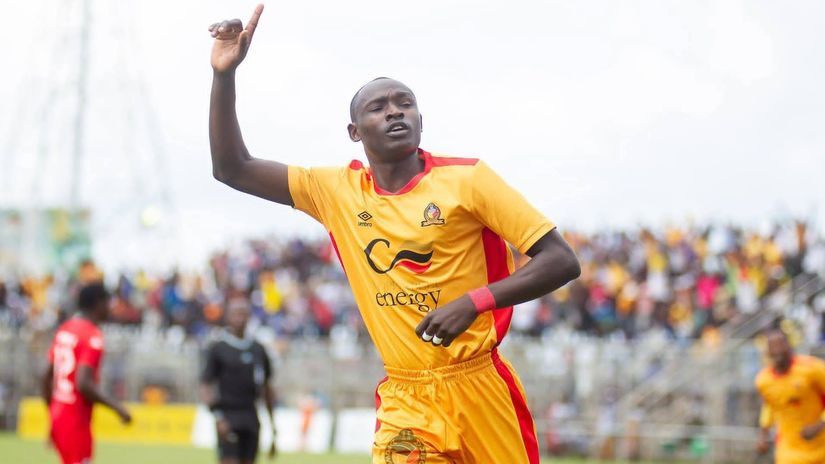
For Morrison, the move represents the next chapter in an impressive rise that has taken him from Ghana to the pinnacle of Kenyan football and now to one of Africa's most decorated clubs.
For Gor Mahia, however, his departure raises uncomfortable questions at a time when the club should be preparing for its biggest challenge yet.
The league holders are returning to the CAF Champions League. And they are doing so without their most influential player. The timing could hardly be more significant.
Only weeks ago, Gor Mahia were celebrating a record-extending 22nd league title, reaffirming their dominance of Kenyan football and securing a return to Africa's premier club competition.
The mood around the club was one of optimism. There was talk of strengthening the squad, building on domestic success and finally making a meaningful impact on the continental stage, yet now, the conversation has changed.
The transfer window has swung open, and while rivals are assessing reinforcements, Gor Mahia's priority has suddenly become replacement. The question echoing around K'Ogalo circles is simple: how do you replace a player who was arguably the best in the country?
To understand the challenge facing Gor Mahia, one must first understand Morrison's importance.
When the Ghanaian midfielder arrived in Kenya two seasons ago, expectations were modest. Like many foreign imports entering the FKF Premier League, he arrived with little fanfare. There was curiosity, certainly, but few anticipated the scale of influence he would eventually command.
What followed was a masterclass in consistency.
Week after week, Morrison became the player teammates relied upon when matches became difficult. He possessed that increasingly rare quality of making complex situations look simple.
When opponents pressed aggressively, he found space. When games became chaotic, he restored order. When creativity was required, he delivered solutions.
His influence extended far beyond statistics.
Football often celebrates the player who scores the winning goal, but championship-winning teams are frequently built around those who control matches from deeper positions.
Morrison belonged to that category. He was the metronome, the conductor of the orchestra, even if Gor had plenty of the famous Harambee Stars 2024 African Nations Championship (CHAN) squad in its ranks.
By the end of the season, recognition followed naturally. Winning the league title was one achievement. Being named the FKF Premier League's Most Valuable Player (MVP) was another. Together, they confirmed what supporters and opponents had known for months: Morrison was operating at a level above most of his peers.
His move to Al Merrikh, therefore, feels less like a routine transfer and more like the conclusion of a chapter.
The Sudanese giants have acquired a player entering his prime years, a midfielder who has already demonstrated his ability to dominate games and thrive under pressure.
For Al Merrikh, it is a statement signing. For Gor Mahia, however, it is a reminder of a reality that Kenyan clubs continue to face. Success often comes with a price. The better a player performs, the more difficult it becomes to keep him.

Across African football, ambitious players inevitably seek opportunities that offer greater financial rewards, stronger competition and broader continental exposure. Morrison's move fits that pattern perfectly. Few can begrudge him the opportunity.
Yet while the transfer makes sense for the player, it creates a dilemma for his former club. Because replacing talent is one thing, and replacing influence is another.
The challenge becomes even greater when viewed through the lens of continental football. For all Gor Mahia's domestic achievements, the CAF Champions League remains an entirely different proposition, an elusive platform which they have been starved of for decades.
Gor have been here before, plenty of times in fact, and understand what the competition presents. It exposes weaknesses that local leagues often conceal. The pace is faster, and the margins smaller. Here, everyone is a champion.
A misplaced pass that goes unpunished in a domestic fixture can prove costly against North African or West African opposition. A lack of squad depth that remains manageable over a league season can become catastrophic when balancing domestic and continental commitments.
This is why Morrison's departure feels particularly significant. In CAF competitions, midfield control often determines success or failure.

The strongest teams dominate possession, dictate tempo and manage difficult moments intelligently. These are precisely the qualities Morrison brought to Gor Mahia.
Take him out of the equation, and the team suddenly appears less complete, not necessarily weaker in every department, but undeniably different, and perhaps more vulnerable.
We have not even addressed the small matter of the psychological aspect of the whole move on his former teammates.
Championship-winning teams derive confidence from familiar leaders. Morrison was one of those figures. His calmness on the ball often spread through the team.
His ability to receive possession under pressure reassured teammates. In difficult away matches, he provided stability. Such qualities cannot simply be purchased overnight.
Which now brings us to the transfer window. If there is one factor that will determine how successfully Gor Mahia navigate life after Morrison, it is recruitment. The opening weeks of the window may prove among the most important in the club's recent history.
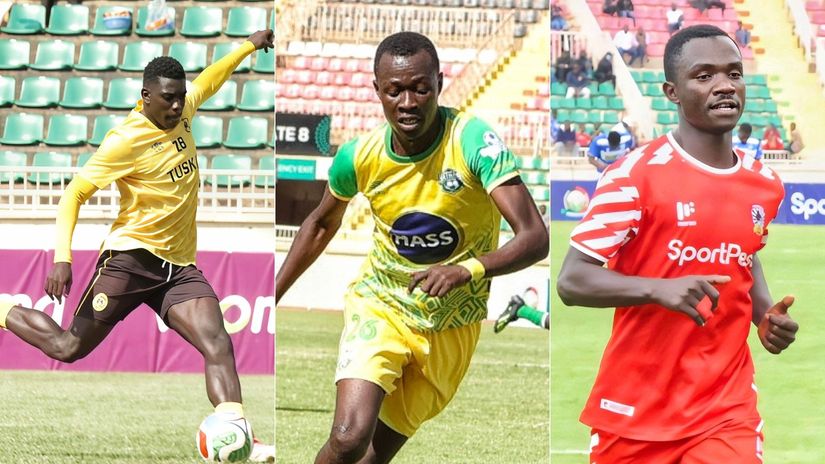
Replacing Morrison with a direct equivalent appears unlikely. Players of his profile are scarce, particularly within budgets available to most Kenyan clubs. The more realistic strategy may involve spreading responsibility across several additions.
A creative midfielder, a ball-carrier, and perhaps another experienced player capable of handling continental football.
The objective should not be to find another Morrison. It should be to ensure the team does not become dependent on any single individual again. That, however, requires planning, and this has not always been the strongest suit of Kenyan football clubs.
Too often, teams wait until key players depart before beginning succession plans. The result is hurried recruitment, short-term fixes and squads assembled more out of necessity than strategy. Gor Mahia cannot afford such mistakes now. The stakes are too high.
Fans will point to another concern.
Morrison's departure comes at a moment when the champions have yet to make major additions of their own. Every day that passes without reinforcement inevitably fuels anxiety among fans who understand the demands awaiting the club in the months ahead.

The CAF Champions League does not reward hesitation. Preparation matters. And while there is still time to strengthen, the urgency is becoming increasingly apparent.
There are, of course, reasons for optimism. Gor Mahia remains the biggest club in the country. Their status continues to attract talent. The Champions League offers an appealing platform for prospective signings, while the prestige associated with wearing the green jersey remains significant.
The club also possesses players capable of assuming greater responsibility.
Moments of transition often create opportunities for others to emerge. Football history is replete with examples of teams that feared the departure of a star player only to discover new leaders in the process, and perhaps that will happen again. Perhaps the next midfield talisman is already within the squad.
But hope alone is not a strategy. The reality confronting Gor Mahia is that they have lost the best player in the league at the precise moment they needed continuity.
The challenge now is to respond intelligently. As Morrison begins a new adventure in Sudan, his legacy in Kenya is secure. In two seasons, he transformed from a relatively unknown arrival into the most decorated individual performer in the FKF Premier League.

He leaves as a champion, an MVP and a player whose influence helped restore Gor Mahia to the summit of Kenyan football.
Yet his departure may ultimately be remembered not for what it means to him, but for what it means to the club he leaves behind. The coming weeks will reveal whether Gor Mahia are prepared for life after Enock Morrison. More importantly, they will reveal whether the champions are truly prepared for Africa.
Because while Morrison's journey continues in Omdurman, Gor Mahia's biggest test is only just beginning.