


Nairobi County Hockey Association highs and lows after six months in office








Reading Time: 7min | Wed. 13.05.26. | 13:37
Nairobi remains the heartbeat of Kenyan hockey, hosting nearly 80 per cent of the teams competing in the Kenya Hockey Union (KHU) leagues
Six months after taking office, the new Nairobi County Hockey Association (NCHA) leadership is still navigating turbulence.
Download our Mozzart Sport app for more news
Elected on Saturday, 22 November, 2025, at Parklands Sports Club, the administration led by President Peter Njoroge came into office promising transparent governance, structured competitions, grassroots development and the eventual establishment of a sustainable Nairobi hockey league.
But half a year later, much of its early tenure has been overshadowed by legal battles, internal resistance and the challenge of laying foundations for long-term change.
Speaking to Mozzart Sport, Njoroge admits that, amid the uncertainty, momentum has not stalled.

“It has not been the best journey,” admits Njoroge. “We’ve been held up in courts, we’ve faced resistance, and we’ve been fighting different fights. But that, for me, is not an excuse enough.”
Nairobi remains the heartbeat of Kenyan hockey, hosting nearly 80 per cent of the teams competing in the Kenya Hockey Union (KHU) leagues.
 awards Leah Omwadho the women MVP of the NCHA Simah Social Hockey Tournament.jpg)
Any shift within the county, therefore, carries national significance. The new office understands that expectation and, despite the setbacks, believes the groundwork for a new era is slowly taking shape.
The largest obstacle facing the administration has been the ongoing Sports Disputes Tribunal (SDT) case filed by former NCHA Secretary General Thomas Olal, challenging the legality of the elections.
The matter temporarily threatened to halt hockey activities within Nairobi after a motion sought to block the new office from conducting county affairs. However, according to Njoroge, that application did not succeed, allowing the association to continue operating while awaiting further directions from the tribunal.
“The case is still ongoing,” he says. “We are waiting for the next steps and directions on what should happen next. But we are hopeful the matter will be put to rest soon.”
While careful not to delve deeply into the proceedings, Njoroge acknowledges that the uncertainty has slowed implementation of some campaign promises. Even so, the administration has opted against pausing operations while awaiting judgment.
“We don’t want to stop until the case is over,” he explains. “We’ve already started conversations around the league, and we’ll continue preparing until a ruling is made.”

The ruling could determine whether the current office continues serving, or whether fresh elections are ordered.
Despite the legal distractions, NCHA has organised several tournaments over the last six months, events Njoroge describes as important learning experiences for the new office.
The competitions have offered administrators an opportunity to test operational structures, understand the strengths and weaknesses within the committee, and assess how stakeholders respond to the new leadership.
“We’ve seen commitment levels, we’ve seen what roles need improvement, and we’ve also gotten very good feedback from teams,” he says.
The tournaments have also produced one of the administration’s first notable wins: attracting sponsorship support.
For an association hoping to build a financially sustainable county league, securing sponsors this early has strengthened the belief that corporate interest in hockey still exists, provided the product is packaged correctly.
At the center of Njoroge’s vision is the establishment of a fully operational Nairobi County Hockey League.
For years, hockey within the county has largely revolved around KHU competitions, leaving many clubs and emerging teams with limited playing opportunities. NCHA wants to change that by creating a structured county league running alongside the national setup.

But unlike previous attempts, the new administration wants the league to be sustainable from the start.
“We’ve always had leagues where there wasn’t much motivation to play,” says Njoroge. “We want to create value for teams through proper organisation, sponsorship and meaningful rewards.”
Initially, the administration hoped to secure full sponsorship before launching the competition. That approach, however, has evolved.
Rather than waiting indefinitely for financial backing, NCHA now plans to begin with realistic operational budgets supported partly by teams themselves, while maintaining full transparency on how funds are used.
“We will fully account for every shilling,” says Njoroge. “Teams deserve to know what the costs are, whether it’s referees, logistics, or match organisation.”
The office is currently finalising logistical planning and budgeting, with mid-June set as the administration’s aggressive target for determining the league’s launch framework.
The Umpiring Challenge
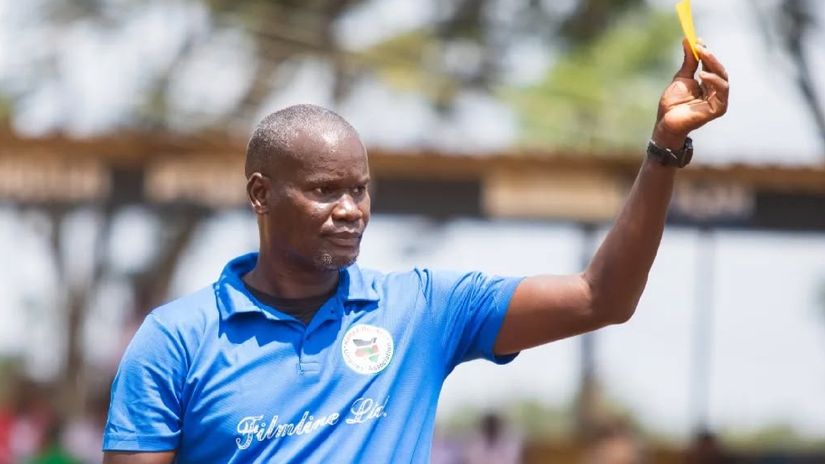
One of the biggest hurdles to the league’s rollout is officiating.
Nairobi currently relies heavily on the national umpiring structures, a dependency Njoroge believes could create scheduling conflicts once both county and KHU competitions run simultaneously.

To address this, NCHA is prioritising the training of dedicated county umpires.
“We want Nairobi to have its own pool of umpires that we can call upon anytime,” he explains. “That’s one of the key things we need to sort out if we want to run our own affairs independently.”

The move is not only aimed at improving league operations but also at growing officiating standards within the county.
Transparency formed a major pillar of the campaign that brought the current office into power. While progress on that front has been slower than anticipated, Njoroge says the administration still intends to implement regular stakeholder town halls.
The forums are expected to allow clubs, players, coaches and managers to question decisions, review league plans and contribute ideas.
“I’ll hold myself accountable for this one,” says Njoroge. “We haven’t been as successful with it as we hoped, but we want to kick-start the process.”
The first major town hall could be held at the end of May once NCHA completes its league feasibility discussions.
The aim is to involve clubs in determining league structures, divisions and operational frameworks before implementation begins.
With nearly all KHU teams based in Nairobi, coordination between the county association and the national federation remains essential.
Njoroge says NCHA has already received encouraging feedback from KHU officials during tournaments organised over the past few months. But the real test will come once the county league officially begins.
“We need to figure out how both leagues can run without fixture clashes or ground conflicts,” he says.
The administration plans to formally engage KHU before the county league launches to ensure alignment on scheduling and operations.
Grassroots Development Still on the Horizon
Although grassroots hockey development remains one of Njoroge’s long-term priorities, the administration has chosen to delay major school-based projects until the county league is operational.
Still, there are already signs of the direction NCHA wants to take.
Several schools have participated in recent county tournaments, exposing young players to hockey beyond traditional school competitions.
The long-term ambition is to create stronger relationships between clubs and schools, with clubs helping institutions develop their programs while also creating player pipelines.
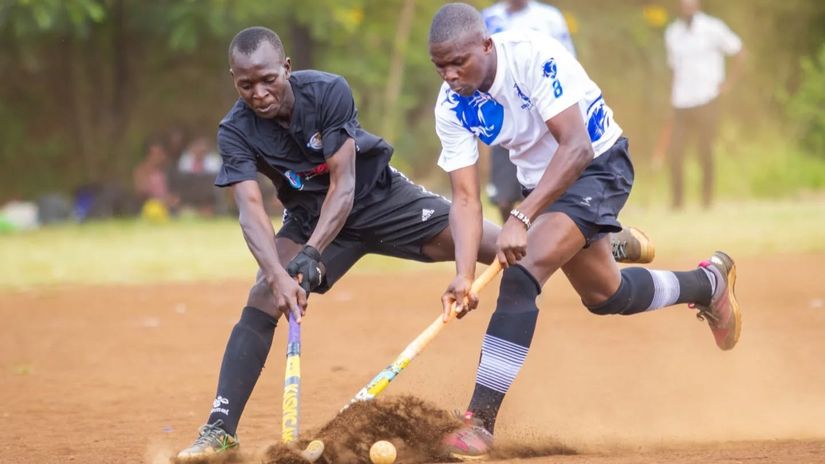
“We want schools to benefit from clubs and clubs to benefit from schools,” says Njoroge.
The home-and-away league model being explored could further encourage schools to open their facilities for training and competition.
Facilities and the Reality on the Ground
Facility development remains one of Nairobi hockey’s most difficult long-term challenges.
For now, the administration is focusing less on constructing new pitches and more on maximising existing partnerships with institutions that already have playable surfaces.
The recent development at Sikh Union Nairobi has offered some encouragement, with the venue hosting several county tournaments in recent months.
But Njoroge remains realistic.
“We are still too new in the office to promise major changes in facilities,” he says. “Right now, the focus is partnerships and access.”
Long-term discussions around dedicated county grounds and potential collaboration with the county government remain part of the broader vision.
.jpg)
For Njoroge, the ultimate success of his administration will not simply be measured by how many tournaments are organised or leagues launched.
Instead, he wants the office to be remembered for creating sustainable systems.
 awards the most promising player of the NCHA Simah Social Hockey Tournament (1).jpg)
“The foundations matter,” he says. “The setup we create today should serve hockey for years to come.”
That foundation, he says, must be built on transparency, accessibility, accountability and memorable hockey experiences.
His hope is that years from now, players and supporters will remember this administration not only for governance reforms but for creating leagues and tournaments that made people genuinely enjoy Nairobi hockey again.
Whether the current office gets the opportunity to fully realise that vision may depend partly on the outcome of the ongoing tribunal case.
But six months in, amid legal uncertainty and operational growing pains, NCHA’s new leadership continues to push forward, determined to reshape hockey in the country’s biggest sporting hub.