


Sikh Union at 100: The club that built Olympians thrashing rivals on new blue turf in centenary celebrations






.jpg)

Reading Time: 5min | Tue. 05.05.26. | 14:58
Through the 1940s and 1950s, Sikh Union Nairobi developed into a highly structured and competitive side, rooted in discipline, technical efficiency, and a strong community identity
Long before the blue turf at Dashmesh Hockey Stadium became the visual centerpiece of Sikh Union Nairobi’s centenary, the club had already etched its identity into the foundations of Kenyan hockey.
This is not just a club turning 100.
It is an institution that helped build the sport in Kenya, producing generations of elite players, shaping national teams, and sustaining a culture that made the country competitive on the global stage.
Download our Mozzart Sport App for more news
To understand the significance of the ongoing centenary celebrations, one has to begin decades earlier, when Sikh Union then closely linked with Khalsa Union and later associated with Nairobi Simba, emerged as a dominant force in East African hockey.
Through the 1940s and 1950s, Sikh Union Nairobi developed into a highly structured and competitive side, rooted in discipline, technical efficiency, and a strong community identity.
At a time when hockey in Kenya was still evolving, the club provided not just players, but a model of organisation and excellence.
By the mid-20th century, Sikh Union had become synonymous with top-tier hockey.
Its influence extended beyond domestic competitions, feeding directly into the national team setup at a time when Kenya was establishing itself internationally.
The club’s golden period aligned with Kenya’s rise in global hockey, particularly between the 1950s and 1970s, when the national team became a regular presence at the Olympic Games.
Olympian conveyor belt
What set Sikh Union apart was not simply success at club level, but the consistency with which it produced international players.
At the 1956 Melbourne Olympics, Kenya’s squad featured a strong Sikh contingent, many of them products of Sikh Union structures.

By 1968 in Mexico, that pipeline had intensified, with the club again heavily represented in the national team.
Among the defining figures of that era was Surjeet Singh Deol, who captained Kenya at the Olympics and symbolized the leadership qualities that Sikh Union instilled in its players.
His influence went beyond individual performance; he represented a generation that carried Kenyan hockey into global relevance.
Then came Avtar Singh Sohal, one of the most decorated players in the country’s history.
A four-time Olympian, Sohal’s career spanned multiple Olympic cycles, and he later returned to guide the national team as a coach, an embodiment of Sikh Union’s tradition of reinvesting experience back into the system.
Equally significant was Surjeet Singh Panesar, whose international career stretched across four Olympic Games.
His longevity and consistency made him one of Kenya’s most dependable players, and his entire club career remained rooted at Sikh Union.
Names such as: Hardev Singh Kular, Tejparkash Singh Brar and Inderjit Matharu further underline the depth of talent that emerged from the club during its peak years.
In total, Sikh Union and its associated structures have produced at least 27 Olympians, a figure that cements its place as arguably the most influential hockey institution in Kenya’s history.
Sikh Union’s contribution was never limited to those who stepped onto the pitch.
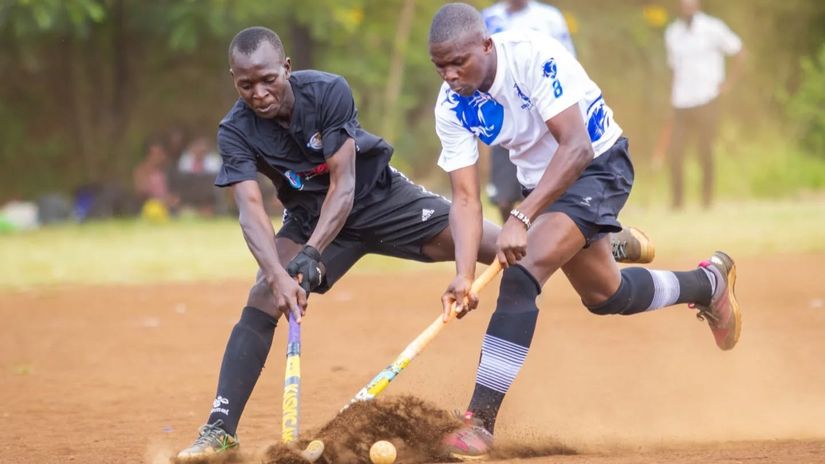
The club played a critical role in administration, coaching, and the broader governance of hockey in Kenya.
Former players transitioned into technical roles, selectors, and officials, ensuring that the philosophy and standards of the club filtered into the national framework.
This continuity created a self-sustaining ecosystem, one in which talent was identified, developed, and retained within a structure that prioritized excellence and discipline.
It is this system that allowed Sikh Union to remain relevant even as the landscape of Kenyan hockey evolved.
History meets present
That legacy now forms the backdrop to the ongoing centenary celebrations in Nairobi.
Marking 100 years since its founding in 1926, Sikh Union has organized a multi-layered celebration, culminating in an international hockey tournament that has drawn teams from India, England, Nigeria, and Malaysia.
The tournament itself reflects the club’s global footprint, with diaspora-linked teams such as London Sikh Union and London Satellites joining continental sides like Niger Flickers and Roundglass Hockey Academy.
Yet the most powerful narrative thread lies closer to home.
.jpg)
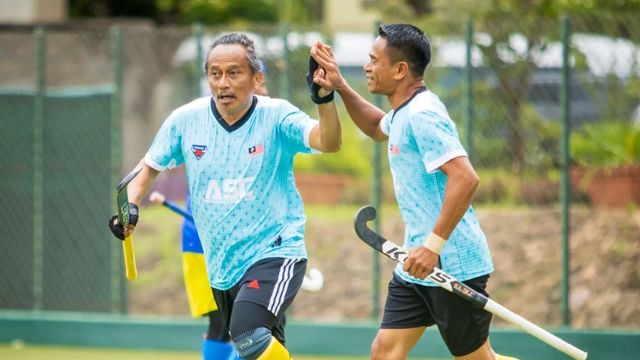
In the Masters category, Sikh Union’s veterans, many of them former internationals and Olympians, have returned to the pitch.
Their participation transforms the tournament from a standard competition into a generational convergence, where past and present intersect in real time.
While history provides context, Sikh Union’s current squad has ensured that the centenary is not reduced to reflection.
From the opening day, the hosts have imposed themselves on the main cup competition with performances that mirror the club’s traditional strengths.
A 4-1 victory over Niger Flickers set the tone, which was followed by another 4-1 win against Roundglass Hockey Academy, before a dominant 5-0 display against London Satellites.
By Day 4 on 4 May, Sikh Union remained unbeaten, reinforcing their status as title contenders while maintaining a defensive solidity that has long been a hallmark of the club.
In the Masters division, similar authority has been evident. The veterans have combined experience with composure, registering convincing wins and demonstrating that the technical fundamentals instilled decades ago remain intact.
Central to the centenary is the unveiling of the blue astroturf at Dashmesh Hockey Stadium, a facility upgrade that signals Sikh Union’s intent to remain at the forefront of the sport.
In modern hockey, infrastructure is inseparable from performance.
By investing in a high-quality playing surface, the club is not just enhancing its own competitiveness; it is contributing to the broader development of hockey in Kenya.
This aligns with Sikh Union’s long-standing emphasis on sustainability, where development pathways are prioritised alongside elite competition.
As the tournament progresses into its final stages at Kenton College and Dashmesh Stadium, the focus will inevitably shift to knockout outcomes and eventual champions.
But within Sikh Union Nairobi, the centenary carries a deeper significance.
It is a reaffirmation of the identity of a club that has, for 100 years, functioned as more than a team. It has been a pipeline, a community, and a custodian of Kenyan hockey’s highest standards.
From producing Olympians who carried the national flag on the world stage to nurturing systems that continue to develop talent, Sikh Union’s influence is both historical and immediate.