


Touching story of former Kenya 7s star preparing for Paralympic after grisly accident

Reading Time: 5min | Mon. 15.09.25. | 08:45
On that fateful day, Dennis was rushed to hospital after a crash that left his leg mangled. At first, he did not grasp the full extent of the damage. It was only later, after being flown to South Africa, that the reality hit him
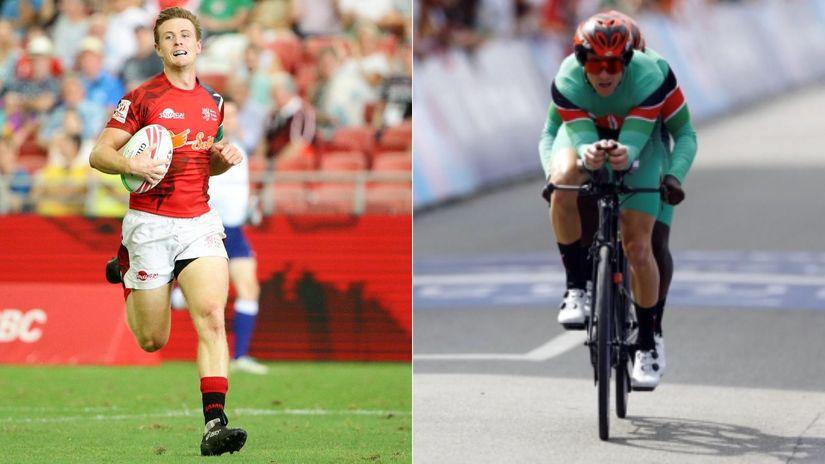
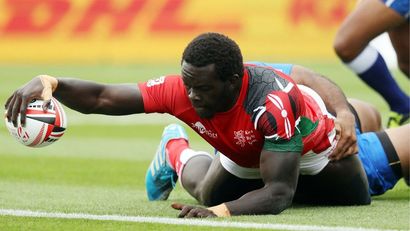
When Oscar Dennis first donned the red, green, and black jersey of the Kenya Rugby Sevens team, he stood out for a unique reason. He was the only white in the team, as he is referred to in the world of rugby.
Follow our WhatsApp channel for more news
But that distinction never defined him; what mattered was that he had earned his place, gained respect, and become part of the brotherhood that made Shujaa one of the most competitive sevens sides in world rugby.
“I got respect from the boys. When I did get into the squad, they just took me in, treated me as a Kenyan, and it was awesome. We had a good group of players at that time,” recalls Dennis.
For him, rugby wasn’t just a sport; it was his identity. He was “the white boy who played for Kenya Sevens,” and everything in his life revolved around that.
But in 2020, a bike accident changed everything.
From near amputation to survival
On that fateful day, Dennis was rushed to the hospital after a crash that left his leg mangled. At first, he did not grasp the full extent of the damage. It was only later, after being flown to South Africa, that the reality hit him.
“I was scheduled for amputation twice,” says Dennis. “I was told I’d be lucky if I saved my leg, lucky if I could walk again, lucky if I could run again. That’s when I realised my rugby career was over.”
According to Dennis, the blow was crushing because his full identity was rugby; everyone knew him for that, and for it to be taken away in an instant was super hard to come to terms with.
Yet even in those dark moments, Dennis leaned on his support system - family and friends who reminded him that sport was not gone forever, just changed. Step by step, he fought back: first to walk, then to run, and eventually, to compete again.
Fast forward four years, Dennis found himself in Paris—not as a spectator, but on the Paralympic stage. The twist of fate was as remarkable as it was unexpected.
He had been working on his classification in para-triathlon, but a last-minute turn of events thrust him into a new role: piloting a tandem bicycle for visually impaired cyclist Paul Ogada.
“I’d never ridden a tandem bike in my life,” admits Dennis. “But if it meant Ogada could make history and we could participate in Paris, I was 100% for it.”
Just three weeks after learning the ropes, Dennis lined up at the Paralympics for Kenya’s first-ever entry in the B1 road race and time trial. “The third time I rode a tandem was at the start of the Paralympics,” he says, still amazed at the whirlwind.
Together, he and Ogada became history-makers, the first Kenyan team to compete in Paralympic cycling.
“It was very cool. A humbling experience. And what a nice chap to do it with.”
While the Paris Games were a turning point, Dennis’ true sporting rebirth is coming through para-triathlon, a gruelling combination of swimming, cycling, and running.
Early this year, he announced his arrival on the international stage by claiming gold at the Africa Triathlon Championships in Nelson Mandela Bay, South Africa.
“It was amazing to become an African champion,” says Dennis. “But for me, it’s just a milestone on the pathway. My greatest achievement so far is still when we qualified for the Tokyo 2020 Olympics with rugby.
That took so much of my life. But now, Africa Champs is a stepping stone toward LA 2028.”
That goal is clear: he wants to qualify for the Paralympic triathlon in Los Angeles in 2028, becoming one of the few athletes in history to represent their country at both the Olympics and Paralympics.
Training for LA 2028
Triathlon demands not just talent but extreme discipline across three events. For Dennis, the transition has been a test.
“From my rugby days, I had power but not endurance. So this first year has been about building endurance to support my top-end power,” he explains.
His body has transformed - leaner, lighter, more attuned to long-distance efforts.
The hardest part, though, has been swimming. “Swimming is always the one that catches people out. If you’re not at the front of the pack in the sprint distance, it’s very hard to win.
I’ve got a long way to go, but I’m spending hours in the pool doing drills and skills.”
So far, the sacrifices are paying off. Dennis is ranked 13th in the world after his first competitive season. To qualify for LA 2028, he must break into the top 10. “We’ve got three years to do it,” he says.
Funding struggles and barriers
Yet, the journey is anything but smooth. In Kenya, funding for triathlon—or even cycling—is virtually non-existent.
“There’s none. The simple answer is there’s no funding,” Dennis says bluntly. The government does not fund federations like Kenya Triathlon, but there’s hope they may support him as an individual Olympic hopeful.
“The competitions are all over the world, and it’s very expensive. So I’m pushing for government support or personal sponsorship. Fingers crossed we can tap into that,” he says.
Without resources, the road is steep. But Dennis believes Kenyan endurance athletes, famed globally for their running dominance, have the potential to shine in cycling and triathlon too.
“If the right kind of funding and exposure gets out there, Africa can be on the world map for cycling and triathlon,” he says.
Beyond medals and rankings, Dennis’ story has become a source of hope for many. His Instagram inbox, he says, is full of messages from strangers.
“The amount of messages I’ve had from people saying, ‘Your story is really inspirational, it’s given me hope’—that makes me proud,” he says. “If my journey can show people that obstacles can be overcome, then I’m happy. That’s my goal now—to give people hope.”
A new chapter
From being the lone white boy in a Kenyan rugby team, to surviving 12 surgeries and the prospect of losing his leg, to now dreaming of LA 2028, Oscar Dennis’ journey has been nothing short of extraordinary.
.jpg)
“I thrive off competition. I couldn’t imagine my life without it,” he says. “One thing ended, and I transitioned into the next. It’s about seeing how far I can push this body. Maybe there’s even a fourth sport one day—who knows?”
What is certain is that Dennis is not done. Not by a long shot. His eyes are firmly fixed on Los Angeles, where he hopes to etch his name into history again—this time, as Kenya’s first Paralympic triathlon Olympian.