


.jpg)
Is the once-vibrant Enterprise Cup on its deathbed?

.jpg)
.jpg)






Reading Time: 4min | Sat. 20.12.25. | 13:20
Founded in 1930, the tournament was once a cornerstone of the rugby calendar in the region, drawing elite teams not only from Kenya but also from Uganda and Tanzania
The Enterprise Cup, one of the oldest and most storied competitions in Kenyan rugby, is facing an uncertain future.
Follow our WhatsApp channel for more news
Founded in 1930, the tournament was once a cornerstone of the rugby calendar in the region, drawing elite teams not only from Kenya but also from Uganda and Tanzania.
However, nearly a century later, the competition appears to be struggling for relevance, participation, and survival.
 (1).jpg) ©Tabby Nashipae
©Tabby NashipaeThe warning signs are hard to ignore. Last weekend, only two of the eight scheduled Enterprise Cup matches were played, a worrying statistic that has reignited debate about whether the historic tournament is slowly fading away.
Clubs withdrawing at short notice and fixtures going unfulfilled have become increasingly common, painting a bleak picture of a competition that once commanded prestige and passion.
Financial strain has emerged as the biggest culprit.
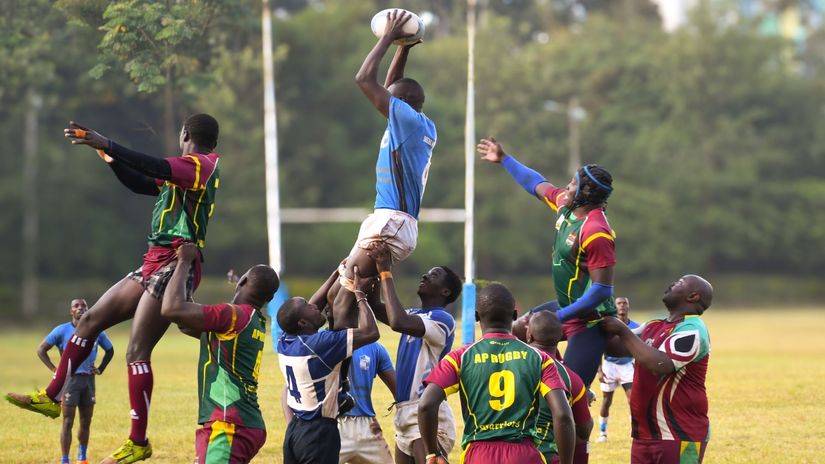
Kisumu RFC chairman Dr. Gabriel Ouma openly admitted that budgetary pressures forced the club to pull out of the competition, a situation he says mirrors the reality facing many teams across the country.
“As Kisumu RFC, we always want to honor our fixtures, but sometimes the financial realities are overwhelming. Travelling across the country without adequate sponsorship is extremely costly, and this season we’ve had to prioritize our league commitments. It’s not that we do not value the Enterprise Cup, but with the resources we currently have, some fixtures become impossible to honour,” Ouma said.
His remarks capture the dilemma facing Kenyan rugby clubs: balancing tradition with survival.
The Enterprise Cup’s origins are as rich as any rugby competition on the continent. The trophy was donated in 1928 by sailors from HMS Enterprise, a British Royal Navy cruiser that toured British East Africa and played rugby matches across Kenya, Uganda, and Tanganyika.
The ship’s rugby team, composed of officers and men, played a series of historic fixtures against clubs in Nakuru, Kitale, Kampala, Kericho, Thika, Ruiru, and Mombasa, marking one of the earliest organized rugby tours in the region.
Following their tour, the crew offered a silver goblet to the Rugby Football Union of Kenya (RFUK) to be awarded annually. After initial hesitation and consultation with rugby authorities in London and South Africa, the RFUK accepted the trophy, laying the foundation for what would become the Enterprise Cup.

First awarded in 1930, the competition quickly grew into a highlight of the rugby calendar in the African Great Lakes region. Annual rugby gymkhanas, packed crowds, entertainment, and fierce rivalries defined the early years. Nairobi, Coast, Plateau, and Rift Valley districts battled for supremacy, with matches often decided in shortened but intense contests to accommodate packed schedules.
Over the decades, the Enterprise Cup evolved through numerous formats: inter-district, club-based, and zonal systems, adapting to the challenges of distance, transport, and growing participation. By the late 1930s, the competition featured up to 16 teams from across Kenya, Uganda, and Tanganyika, with hundreds of spectators attending semi-finals and finals.
The tournament was only interrupted by major global or logistical events: World War II between 1940 and 1946, the 1987 All Africa Games, and the infamous 2012 season that ended in disarray when the final was not played.
While the Enterprise Cup once symbolized regional rugby excellence, in recent years it has become an all-Kenyan affair, and even then, participation has dwindled. Rising travel costs, limited sponsorship, congested calendars and prioritization of league rugby have all chipped away at its stature.
.jpg) ©Tabby Nashipae
©Tabby NashipaeDespite these challenges, Kenya Rugby Union (KRU) officials remain optimistic.
Leslie Mwangale, KRU’s Director of Fixtures, believes structural changes are already breathing new life into the competition.
“The competition was losing significance when it was being played after the regular season. We have since incorporated it within the regular season, and this has seen significant improvements. This season it will be cross-border, and I believe with this development the competition will be revived,” he said.
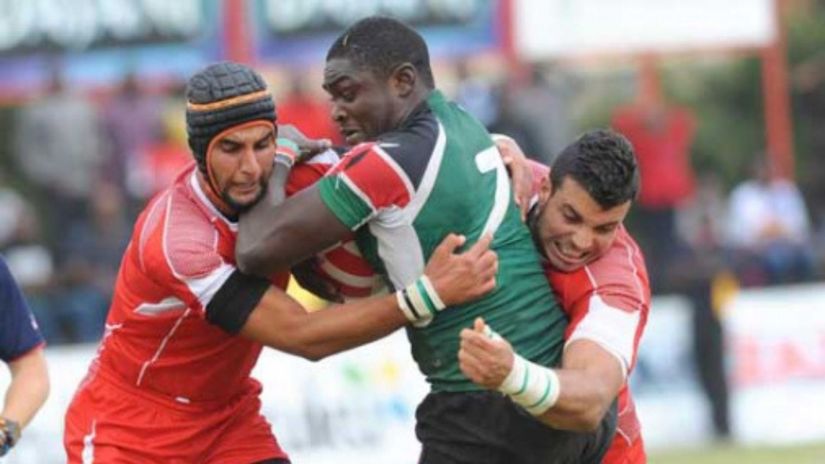
Mwangale further admitted that funding remains the biggest obstacle, but insisted that stability and improved planning will eventually attract sponsors.
“The main issue is funding. Most clubs are struggling. But as we keep growing our products and making them more stable and predictable, we will see more partners coming into the game. With the new format incorporating East Africa, it’s only a matter of time before sponsors come in and the competition is revived,” he said.