


Kakuma-born midfielder explains life in South Sudan after clinching treble

.jpg)

Reading Time: 6min | Wed. 13.05.26. | 08:10
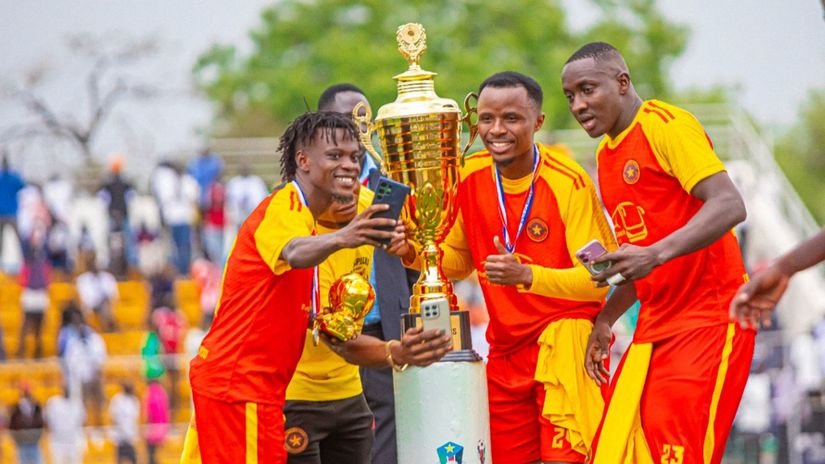
El Merreikh Bentiu have swept through the domestic scene, winning every major trophy on offer: the Super Cup, the league title and, most recently, the South Sudan Cup
A year ago, Gaetan Masha and El Merreikh Bentiu closed their season in silence. No medals, no celebrations, no silverware. For one of the biggest clubs in the South Sudan Premier League, ending the campaign trophy-less was indeed a catastrophic failure.
The disappointment lingered heavily around Bentiu because expectations at a club of El Merreikh’s stature always come enormously.
Download our Mozzart Sport app for more news
Twelve months later, the story has completely changed.
El Merreikh Bentiu have swept through the domestic scene, winning every major trophy on offer: the Super Cup, the league title and, most recently, the South Sudan Cup.
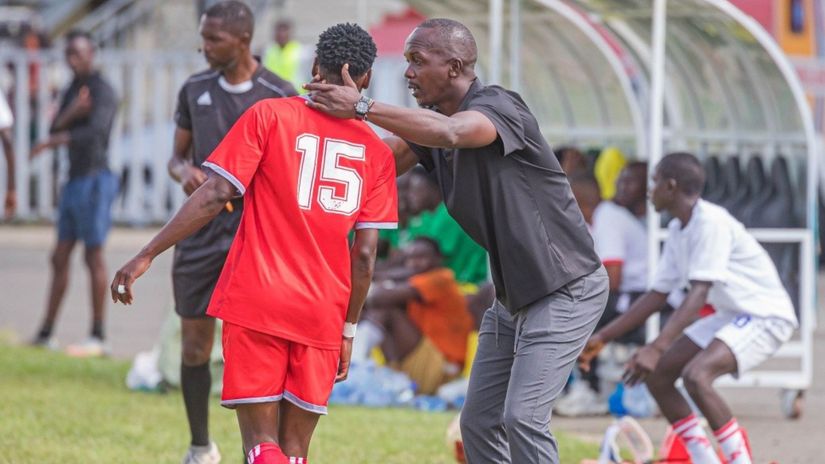
In the cup final against Al Ghazzala, it was Masha who delivered the decisive moment, scoring the winning goal in a tense 2-1 victory before later being named the competition’s best player.
For the diminutive, left-footed attacker whose low centre of gravity, quick feet and technical skill allow him to glide past defenders with ease, the triumph represented more than just trophies.
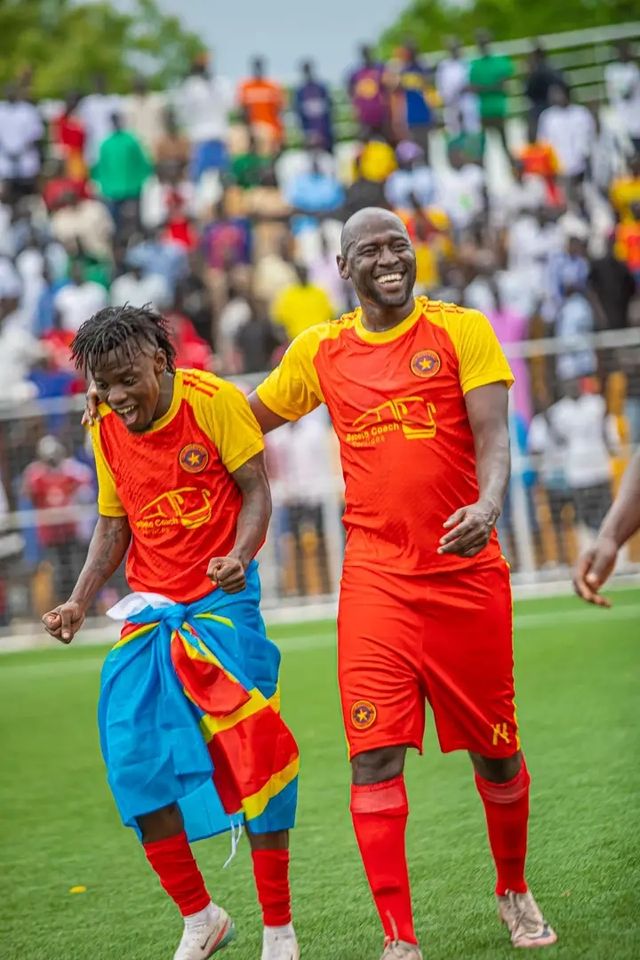
It was vindication after a difficult previous season and proof that both player and club had grown together.
“I’ve won three: Super Cup, Premier League and the South Sudan Cup,” Masha says proudly. “It’s all because of all the players’ efforts. We pushed ourselves knowing what we wanted.
The president gave us a lot of support, and not to mention the fans who really pushed us throughout. We give glory to the Almighty God.”
Masha’s rise in South Sudan may surprise some observers outside the region, but those who have watched his journey closely know his talent has always been evident.
Before arriving in Bentiu, the DR Congo native had already built experience in Kenyan football, featuring for Kakamega Homeboyz, Hillside FC and Nzoia Sugar.
During his spell with Homeboyz, he won the Mozzart Bet Cup in 2023, but even then, few could have predicted the impact he would eventually have in South Sudan.
El Merriekh SC Bentiu all the way.... pic.twitter.com/1hcbWGVScQ
— El Merriekh SC Bentiu (@ElmerriekhFC) April 28, 2026
What makes his story especially compelling is how closely it mirrors the development of the South Sudan Premier League itself: young, ambitious and steadily growing.
“When I arrived here, I had a lot of hope that we would one day lift the title,” Masha recalls. “The league wasn’t very competitive then. It’s a young league, and for any team with good structures and disciplined players, winning titles is easy.”
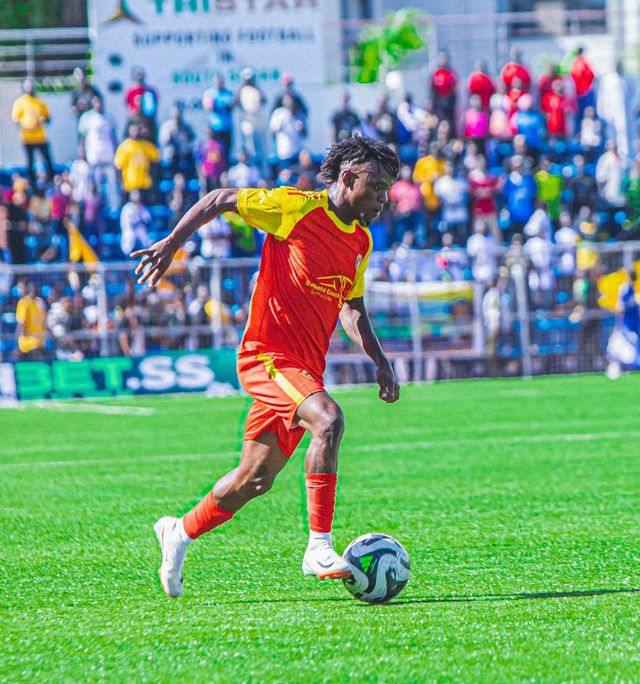
His words are not dismissive of the competition but rather an honest reflection of a league still in its infancy. South Sudan’s top flight is only in its second season since inception, meaning clubs are still building professional systems, attracting sponsors and developing structures that can sustain long-term growth.
For players willing to embrace the uncertainty, however, opportunity exists.
“It has not been so competitive. It’s only the second season since its inception,” Masha explains. “As time goes on, we hope sponsors will come in and attract more international players for the league to improve its competitiveness.”
That growth is already beginning to show. Clubs are becoming more organised, fan culture is intensifying, and foreign players from across Africa are increasingly viewing South Sudan as a destination rather than a risk.
At El Merreikh Bentiu, Masha found an environment he describes as fully professional — something he believes separates the club from much of the competition.
“El Merreikh is among the best teams in the country,” he says. “Since moving here, I’ve never thought of playing for another team. It’s a fully professional outfit, and the only other club that can compare is Jamus.”
Within that structure, Masha enjoyed the finest campaign of his career. He finished the season with nine goals and eight assists, consistently influencing matches with his creativity and movement in attacking areas.
Whether drifting inside from wide positions or unlocking defences with his close control, the left-footer became one of the league’s standout performers.

“It has been a great season for the team and me; we achieved a lot,” he says. “I was among the best — my best ever season, I can say.”
Yet beyond the trophies and statistics, Masha’s experience in South Sudan carries a deeper significance. Too often, perceptions of the country abroad are shaped almost entirely by stories of conflict.
Ishimwe, Gaetan on target to hand El Merriekh SC Bentiu South Sudan Cup 2026https://t.co/S00T3jtzhT pic.twitter.com/9JxLEJiz1Y
— El Merriekh SC Bentiu (@ElmerriekhFC) May 9, 2026
Mention South Sudan in many football circles and conversations quickly turn toward instability rather than possibility. Masha believes that narrative unfairly overshadows the country’s football culture and the abundance of talent within it.
“People think there is no talent. People believe there’s only war here,” he says. “What I can say is people here love football, and there is plenty of talent. Agents should visit more and see for themselves.”
His message is important, especially for foreign players hesitant to move to lesser-publicised leagues. African football continues to evolve beyond the continent’s traditional powerhouses, and leagues like South Sudan’s are increasingly becoming spaces where players can rebuild careers, gain visibility and compete for continental football.
Masha himself is evidence of that.
Raised partly in Kenya and having spent time at the Kakuma refugee camp during his formative years, his journey has never followed a straightforward path. That background perhaps explains his willingness to embrace uncertainty and take opportunities many others might avoid.
“I didn’t find it hard. I love taking risks,” he says. “As a footballer, you can find yourself in difficult situations. When I came in first, I would start from the bench. Most of the South Sudanese players I met here were people I was with at the Kakuma refugee camp in Kenya, so it was seamless for me to settle in.”
That familiarity helped him adapt quickly, but so too did the atmosphere around the club. At El Merreikh Bentiu, he found not just teammates but a sense of belonging.
“They take you as family,” Masha says. “There are players from the Ivory Coast, Mali, Tanzania, all here, and the management treats people equally, even when we are in the camp. They are like a family to me, too.”
In many ways, that unity became the foundation of El Merreikh’s success. A season after enduring the frustration of finishing empty-handed, the club responded with dominance, resilience and hunger. For Masha, the transformation remains almost surreal.
“Winning the three trophies is huge. It has never happened to me personally. I’m really happy,” he says. “Last season we were trophy-less, but this season we have three. My personal target was the CAF Champions League and we have managed.”
For now, his focus remains on Bentiu, although he admits strong performances naturally attract attention.
“For now, I’m in Bentiu, but if any offer comes up that is good, and an agreement is reached with my current club, I’d be willing to move.”
Whether he stays or eventually departs, Masha has already etched his name into the club’s recent history. More importantly, his story has become symbolic of a league and a country attempting to reshape how they are viewed by the rest of the football world.
South Sudanese football may still be young, imperfect and developing, but players like Gaetan Masha are proving that growth is happening. Behind the stereotypes and headlines lies a passionate football culture waiting to be discovered, and for those willing to believe, there are trophies, opportunities and stories worth telling.