


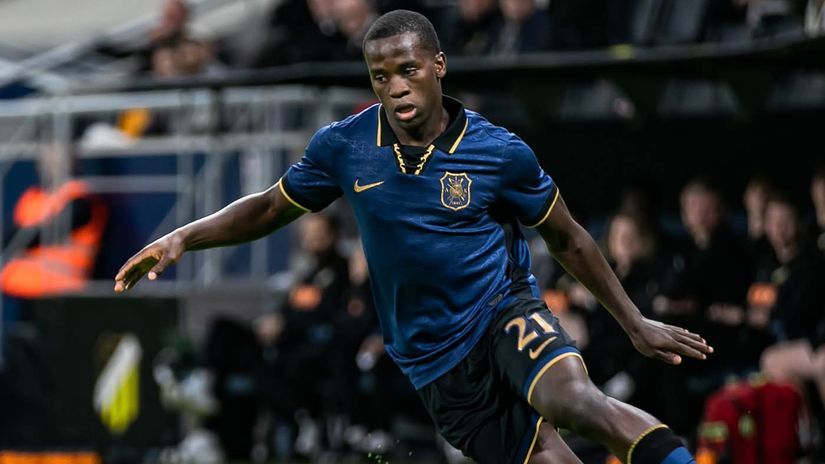
PLAYER ANALYSIS: Why Stanley Wilson could be Kenya’s most important player ahead of AFCON 2027




.jpg)



Reading Time: 8min | Wed. 27.05.26. | 20:38
His rise and versatility in the Swedish top tier could see him leap to a more competitive league, including the English Premier League
When Darajani Gogo faced Migori Youth FC at Camp Toyoyo stadium in a National Super League match in 2023, Kariobangi Sharks assistant coach Edward Seda noted a dimunitive midfielder running the show for Gogo.
Sharks soon snapped him up and after two years he is now a fully fledged Kenyan International and turning up for Swedish giants AIK.
In this player analysis we look at how Stanley Wilson Omondi has taken up his role and chances, earning plaudits far and wide.
At AIK this season, Wilson has quietly become one of the most interesting young possession players outside Europe’s traditional elite leagues.
What makes his emergence particularly compelling is not simply the volume of his passing or his technical polish, but the tactical complexity of the role he is always asked to execute.
Download Our MozzartSport App For More News
Across the matches against Malmö FF, Degerfors IF and IF Elfsborg, Wilson’s performances were not isolated flashes.
They formed one connected picture of a midfielder-defender hybrid capable of dictating build-up structures, progressing possession under pressure and accelerating attacks through intelligent vertical distribution.
The first thing that stands out about Wilson is the sophistication of his passing profile.
AIK are effectively using a midfielder disguised as a fullback.
Whether starting nominally on the left or right side of the back line, his game is fundamentally built around manipulation of space and circulation of possession.

He is constantly scanning before receiving, opening his body to the pitch and creating multiple passing exits with his first touch.
That scanning habit is critical because it allows him to play forward early and with conviction.
Wilson rarely receives the ball just to recycle it aimlessly.
Even in safer moments, there is visible intent to progress the phase.
His passing ambition is arguably his defining trait.
Against Malmö, operating primarily from the left side, he repeatedly hit diagonal switches toward the right winger Zadok Yohanna with excellent weight and trajectory.
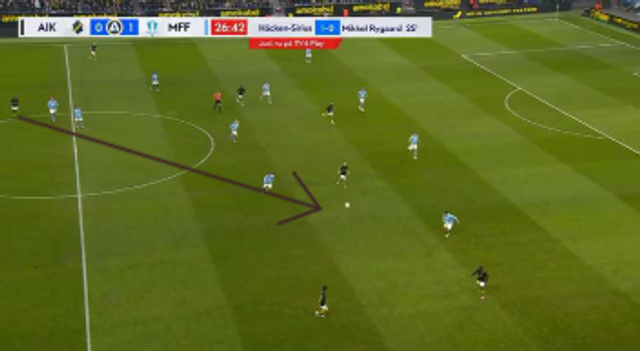
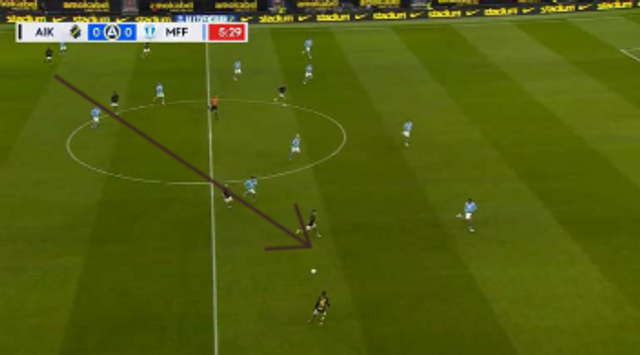
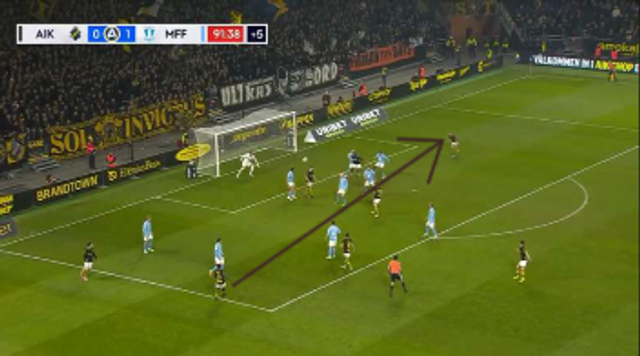
These were not speculative clearances disguised as switches; they were calculated progression passes designed to bypass pressure and immediately attack the far side of Malmö’s defensive structure.
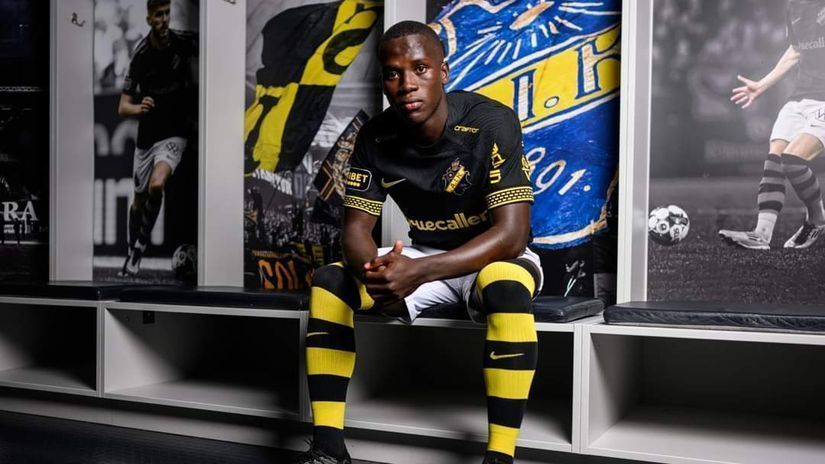
The accuracy of those deliveries stood out because he consistently played them into the receiver’s stride rather than simply toward an area.
That distinction matters. Elite passers do not merely complete passes; they improve the next action for the teammate receiving them.
Wilson’s vertical passing is even more impressive than his switches.
He constantly searches for line-breaking options into advanced runners between midfield and defensive lines.
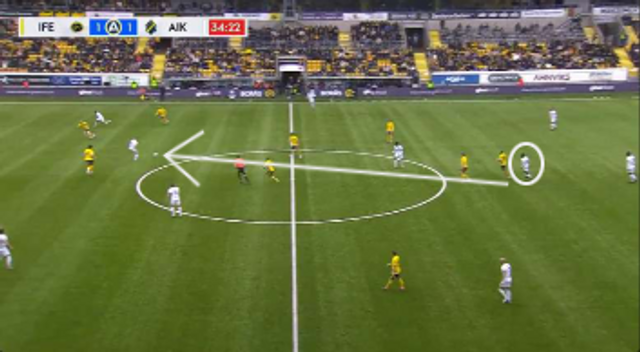
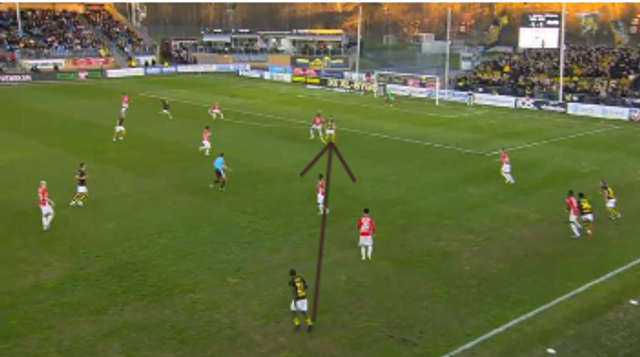
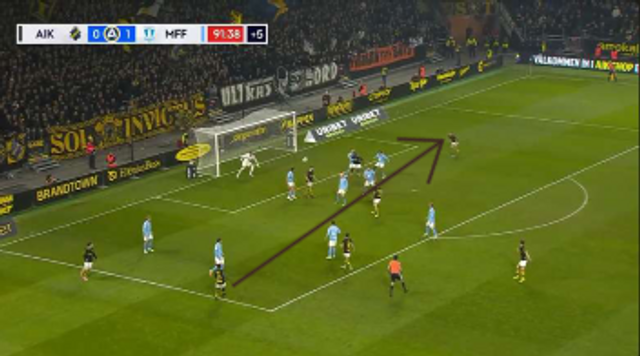
These were not speculative clearances disguised as switches; they were calculated progression passes designed to bypass pressure and immediately attack the far side of Malmö’s defensive structure.
AIK’s build-up often funnels through him because he has the courage to attempt difficult forward passes under pressure.
The statistical output reflects that profile: among the highest players in the Allsvenskan for progressive passes and passes into the final third.
But the eye test reveals something equally important - timing.
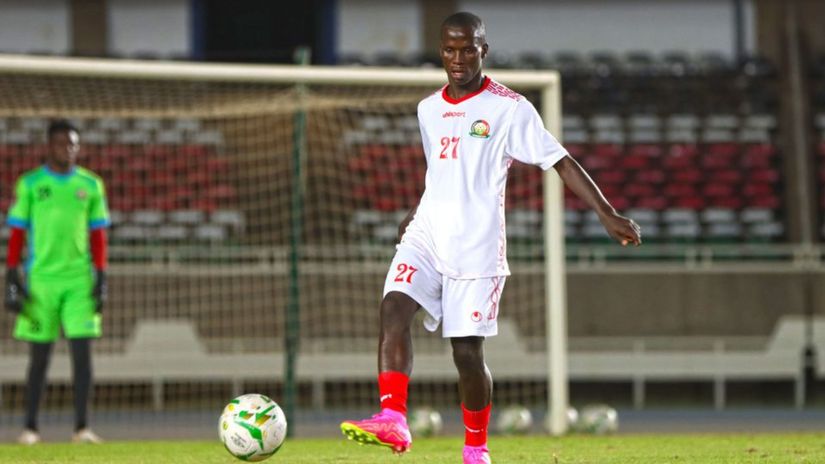
He does not rush the release unnecessarily. Instead, he manipulates defenders through subtle pauses and body orientation before threading the ball forward.
That composure under pressure is central to AIK’s entire possession structure.
Across all those three matches evaluated, Wilson consistently recorded the highest number of touches, which says a great deal about the trust placed in him by teammates.
Players repeatedly circulate possession through him because he provides stability without slowing the tempo.
His first touch is exceptionally clean, especially when receiving on the half-turn.
In tight spaces he can cushion difficult passes with either foot and immediately shift away from pressure.

That ability allows AIK to maintain rhythm during deeper phases of build-up.
What elevates him further is how naturally he combines carrying with passing.
Wilson is not simply a stationary distributor.
When opponents block central lanes, he progresses possession through carries with close control and balance.
Against Elfsborg especially, his inverted movements into midfield created overloads and opened progression angles that AIK otherwise struggled to access.
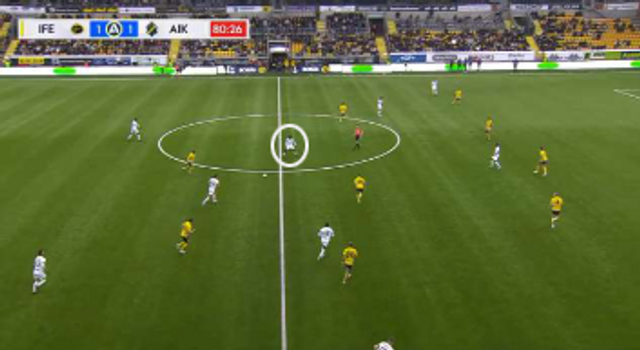
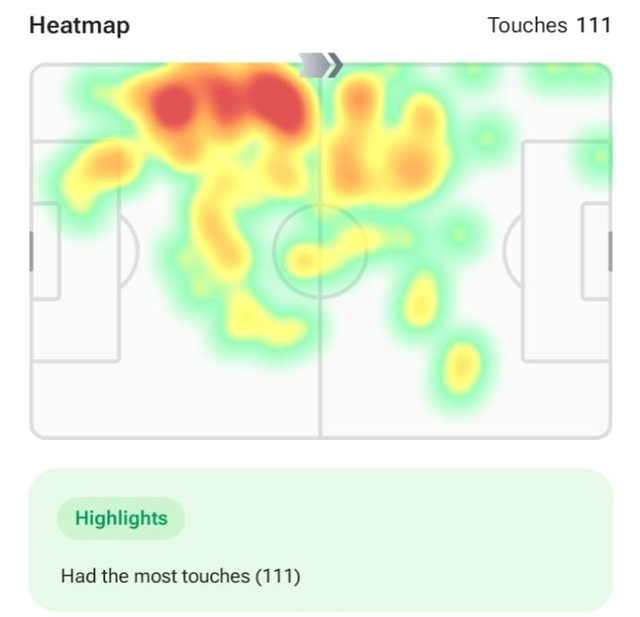
He glides past pressure rather than exploding through it physically.
His dribbling is based more on agility, ball manipulation, and body positioning than raw acceleration.
Once he draws opponents toward him, he releases quick combinations that destabilize defensive compactness.
AIK’s tactical use of him has been extremely intelligent. Officially he starts as a fullback, but functionally he operates as an additional midfielder during possession.
From left-back, he frequently inverts centrally while the winger - particularly the left-sided attacker, Bersant Celina, maintains width.
That rotation stretches opposition pressing structures horizontally.
Against Elfsborg, his inward movement consistently created space for the winger to isolate defenders wide, while simultaneously giving AIK another controller between the lines of pressure.

When deployed on the right side against Degerfors, the principles remained similar despite the positional switch.
He stepped inside during build-up to create numerical superiority in midfield, allowing the center-backs cleaner access into progression phases.
His positioning between opposition midfielders often made him the free man in circulation.
Once he received, his awareness of surrounding pressure allowed him to either play through compact zones or switch play quickly.
His relationship with the center-backs is particularly important.
Wilson frequently drops into supportive angles during first-phase build-up, giving defenders a technically secure outlet capable of escaping pressure.
Because he is comfortable receiving while marked, opponents cannot easily trap AIK on one side.
Many of his vertical passes are aimed not directly into feet, but into zones that allow forwards to receive while already facing goal or attacking depth.
Out of possession, Wilson brings aggression and intelligence, though this remains the least complete part of his game.
His duel success on the ground is excellent because he engages assertively and reads passing lanes well.
Against Malmö, he handled Taha Ali impressively in one-versus-one situations by staying tight without overcommitting.
He covers ground aggressively and anticipates interceptions early, which makes him effective in transitional defensive moments.
However, there are still inconsistencies in his pressing mechanics.
Against Degerfors there were moments where delayed pressing jumps allowed opponents to bypass him through quick flank combinations.
This is partly an experience issue. As an inverted fullback, timing becomes extremely delicate because the player must constantly judge whether to protect central spaces or engage wide pressure.
Wilson occasionally reacts a fraction late to blindside movements, especially when possession changes quickly.
Improving his recognition of pressing triggers will elevate his defensive reliability significantly.
Physically, he is quick over short distances and agile in tight areas, but aerially he can be vulnerable.
His frame is not naturally dominant, and stronger attackers can sometimes pin him physically during defensive duels.
The own goal against Degerfors reflected part of that physical awkwardness in emergency defending situations rather than poor technical ability.
He is not weak, but he is still developing the robustness needed for elite-level defensive consistency.
For Kenya national football team under Benni McCarthy, Wilson could become tactically transformative.
Kenya have often lacked a midfielder capable of consistently progressing possession through central pressure while maintaining attacking ambition.
Wilson solves several structural problems simultaneously. He offers build-up control, tempo management, and direct progression from deeper zones.
![Benni McCarthy stars in advert announcing Ksh234 million promotion [VIDEO]](https://cdn3.mozzartsport.co.ke/upload/825x464/News/Image/2026_05/1779381938431_IMG_20260521_164909.jpg)
McCarthy’s likely approach with Kenya will emphasize quicker vertical attacks combined with structured pressing. In that environment, Wilson fits naturally as either an inverted fullback or a deeper central midfielder in a double pivot.
His ability to connect midfield to attack through disguised forward passing would immediately benefit Kenya’s transition game.
With runners ahead of him, his diagonal switches and line-breaking deliveries could become major attacking weapons.
The ideal scenario would involve pairing him with a more physically dominant midfielder who can absorb defensive dueling responsibilities while allowing Wilson to orchestrate progression.
His chemistry with dynamic forwards could be particularly dangerous because he excels at releasing runners early into space.
Kenya have often struggled to sustain attacks after regaining possession; Wilson’s calmness and passing range could change that dynamic by turning defensive recoveries into controlled attacking sequences.
To maximize his qualities, McCarthy should build rotational structures around him rather than treating him as a conventional fullback.
Allowing him to drift centrally during possession would create superior passing angles and facilitate faster access into advanced areas.
Kenya’s wingers could then maintain width while Wilson operates as the connective distributor underneath.
Structured third-man combinations involving Wilson, an attacking midfielder, and the striker would particularly suit his profile because of his ability to weight passes precisely between defensive lines.
He is especially effective in the “Attacking midfielder-to-striker” connection phase. Many young passers can switch play or recycle possession, but Wilson consistently looks to access dangerous central zones.

Designing patterns where he receives facing forward with runners attacking the channels could significantly improve Kenya’s chance creation.
His directness should not be restricted. Instead, it should be framed within coordinated movement ahead of him.
There are still clear developmental areas. Decision-making under sustained pressure can improve, particularly regarding when to simplify play instead of forcing ambitious progression.
His defensive awareness during wide pressing phases needs refinement, especially in recognizing blindside overlaps and timing pressing jumps earlier.
Physically, he must continue developing strength and aerial competitiveness if he is to thrive consistently against stronger opposition.
Consistency over longer stretches will also determine his ceiling.
The technical foundation is already elite for his age, but maintaining concentration across entire matches - especially defensively - remains part of the maturation process.
Yet the broader picture is unmistakably encouraging. Wilson already plays with the composure and spatial understanding of a far older midfielder.
AIK are not simply developing a modern fullback; they are shaping a multifunctional progression specialist whose intelligence allows him to influence every phase of possession.
Across these three matches, the pattern was unmistakable: AIK’s rhythm, progression, and structural balance repeatedly flowed through Stanley Wilson.
At just 19, he already looks like a player capable of becoming the central reference point of both club and national-team build-up systems.
And if his development continues on this trajectory, it is not difficult to envision him reaching the Premier League in the coming years.
His profile aligns closely with the type of multifunctional possession players elite clubs increasingly value - technically secure, positionally intelligent, and capable of progressing play from deeper zones under pressure.
A club like Brighton & Hove Albion F.C. would make enormous sense given their recruitment model and emphasis on technically refined young players comfortable in rotational structures.
The pathway through Royale Union Saint-Gilloise could also suit his development perfectly, allowing him to sharpen his tactical and physical consistency before making the jump to England.
Even stylistically, there are elements of his game that would translate naturally into positional-play systems used by teams like Manchester City F.C. - particularly his ability to invert from fullback zones, manipulate pressure through passing angles, and control tempo while maintaining vertical ambition.