


.jpg)
Pre-Match Tactical Analysis: How subtle patterns will decide Shabana's clash with Kenya Police

.jpg)
.jpg)
Reading Time: 6min | Fri. 24.04.26. | 21:30
Both teams have shown a preference for a 4-4-2 midblock defensively
Shabana’s upcoming clash with Kenya Police sets up as a fascinating tactical duel between two sides that share structural similarities out of possession, but diverge significantly in how they interpret transitions, build-up play, and attacking width.
Download our MozzartSport App For More News
Both teams have shown a preference for a 4-4-2 midblock defensively, yet the nuances within those systems - and how they morph in different phases - will likely define the outcome of this encounter.
Kenya Police come into this match off a commanding 3-0 victory over AFC Leopards, but beneath that scoreline lies a very specific and somewhat unconventional match profile.
They completed only 84 passes in a game with just 24 minutes of actual ball-in-play time, highlighting a highly direct, transition-heavy approach.
Out of possession, they deploy a compact 4-4-2 midblock, occasionally stepping into a higher press led by the frontline pairing of Marvin Nabwire and Yves Koutiama.
Their pressing is not constant but rather trigger-based, with clear cues such as passes to the fullbacks or backward circulation to the pivot.
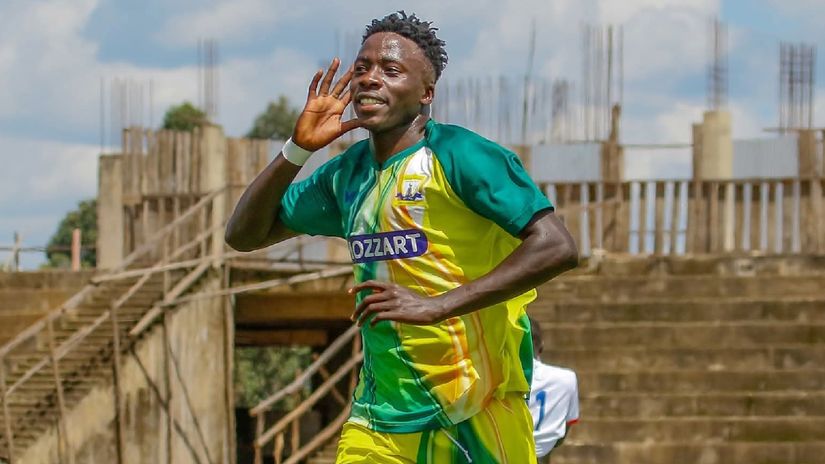
Once activated, they shift laterally with a man-oriented approach, often using the touchline as a pressing trap to suffocate opponents and force turnovers in wide areas.
Defensively, Kenya Police are aggressive in their line engagement.
Their center-backs, Aboud Omar and Kevin Ouma, are proactive in stepping out of the defensive line to close down players receiving between the lines, especially in zones around the penalty area.
This front-foot defending limits the opponent’s ability to turn and create, but it also introduces risk if bypassed, leaving space in behind. Interestingly, their defensive shape can morph situationally into a five-man second line when Charles Ouma drops deeper, reinforcing central compactness when the opponent advances into their third.
In possession, Kenya Police utilize a build-up structure that begins with their center-backs and a dropping pivot - either Charles Ouma or Nana Kusi - forming a temporary back three.
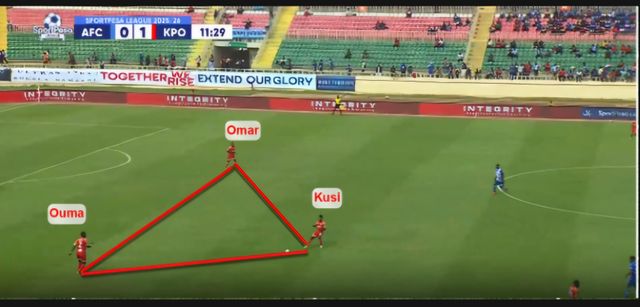
This allows both fullbacks to push high, stretching the pitch horizontally.
However, their most distinctive attacking pattern emerges on the left flank. Zakayo Ngava, nominally the left winger, frequently drops into deeper zones during phase one build-up, either to receive the ball or to vacate space for Aboud Omar to launch long diagonal passes.
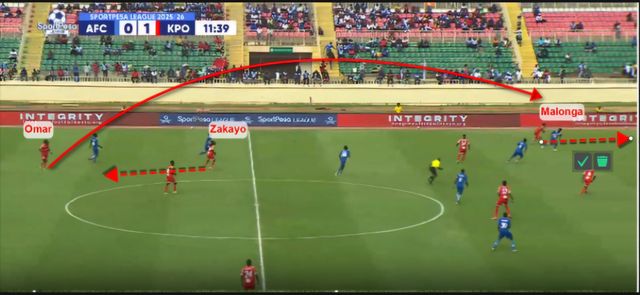
These diagonals often target Hernest Malonga, the left-back, who advances aggressively into wide attacking zones.
This left-sided overload becomes a key progression route, bypassing midfield congestion and exploiting space behind the opponent’s defensive line.
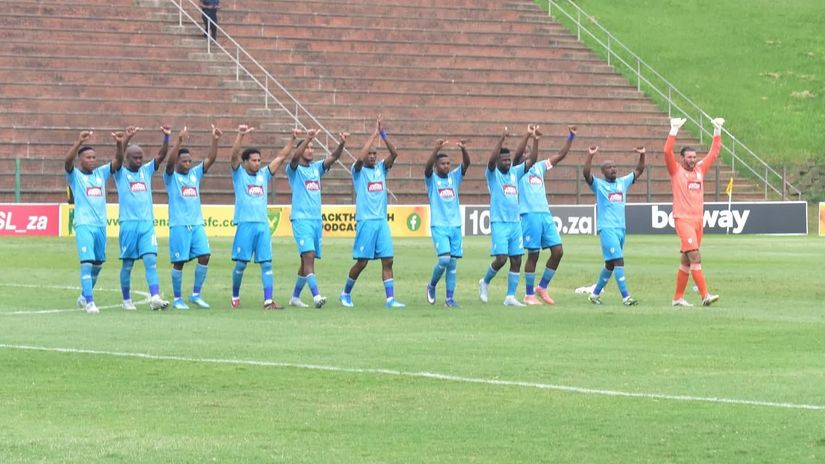
Their attacking shape often resembles a 4-2-4, especially in sustained possession in the final third.
Width is crucial, with Herbert Malonga and Mangeni delivering crosses into the box, aiming to exploit aerial presence and second-ball situations.
Koutiama’s movement in behind adds another dimension, as he constantly threatens the depth of the opponent’s backline.
Kenya Police are also dangerous on set pieces, particularly corners. Zakayo Ngava delivers inswingers from the left, targeting near-post runs, while Aboud Omar and Malonga can deliver from the right.
These routines are well-rehearsed and can punish teams with poor marking discipline.
Transitions are perhaps their most potent weapon. Kenya Police thrive on intercepting passes and launching quick counterattacks, exploiting structural disorganization in the opponent’s rest defense.
Their directness is not just a stylistic choice but a tactical weapon, especially against teams that commit numbers forward.
The recent return of Edward Omondi adds further attacking firepower, particularly on the left wing, and his potential involvement could stretch Shabana’s defensive structure even more.
Shabana, on the other hand, are entering this fixture under the guidance of first assistant coach Osborne Monday, and their recent tactical identity reflects a blend of structured build-up and direct attacking intent.
Like Kenya Police, they defend in a 4-4-2 midblock, occasionally shifting into a 4-1-4-1 when closer to the opponent’s territory.
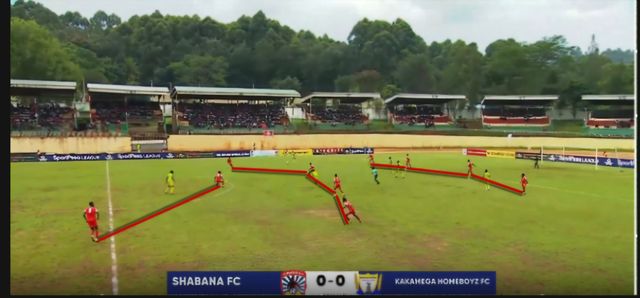
Their compactness and discipline out of possession allow them to absorb pressure effectively, especially in the latter stages of matches where they prioritize game management and defensive solidity.
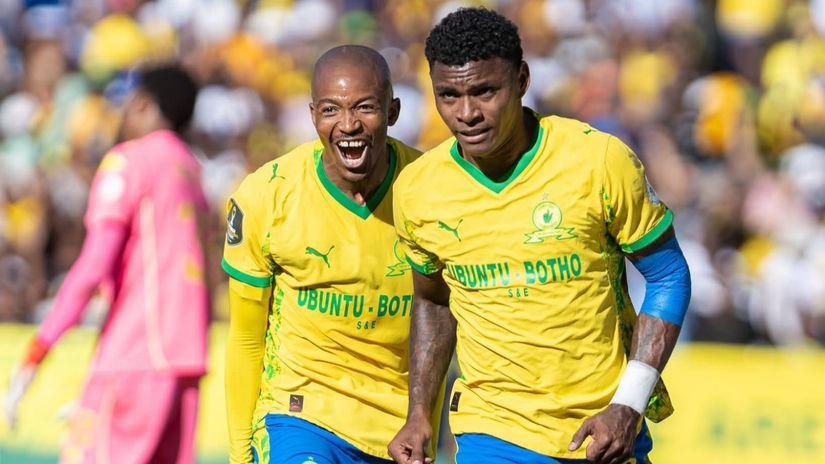
In possession, Shabana exhibit flexibility, alternating between patient build-up and direct play. Their base structure often resembles a 4-2-3-1, with the double pivot of Kevin Omundi and Byron Otieno dropping deep to support the center-backs during the first phase.
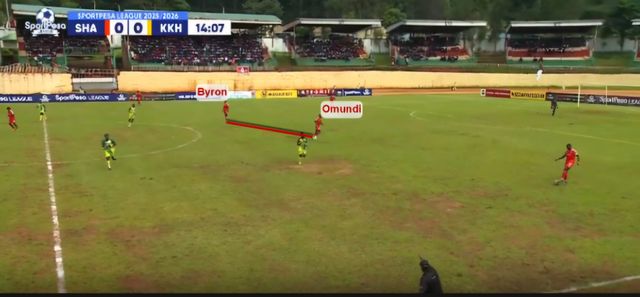
This creates a stable 4-2 base that facilitates ball circulation and allows the fullbacks - particularly James Mazembe on the left - to push forward.
Mazembe’s forward runs are instrumental in creating width and enabling Brian Michira to invert into the left half-space, effectively acting as an inside forward and increasing presence in the final third.
However, Mazembe’s injury in the previous match introduces uncertainty. His absence could disrupt Shabana’s left-sided dynamics, both offensively and defensively.
If Brian Bett steps in, the team may need to adjust their patterns, potentially reducing the fluidity of their left flank or altering the timing of overlapping runs.
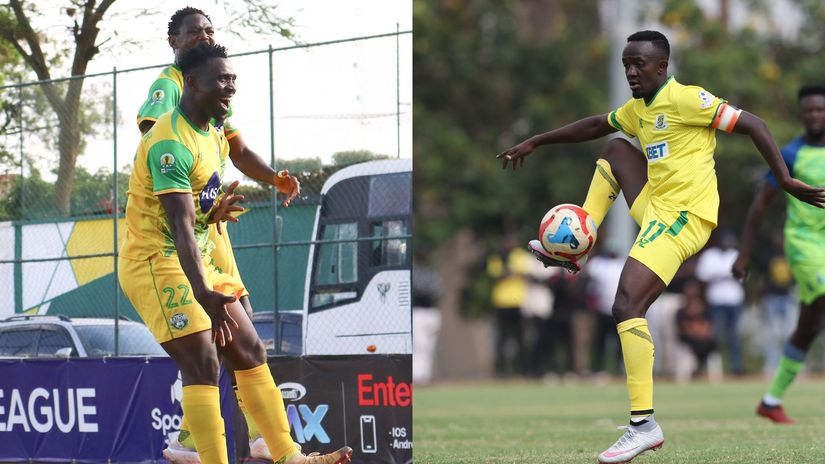
This could also impact their rest defense, as Mazembe’s balance between attack and defense has been a key stabilizing factor.
Shabana’s attacking play often revolves around targeting Bathsi Assis with long balls.
Assis acts as a focal point, engaging in aerial duels and holding up play in advanced areas. This direct approach allows Shabana to bypass midfield pressure and quickly enter the opponent’s defensive third.
Additionally, they utilize switches of play to stretch the opposition and create space in wide areas, inviting midfielders to exploit half-spaces as they approach the penalty box.
Their use of gegenpressing sometimes, however, presents a double-edged sword.
While it allows them to quickly regain possession after losing the ball, it also leads to turnovers in vulnerable zones near the halfway line.
Against a team like Kenya Police, who excel in transitional moments, this could be a critical weakness.
If Shabana lose the ball during their pressing attempts, they risk being exposed to quick counterattacks, especially with Koutiama’s runs and the wide threat posed by Malonga\Zakayo on the left and Alvin\Omondi.
Despite this, Shabana maintain a solid rest defense, with fullbacks who are disciplined in balancing their roles.
This could help mitigate some of the risks associated with their aggressive pressing and forward runs.
Their ability to adapt between long and short build-up phases also makes them less predictable, allowing them to respond dynamically to Kenya Police’s pressing triggers.
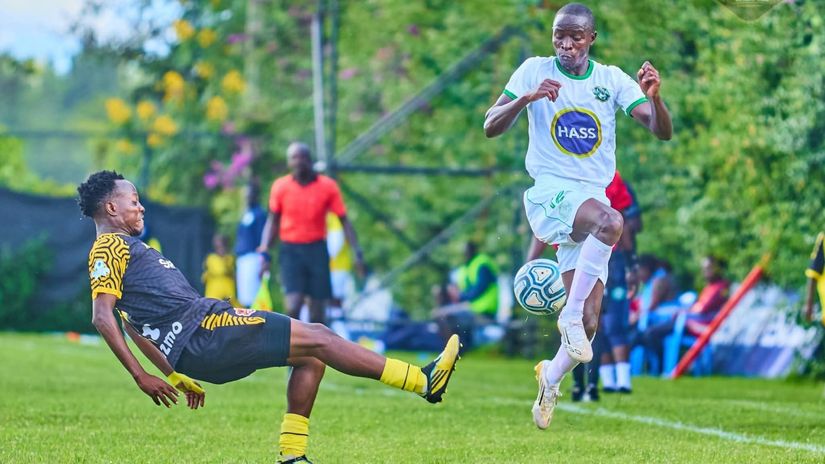
This match may hinge on which team better exploits transitional moments and manages structural balance. Kenya Police will look to capitalize on Shabana’s midfield turnovers and use their direct, wing-oriented attacks to create scoring opportunities. Shabana, meanwhile, must be cautious in their pressing and ensure that their rest defense is well-organized to withstand Kenya Police’s quick breaks.
At the same time, they will aim to exploit the spaces left by Kenya Police’s aggressive center-backs and high fullbacks, particularly through Assis and their half-space runners.
The tactical battle is finely poised, with both teams possessing the tools to hurt each other. Execution, discipline, and adaptability will be key in determining who gains the upper hand.