



TACTICAL ANALYSIS: How Nairobi United staged spirited comeback in 6-goal thriller against Murang'a Seal




.jpg)
Reading Time: 7min | Tue. 21.04.26. | 22:12
The match was closely contested in the opening 20 minutes before swinging decisively in Nairobi United’s favour, driven by their superior ability to punish structural gaps and exploit half-spaces and wide channels
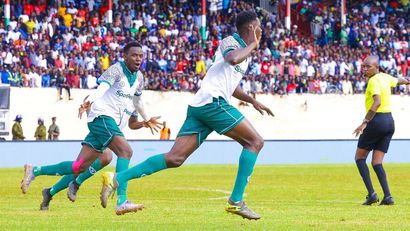
Murang'a Seal hosted Nairobi United in an FKF Premier League encounter that began with early promise for the home side but quickly unravelled into a 2-4 defeat, exposing clear tactical imbalances as the visitors capitalised on transitions and wide overloads.
Download our MozzartSport App For More News
The match was closely contested in the opening 20 minutes before swinging decisively in Nairobi United’s favour, driven by their superior ability to punish structural gaps and exploit half-spaces and wide channels.
Murang'a Seal lined up in a 4-2-3-1, with Wesley Mwangi in goal, Price Musebe at right-back, Paul Ngugi and Michael Aloo as the central defensive pairing,
Tony Musa at left-back, Michael Owen and Telvin Maina as the double pivot, Victor Akwanyi on the left wing, Lucas Maina starting on the right flank, Joe Waithira as a withdrawn striker, and Jack Macharia operating in behind as the attacking midfielder.

Nairobi United deployed a 4-2-4, featuring Bernard Jairo in goal, Yusuf Mainge at right-back, Lennox Ogutu and John Otieno as centre-backs, Kevin Osanya at left-back, Brian Mzee and Lesley Owino as the two central midfielders providing progression and security, Kevin Wangaya as the advanced playmaker drifting between the lines and into wide areas,
Enock Machaka and Dancan Omalla as the wide attackers, and Michael Karamor leading the line as striker.
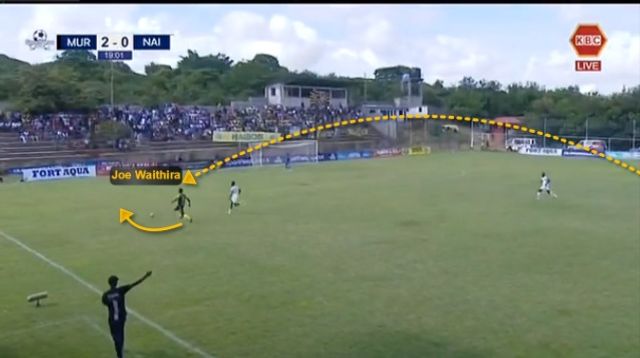
From kick-off, Murang'a Seal showed intent through direct build-up, bypassing the midfield with a long pass from the goalkeeper down the left wing to Tony Musa.
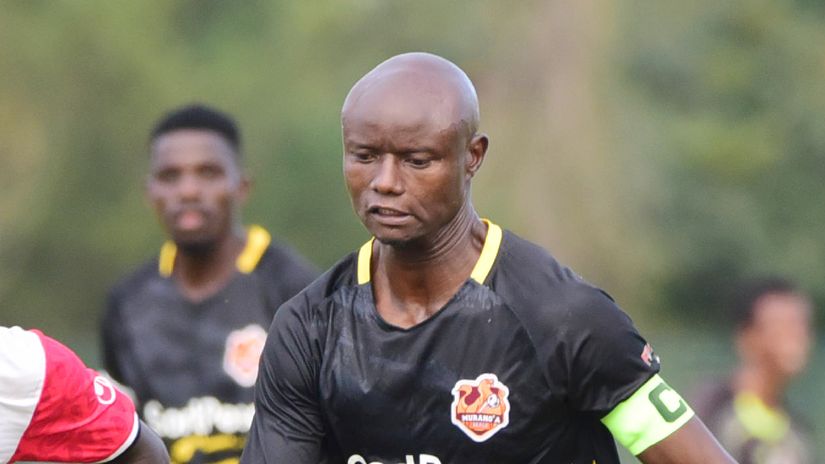
The left-back controlled the ball composedly and delivered a precise pass that allowed Jack Macharia to finish with a low shot in the fifth minute, giving the hosts a 1-0 lead.
This early success highlighted Murang'a’s flexible attacking patterns, blending long passes to stretch the opposition defence with Joe Waithira’s runs into the left half-space while maintaining intricate short circulation in midfield to increase tempo near the opposition territory.
In contrast, Nairobi United’s 4-2-4 shape featured wide centre-backs positioned low during build-up, allowing full-backs to push high and create width.
This enabled Enock Machaka to drift infield from the right when Yusuf Mainge advanced, generating rotational mechanisms that supported interior overloads and quick combinations with Kevin Wangaya.
Rising tension emerged as Murang'a Seal pressed for a second goal, but Nairobi United’s high-man-oriented press and counter-pressing resistance disrupted their rhythm.
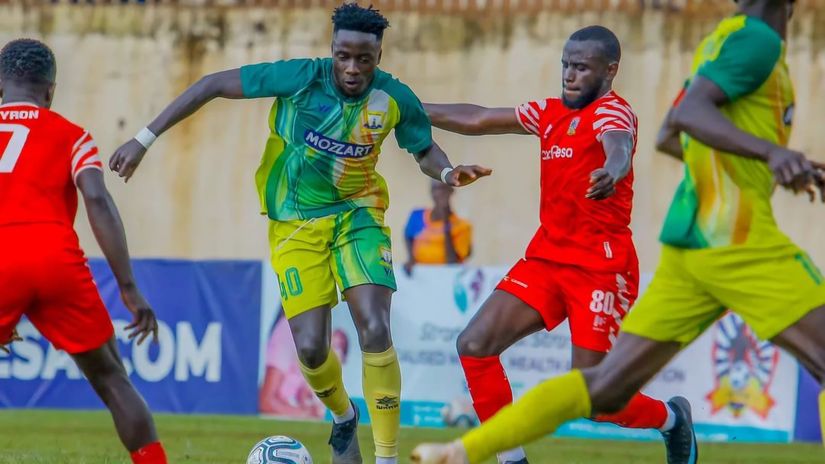
In the ninth minute, a dispossession of Machaka led to a rapid through ball that Jack Macharia latched onto, doubling the lead to 2-0 with a clinical finish.
Murang'a’s in-possession shape relied on dropping movements from Waithira to create space, yet their out-of-possession structure left gaps when full-backs pushed forward.
Nairobi United capitalised on these transitions by funnelling play wide, where their wingers orchestrated crosses and cutbacks targeting Karamor in the box or late arrivals from midfield.
Their defensive scheme in a 4-4-2 mid-block out of possession proved compact and effective, with stepping triggers that forced Murang'a into predictable wide attacks while recovery runs from the double pivot of Mzee and Owino swept up second balls.
The first major turning point arrived in the 21st minute when a mistimed pass at the back from Murang'a Seal gifted Nairobi United a corner. John Otieno rose unmarked to head home a free header, reducing the deficit to 2-1.
This goal stemmed directly from Nairobi’s ability to exploit Murang'a’s build-up vulnerabilities under pressure.
Brian Mzee dropped deeper as a pivot to support the wide centre-backs, with Lesley Owino staggering nearby to aid progression, creating a solid rest-defence that allowed full-backs to bomb forward without exposing the back line.
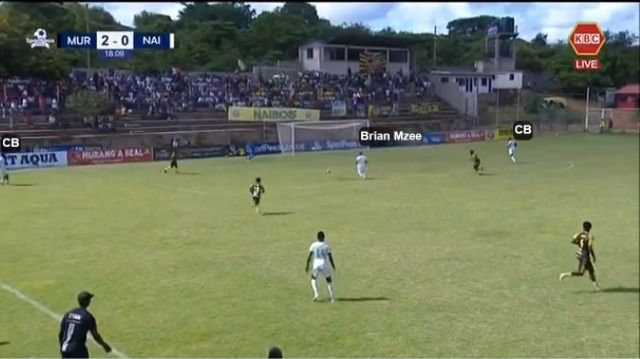
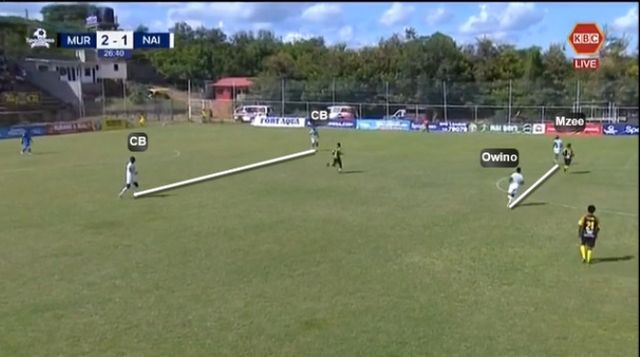
Nairobi’s attacking patterns emphasised verticality and directness, using switches of play from the left to isolate players on the right flank before delivering crosses or cutbacks into the penalty area.
Murang'a Seal struggled in the wide channels, where their full-backs were repeatedly lured out of position, leaving half-spaces exposed for Wangaya’s drifting movements.
Momentum continued shifting toward Nairobi United around the 30th minute. A swift switch of play from the left wing found the right flank, followed by a cross-cutback that saw Wangaya arrive late to shoot; Wesley Mwangi punched the ball away, but Michael Karamor pounced on the rebound to equalise at 2-2.

This sequence illustrated Nairobi’s dominance in key zones: the wide areas and the edge of the box, where third-man combinations between wingers and the advanced playmaker created numerical overloads.
Karamor’s positioning as the focal point exploited Muranga’s defensive compactness, which lacked the stepping triggers to deal with late runners.
Just five minutes later, in the 35th minute, Wangaya reached the byline on the left and cut the ball back for Karamor to finish clinically on the far side of the vacated goalmouth, making it 2-3.
Nairobi’s pattern of going wide from build-up, then delivering crosses or cutbacks to target the striker or midfield arrivals, repeatedly overwhelmed Murang'a, whose interior overloads in midfield failed to track the drifting threats.
Murang'a Seal nearly responded in the 37th minute when Jack Macharia’s shot forced a save from Jairo, who came off his line smartly, but the visitors maintained control through their 4-4-2 mid-block.
Their pressing disrupted Murang'a’s short, intricate passes, forcing errors and regains in the middle third that led to quick vertical breaks. By half-time, the score stood at 2-3, with Nairobi United having overturned a two-goal deficit through superior transitions, wide exploitation, and clinical finishing in the channels.
The second half opened with another decisive turning point in the 50th minute when Kevin Wangaya scored directly from a free-kick, extending the lead to 2-4.
This set-piece goal underscored Nairobi’s threat from dead-ball situations and Murang'a’s struggles with compactness around the box.
Murang'a Seal responded by attacking through the wide areas, seeking 3v2 or 2v1 overloads and early crosses to create chaos, but their out-of-possession shape remained vulnerable to counterpressure.
Tactical adjustments followed in the 65th minute: Murang'a introduced Memusi Siololo for Macharia and Mark Mwaniki for Lucas Maina to inject speed and verticality.
They shifted to a two-striker system with Joe Waithira and Memusi Siololo up front, Victor Akwanyi moving to the left wing, and Mwaniki slotting in on the right.
This change aimed to create more direct threats and isolation on the flanks, particularly with Victor Akwanyi, yet it left their rest-defence exposed as numbers were committed forward.
Nairobi United countered with the substitution of Mustafa Kizza for Dancan Omalla to maintain width and defensive balance.
Their wingers continued luring Murang'a players into wide presses before exploiting spaces behind the full-backs with third-man runs involving the left-back and supporting midfielders.
By the 69th minute, Murang'a nearly conceded a fifth when their goalkeeper ventured out, but Paul Ngugi produced a vital recovery run to deny Karamor a clear chance.
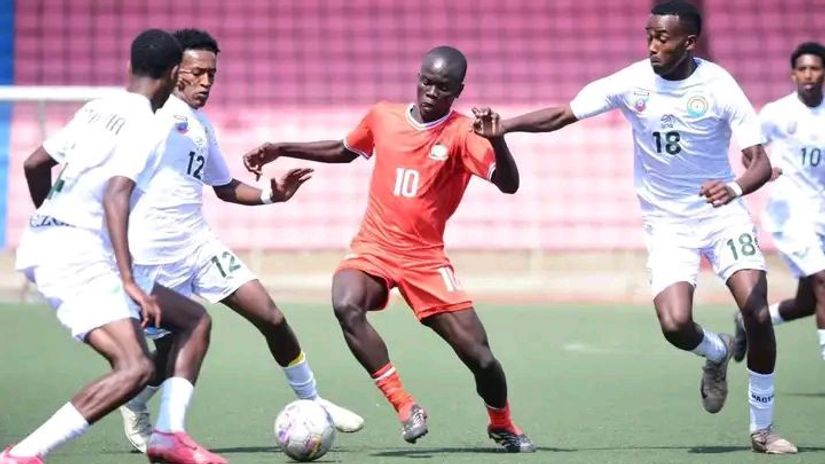
The game entered a phase of middle-third regains around the 75th minute, with both sides looking for quick transitions, but Nairobi’s structure proved more disciplined in controlling these moments through compact stepping triggers and rapid recovery runs.
Further changes came in the 79th minute as Nairobi brought on Brian Magare for Wangaya and Shami Mwinyi for Karamor, refreshing their attacking line while preserving solidity.
Murang'a Seal threw more numbers forward in the closing stages, seeking goals through corner kicks, but this left significant gaps in their rest-defence.
Nairobi United exploited the space with directness and vertical breaks, using third-man patterns on the wide areas to maintain control. Their 4-4-2 mid-block remained organised, absorbing late pressure and clearing danger efficiently to see out the victory.
In tactical judgment, Nairobi United’s strategy proved superior through a flexible 4-2-4 in possession that transitioned seamlessly into a 4-4-2 mid-block out of possession, dominating wide channels and half-spaces with drifting playmakers, overlapping full-backs, and clinical wide combinations.
Their pressing and build-up disruption, triggered by high man-oriented pressure and dropping pivots, repeatedly forced Murang'a into errors that led to transitions and overloads.
Murang'a Seal’s 4-2-3-1 offered early promise through direct long passes and intricate midfield circulation but failed to adapt when their full-backs were pulled out of position, leaving defensive weaknesses exposed in transitions and rest-defence phases.
The visitors’ counter-pressure and recovery runs neutralised Murang'a’s late overload attempts, while their own substitutions maintained intensity without compromising compactness.
The result highlights how Nairobi United’s rotational mechanisms and exploitation of structural gaps turned defensive solidity into decisive attacking output, while Murang'a’s ambitious wide attacks left them vulnerable once momentum swung.
Key tactical takeaways include the effectiveness of dropping midfielders as pivots to enable wide overloads, the danger of mistimed build-up passes against a high press, and the value of clinical third-man runs in wide areas to punish overcommitted full-backs.
Nairobi United controlled transitions and key zones throughout the second half, delivering a clear verdict on their more adaptable and ruthless approach compared to Murang'a Seals’ promising but ultimately fragile structure.