


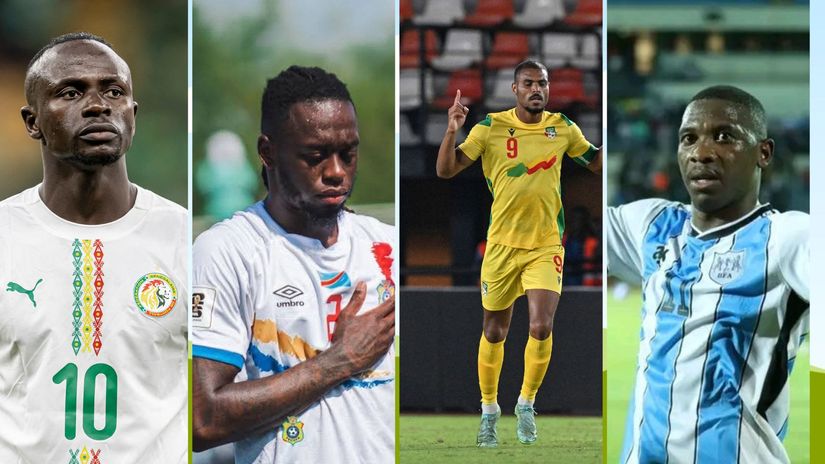
TACTICAL ANALYSIS: Group D Understanding Senegal's fluid rotations,DR Congo's shrewd gameplan,Benin's tactical maturity and Botswana's achilles heel

.jpg)
.jpg)
.jpg)

Reading Time: 7min | Fri. 19.12.25. | 12:45
With such diversity in tactical identities and competitive levels, every match will present unique challenges in this group
With Africa’s premier football showpiece gracing us once again, Mozzart Sport Kenya brings you in-depth tactical analysis of all the participating teams, what to expect from the coaches, the key players who make the systems work, and who will advance to the next round.
Follow our WhatsApp channel for more news
AFCON 2025’s Group D arrives with the feeling of a storyline waiting to erupt.
Senegal walks in carrying the weight of expectation, DR Congo brings a growing sense of ambition, Benin lurks with the kind of tactical discipline that unsettles bigger sides, and Botswana steps in knowing that nobody expects them—yet that is exactly what makes them dangerous.
It’s a group where reputations mean less than the battles that will unfold on the pitch; from personnel to tactical patterns, this group offers a rich blend of style contrasts that could define the early storylines of the tournament.
Senegal
Senegal enters AFCON 2025 as the second-highest-ranked African side after Morocco, and they remain an undisputed favorite for the title.
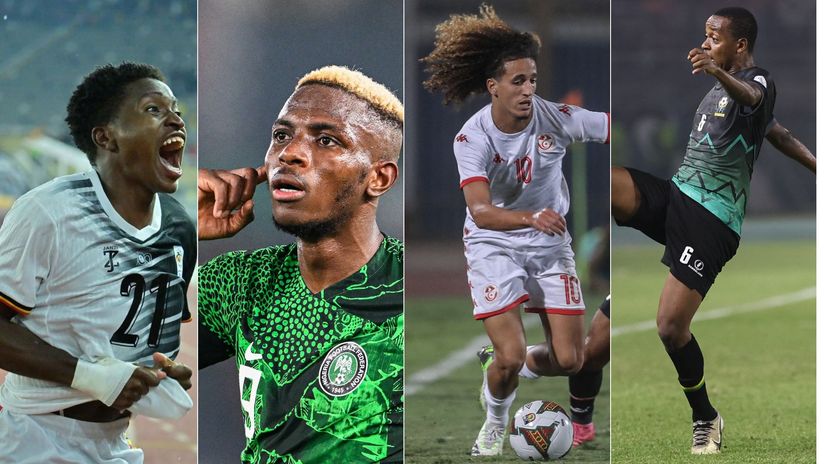
With individual quality scattered across all lines—Edouard Mendy’s assurance in goal, Kalidou Koulibaly’s leadership, Idrissa Gueye’s experience, Pape Matar Sarr’s dynamism, Sadio Mané’s star power, and the attacking profiles of Nicolas Jackson and Iliman Ndiaye—the Lions of Teranga possess both depth and balance.
Their “golden generation” of the early 2000s laid the foundation with a famous 2002 World Cup quarter-final run and an AFCON final.
But the current crop surpassed that by winning their maiden AFCON title four years ago, followed by consistently strong competitive cycles.
Their AFCON qualifiers saw them dominate with five wins and a draw, while the World Cup qualifiers produced seven victories and three draws, reinforcing their status as the continent’s most reliable performers.
Pape Thiaw’s tactical identity has been a key component of Senegal’s resurgence.
He embraces adaptability rather than rigid structural demands, frequently altering formations in response to match state, opponent shape, or in-game dynamics.
Senegal mostly deploys a 4-2-3-1 in possession, building through Mendy and the center backs to establish patient, circulation-heavy progression.
The double pivot—often featuring Sarr, Gueye, or Lamine Camara—serves as the stabilizing mechanism, dictating tempo while enabling full-backs to push high.
Thiaw’s full-backs advance energetically to provide width, narrowing the midfield at times but opening wide overloads that stretch compact defensive blocks.
Wingers start wide but rarely remain stationary—they drift deep, invert to combine inside channels, or burst into pockets between opposition defenders. With such fluidity, Senegal consistently achieves numerical superiority on the flanks, an area they use deliberately as their main attacking route.
Out of possession, Senegal transitions into a 4-1-4-1 or 4-4-2, depending on pressing triggers and opponent buildup patterns. They adopt aggressive man-oriented pressure in higher phases to trap opponents near the touchlines or force long, hopeful clearances.
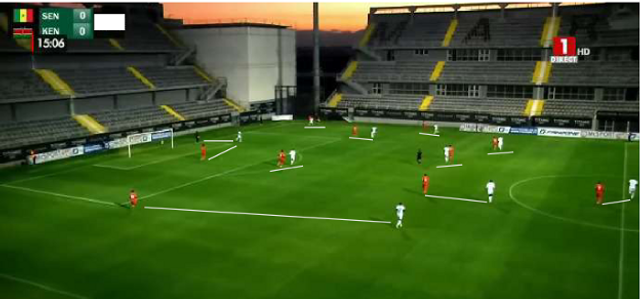
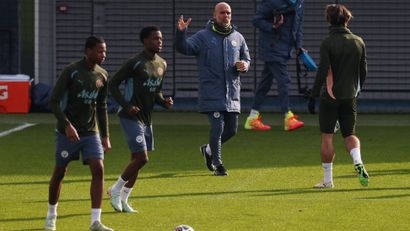
Senegal’s aggressive man-to-man press suffocates Kenya high up the pitch
With athletic defenders and a coordinated rest-defense structure, they control transition moments efficiently.
Given this platform, failing to reach the knockout rounds would be a significant shock to neutrals and supporters alike.
In a group this demanding, Senegal’s mixture of tactical flexibility, individual talent, and competitive maturity makes them clear frontrunners.
DR Congo
DR Congo arrived in Morocco with quiet confidence but a unique mental challenge.
While AFCON is a priority, the Leopards must also prepare for their upcoming World Cup inter-confederation playoff next March—a decisive tie that could end a 52-year World Cup absence.
Despite this, their recent form has been excellent. They finished behind Senegal in World Cup qualifying yet overcame giants Cameroon and Nigeria in the playoff race, displaying resilience, organization, and growing self-belief.
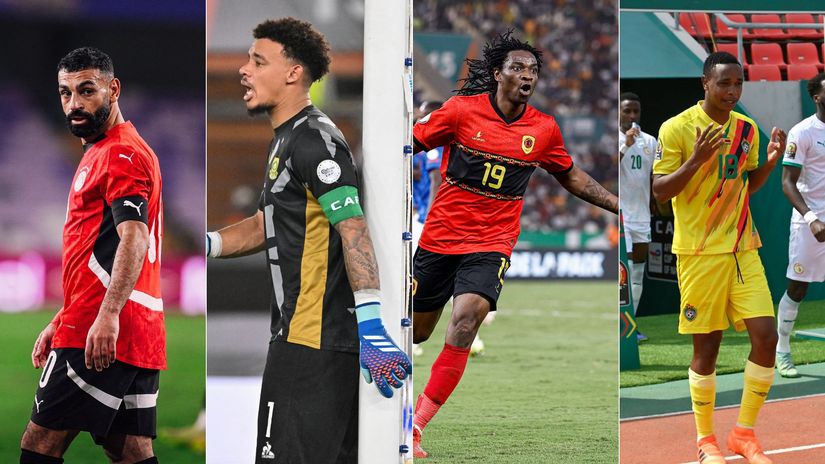
With Premier League names such as Aaron Wan-Bissaka, Axel Tuanzebe, and Noah Sadiki joining an already strong core of Chancel Mbemba and Nathanael Mbuku, this generation has the tools to make DR Congo a legitimate contender.
Historically crowned AFCON champions in 1968 and 1974 as Zaire, the Leopards have blossomed again under Sébastien Desabre.
Their tactical identity blends physicality, chemistry, and a disciplined defensive structure more than explosive attacking output. DR Congo are not prolific scorers, but they maximize the qualities of players like Cedric Bakambu and Fiston Mayele and the wide threats of Sadiki, Theo Bongonda, or Mbuku.
Desabre often uses a 4-1-4-1 out of possession, aimed at controlling space between midfield lines, while employing a high press designed to trap opponents in their half, especially on one side of the pitch.
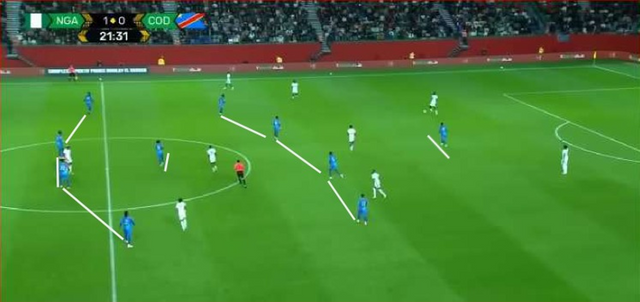
DR Congo’s compact 4-1-4-1 out-of-possession shape against Nigeria in the World Cup Qualifiers playoff clash.
Congo typically channel their attacking progressions through wide players, using directness, crossing, and second-ball aggression rather than intricate central combination play.
Their AFCON qualifying campaign, where they topped a group with Tanzania, Guinea, and Ethiopia, confirms their tactical clarity and resilience. In this group, they are arguably the side most capable of unsettling Senegal.
Benin
Benin continues to grow into one of Africa’s more tactically convenient sides—disciplined, physical, and structured in a way that frustrates even the strongest teams.
Their historic 2019 AFCON quarter-final run remains a reference point, and although their recent AFCON qualifying campaign was unconvincing, their World Cup qualifiers showcased their real identity.
Gernot Rohr, one of Africa’s most experienced managers, brings tactical pragmatism and an understanding of how to maximize limited margins. Benin’s AFCON 2025 squad—largely made up of players competing abroad—has matured into the strongest unit in the nation’s football history, featuring names from the 2019 success such as Steve Mounié, Jodel Dossou, Olivier Verdon, David Kiki, and others.
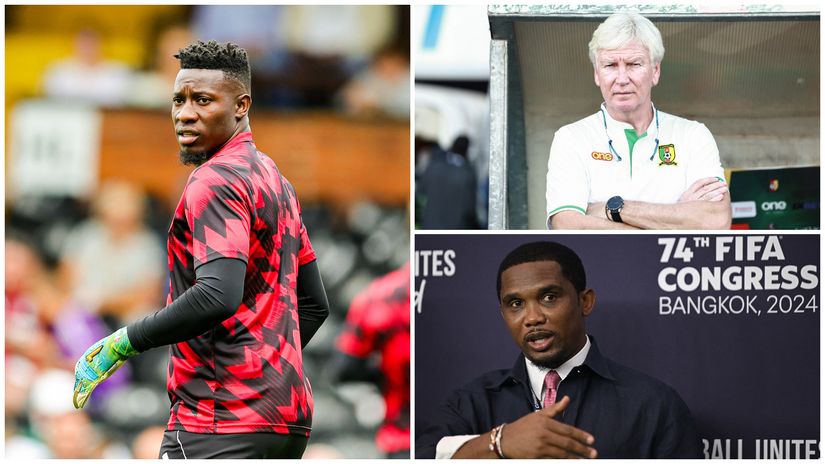
Tactically, Benin builds with technical comfort from the back.
Their center backs and pivot operate in a 3-2 buildup shape, created either by an inverting full-back or by pushing one full-back very high to manipulate pressing triggers.
They intentionally invite pressure, using backward passes and slow circulation to lure opponents forward before hitting long, vertical balls into attacking channels.
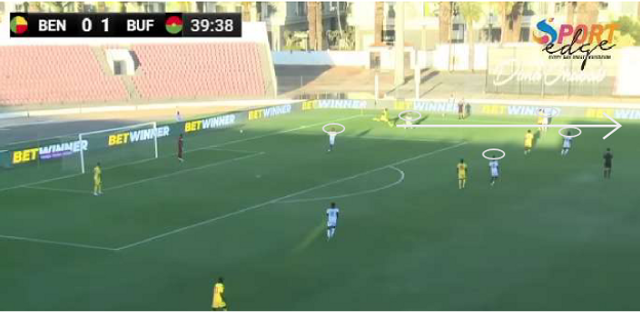
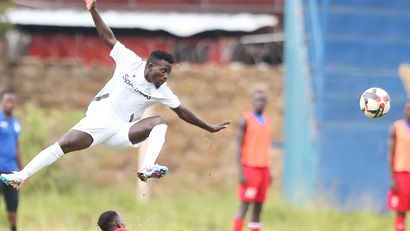
Benin repeatedly lured Burkina Faso into one-sided pressure with their back-line build-up before going long, a recurring pattern in their 3–0 friendly defeat
While this gambit sometimes produces dangerous transitions, it also forces turnovers and errors that opponents have punished.
Out of possession, Benin adopts a compact 4-4-2, with wingers tasked with tracking opposition full-backs, while central midfielders jump aggressively onto the opponent’s playmaker.
Their physicality and intensity in duels make them a difficult opponent for any side reliant on controlled buildup. Injuries to Felipe Santos and Hountondji could complicate squad selection, but Benin should still be strong enough to challenge for third place—and most likely qualify as one of the best-ranked third-place teams.
Botswana
Botswana enters the tournament as clear underdogs, the lowest-ranked team in Group D and one still struggling to build a stable continental identity. With only their second AFCON appearance after a group-stage exit in 2012, expectations are modest.
Most of their players operate domestically, with a handful spread across North African leagues.
Their AFCON qualifying campaign was below par, though a draw against Egypt and a double over Cape Verde were rare bright spots.
Tactically, Morena Ramoreboli’s side depends heavily on set pieces—corners and free kicks around the box form a major part of their chance creation.
They transition with long balls into wide areas and rely on forced turnovers and long-range strikes to threaten opponents.
Defensively, they adopt a 4-1-4-1 that drops into a deep 4-5-1 low block, designed to congest central areas but often vulnerable to quick combinations and wide overloads.
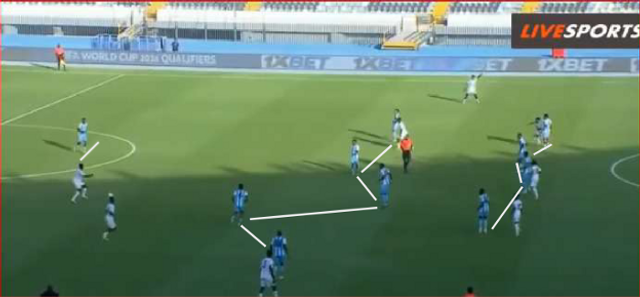
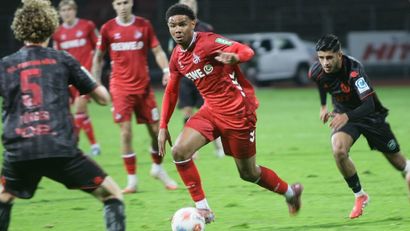
Botswana’s disciplined 4-5-1 low block held firm in their 2–2 World Cup qualifier draw against Guinea
Their talisman, Tumisang Orebonye, remains their primary hope for goals, while the team’s nine different scorers in AFCON qualifying reflect a side searching for attacking consistency.
Against the giants of this group, Botswana will target survival, small margins, and the possibility of claiming their first-ever AFCON points.
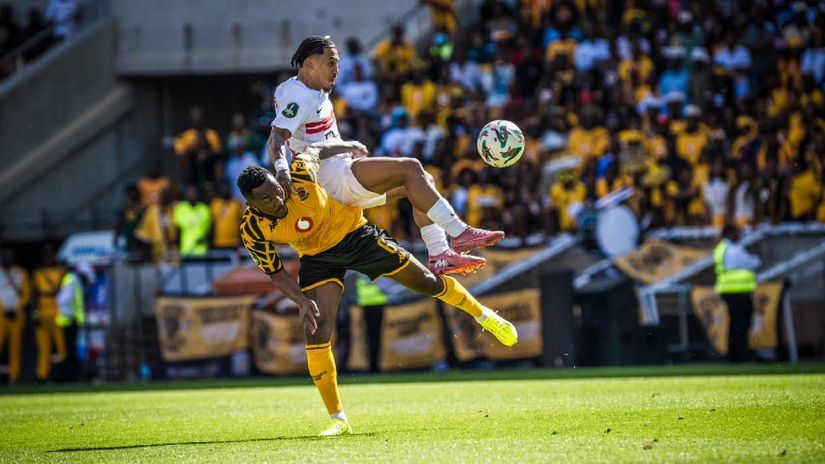
Group D, therefore, presents stark contrasts: Senegal’s control and adaptability, Congo’s physical intensity and pressing, Benin’s compactness and transitional efficiency, and Botswana’s underdog determination.
With such diversity in tactical identities and competitive levels, every match will present unique challenges. Senegal remain favorites, DR Congo threaten to disrupt the hierarchy, and Benin could spring surprises with organization and intensity, while Botswana chase pride and history.
In a tournament that often produces shock waves, Group D may be the stage where some of AFCON 2025’s most defining moments begin.