


TACTICAL ANALYSIS: How 10-man Madagascar outsmarted Kwesi Appiah's Sudan



.jpg)

Reading Time: 4min | Wed. 27.08.25. | 13:04
Madagascar’s historic qualification to the CHAN final was the product of a well-drilled tactical plan centred on wide overloads, intelligent positional play, and relentless defensive organisation
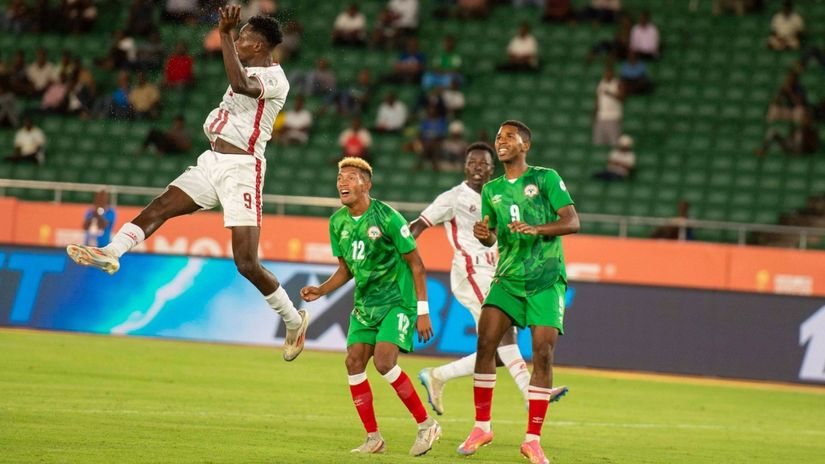
A 10-man Madagascar made history by becoming the first island nation to reach the African Nations Championship (CHAN) final after edging Sudan 1-0 in extra time at the Benjamin Mkapa Stadium in Dar es Salaam, Tanzania.
Follow our WhatsApp channel for more news
The win crowned a memorable campaign for Romuald Rakotondrabe’s side, who had already shown their tactical resilience by reaching the semifinals for a second successive edition.
In 2022, they fell 1-0 to eventual champions Senegal, but this time, the Malagasy found the balance between tactical discipline and attacking bravery to write a new chapter in their history.

Madagascar’s Tactical Setup
Coach Romuald Rakotondrabe maintained his tournament philosophy of short passing and progressive buildup play. His team lined up in a 4-2-3-1 shape with the intention of controlling possession and creating overloads in the wide areas to unbalance Sudan’s defensive structure.
Michel Ramandimbisoa started in goal, protected by a back four of Rado Rabemananjara, Nantenaina Randriamanampisoa, Toky Randrianirina, and Bono Rabearivelo.
In midfield, Andy Rakotondrajoa partnered Rijaniaina Randriamanampisoa at the base, but an early injury to Andy after just four minutes forced his withdrawal, with Harison Randrianantenaina stepping in.
Ahead of them, Lalaina Rafanomezantsoa served as the creative midfielder tasked with linking play and offering forward thrust. On the flanks, Nantenaina Razafimahatana and Onjaniaina Hasinirina worked the channels, while Fenohasina Gilles Razafimaro led the attack.
From the onset, Madagascar sought to build from the back, progressing the ball wide with fullbacks pushing high to provide width. Midfielders carried the ball forward, drawing in Sudanese markers before releasing passes into the half-spaces or channels, where wingers and Lalaina could receive and combine.
This approach ensured that Madagascar dictated the flow of play while constantly probing for weaknesses in Sudan’s defensive shape.
Wide Overloads as the Key Strategy
One of Madagascar’s most notable tactical mechanisms was their creation of 3v1 or 3v2 overloads on the flanks. The wingers often tucked inside, joined by Lalaina from midfield, to combine with overlapping fullbacks. Lalaina’s intelligent positioning allowed him to act as the third runner between centre-back and fullback, creating dilemmas for Sudan’s defenders.
Even when Lalaina did not directly receive the ball, his runs destabilised Sudan’s defensive line, freeing space for ball carriers to cut inside or deliver early crosses. Rakotondrabe’s commitment to this plan was underlined in the 64th minute, when both wingers were substituted for fresh legs.
Rayan Hery Rajaonarivelo and Toky Rakotondraibe entered to sustain the tempo and continue troubling the Sudanese fullbacks.
Defensive Approach and the Red Card Adjustment
Defensively, Madagascar played with an aggressive man-to-man press, seeking to win the ball high up the pitch. Their counterpress after losing possession was equally intense, aimed at suffocating Sudan and preventing them from building rhythm.
However, the game changed in the 79th minute when striker Razafimaro was sent off for a second bookable offence. Reduced to ten men, Madagascar reshaped into a 4-4-1 or 4-3-2 block, prioritising compactness in central areas while conceding space out wide.
They trusted their organisation to deal with Sudan’s aerial deliveries and low crosses, maintaining composure even under sustained pressure.
Attacking Adjustments with 10 Men
Even with a numerical disadvantage, Madagascar still found ways to create overloads. The blindside winger drifted centrally to act as a temporary centre-forward, occupying Sudan’s centre-backs.
Meanwhile, the ball-side winger overlapped to stretch the defense, while Lalaina and the central midfielders provided third-man runs.
This tactical adaptation bore fruit in extra time. In the 116th minute, Ryan picked up the ball in the half-space and combined with substitute Félicité Mantasoa. Toky, who had drifted centrally, linked play before releasing Ryan again.
Lalaina then made a decisive third-man run into the box, delivering a one-time pass across goal for Toky, who had ghosted into space on the blind side to finish clinically.
Madagascar’s historic qualification to the CHAN final was the product of a well-drilled tactical plan centred on wide overloads, intelligent positional play, and relentless defensive organisation.
Even after going down to ten men, Rakotondrabe’s men showed adaptability, maintaining their composure while finding ways to sustain their attacking principles.
The decisive goal in extra time was a textbook execution of their approach: wide progression, third-man runs, and blindside movements. That they achieved this while a man down only highlighted their tactical maturity.
For Madagascar, this semifinal was not just a victory—it was a tactical masterclass that confirmed their rise as a force in continental football.