


TACTICAL ANALYSIS: How positional rotations earned Kakamega Homeboyz vital win over Bidco

Reading Time: 5min | Sat. 18.10.25. | 08:00
Kakamega Homeboyz’s 3-1 triumph was built on tactical adaptability and calculated in-game management
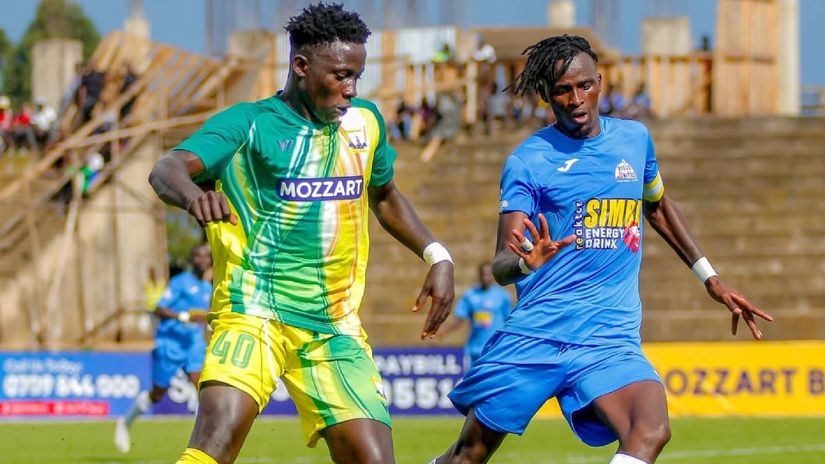
Kakamega Homeboyz returned to winning ways with a commanding 3-1 victory over Bidco United at Bukhungu Stadium in a rescheduled FKF Premier League fixture.
Coming from a 2-0 loss to Nairobi United at the same venue, Abana Beingo needed to respond, and they did so with intent.
Follow our WhatsApp channel for more news
Bidco United, fresh from back-to-back wins against Gor Mahia and Nairobi United—both with clean sheets—were not easy opponents, but tactical discipline and well-timed changes from coach Patrick Odhiambo made the difference.
Homeboyz’s Tactical Setup and Build-Up Approach
Odhiambo departed from the 3-5-2 system he used against Nairobi United, opting instead for a 4-4-2 diamond formation to maximize central control while maintaining attacking width.
Edwin Mukolwe started in goal behind a back four of John Omondi, Joseph Onyango, Potipher Odhiambo, and Eugene Okoth.
Estone Omengo anchored the midfield, flanked by Glen Masava and Samuel Odaro, with Hillary Otieno operating just behind the strike pair of Josephat Lopaga and Henry Omollo.
From the onset, Homeboyz looked to build from the back.
Their center-backs split wide, inviting Mukolwe to act as a passing option in the first phase.
Omengo frequently dropped deep to form a triangle in build-up, ensuring numerical superiority against Bidco’s first press.
Progression was patient—moving from the central defenders into midfield, then to the flanks where the wide players would dribble inward or deliver early crosses
.jpg)
Odaro, playing from the left side of midfield, often drifted into the channel to stretch Bidco’s defensive line, while Otieno advanced behind the two strikers to link play.
Both fullbacks—especially Omondi—joined the attack when the ball was on their flank, while the opposite fullback tucked in to form a compact rest defence. Lopaga and Omollo’s diagonal runs constantly pulled Bidco’s defenders out of position, creating space for late arrivals from midfield.
Homeboyz’s equaliser came from such coordinated attacking play.
Odaro carried the ball from deep, and a deflection from an attempted interception placed it in Lopaga’s path.
Lopaga drove into the box and fired at goal, and after a scramble, Omollo capitalised on the loose ball to level the score.
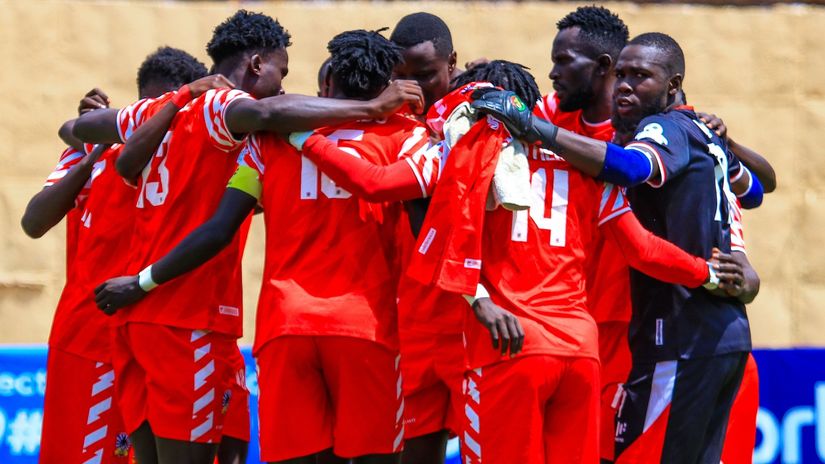
Defensively, Homeboyz transitioned into a 4-4-2 out-of-possession shape, pressing high when possible but quickly reorganising into a midblock whenever Bidco bypassed the initial press.
The structure allowed them to close passing lanes effectively and limit Bidco’s access to central zones.
Bidco United’s Approach and Transitional Play
Coach Anthony Akhulia maintained his side’s trusted 4-3-3 system, with Issa Emuria in goal behind a back four of Idris Amadi, Timothy Wainaina, Kennedy Ongalo, and Kelvin Ouma.
Kassim Juma sat at the base of midfield, supporting Newton Ochieng and Dennis Murunga in advanced roles.
John Kelwish and Herman Ngala provided width on either flank, while Victor Kunyili led the line.
Bidco adopted a more reserved approach, defending deep and waiting to exploit spaces on the counter
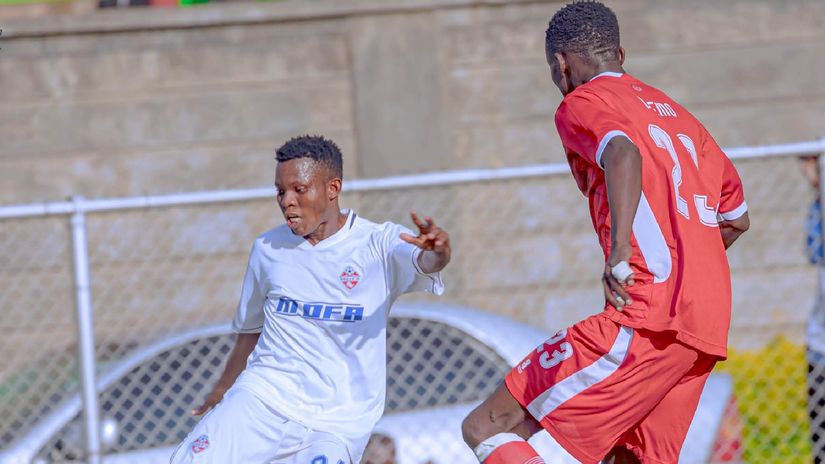
Their build-up mirrored Homeboyz’s in the first phase, with the center-backs splitting wide and Juma dropping between them to facilitate progression.
The emphasis, however, was clearly on wing play—overloads were created on the flanks by the fullbacks overlapping and the advanced midfielders drifting wide to combine.
Their first goal came precisely through this pattern.
Amadi overlapped on the right with Ngala tucking inside to open space.
The fullback’s cross found Murunga, who connected well to score, showcasing Bidco’s fluidity and understanding in wide areas.
Despite the early success, Bidco’s conservative approach eventually allowed Homeboyz to take control of possession, and their inability to press as a unit left them vulnerable to quick interchanges through the middle.
Second-Half Adjustments and Game Management
Odhiambo’s tactical awareness shone in the second half.
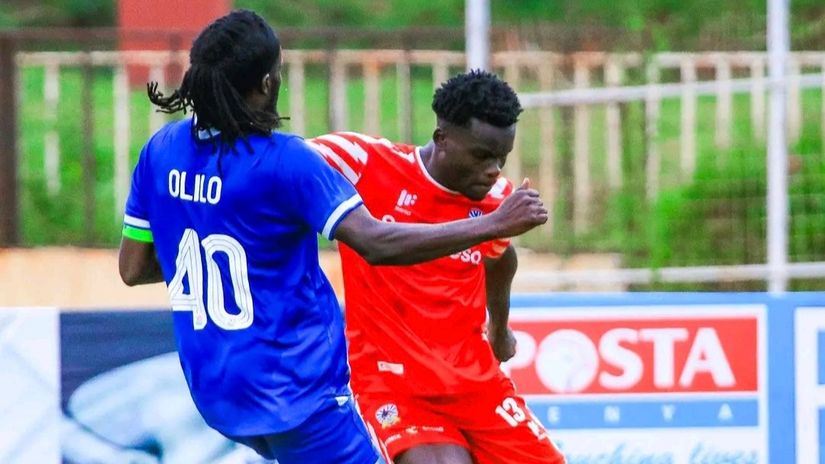
Sensing the need for more attacking presence and fluidity, he withdrew Otieno and Omollo in the 55th minute, introducing Oliver Majaka and Joshua Nyatini.
The substitutions prompted a switch from 4-4-2 to a 4-3-3 formation, with Majaka and Odaro moving wide, Omengo anchoring midfield, and Masava and Nyatini advancing as attacking interiors.
This change allowed Homeboyz to stretch Bidco’s defensive shape horizontally while maintaining control in midfield. Omondi became more adventurous on the right flank, repeatedly overlapping to provide width.
His persistence was rewarded in the 72nd minute when his teasing cross forced Kelvin Ouma into an own goal, giving Homeboyz a deserved lead.
With the advantage secured, Homeboyz dropped into a compact midblock to manage the game.
They circulated possession calmly, forcing Bidco to chase the ball and tiring them out.
Ten minutes from time, Odhiambo introduced Rogers Ouma for Masava, shifting the team into a more conservative 4-2-3-1 to strengthen defensive stability.
Omengo and Ouma shielded the backline effectively, neutralizing Bidco’s counter threats.
In stoppage time, Homeboyz sealed the victory through Majaka, who finished off a swift attacking move—testament to the fluidity and precision that defined their second-half display.
Tactical Mastery and Response Under Pressure
Kakamega Homeboyz’s 3-1 triumph was built on tactical adaptability and calculated in-game management.
Odhiambo’s switch from a 3-5-2 to a 4-4-2 diamond and later to a 4-3-3 showcased his flexibility and understanding of situational demands. The fluid transitions between systems allowed Homeboyz to dominate possession, control space, and exploit Bidco’s defensive frailties.
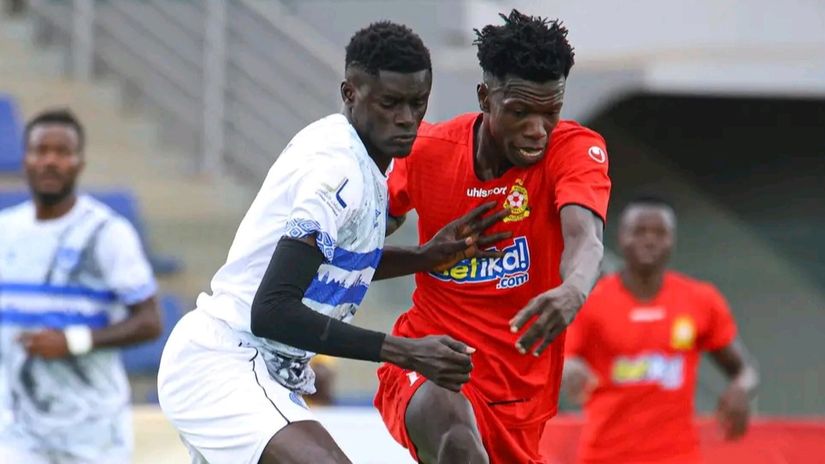
While Bidco United’s wing play and disciplined structure were commendable, they struggled to cope with Homeboyz’s positional rotations and the increased intensity in the second half.
Ultimately, Homeboyz’s well-coordinated pressing, structured build-up, and timely tactical changes earned them a vital and deserved victory—one that reasserted their authority at Bukhungu Stadium.