


TACTICAL ANALYSIS: Kibera Black Stars’ game plan that ended MOFA's unbeaten start

.jpg)




Reading Time: 5min | Wed. 15.10.25. | 20:13
Ultimately, it was a game won in the margins - one where Kibera’s tactical execution, especially in wide areas and transitions, made the difference
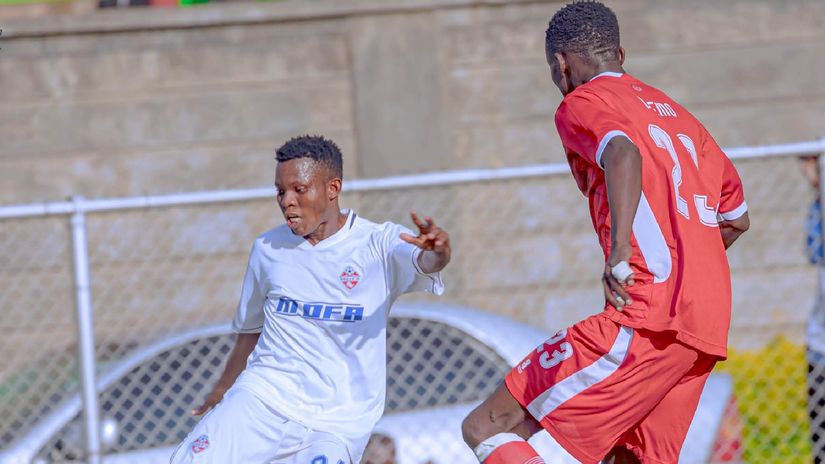
A tense and tactically rich affair unfolded at the Hope Centre, Kawangware, as Kibera Black Stars edged MOFA 1–0 in a closely contested FKF-NSL Week 3 clash.
Kibera’s disciplined structure, aggressive pressing, and intelligent use of space saw them earn a valuable win, with Brian Odhiambo’s first-half strike proving to be the difference.
Both sides came into the tie with positive momentum, but it was Kibera who tactically edged the duel in a match filled with fascinating formations and fluid positional play.
Follow our WhatsApp channel for more news
Kibera set up in a 4-2-4 structure, an offensively-inclined shape that morphed into a 4-4-2 out of possession, giving them both width and defensive compactness when needed.
Elvis Otieno started in goal, with Wellington Ochieng and Alex Shamallah as fullbacks.
Donald Omwanda and Fidel Castro anchored the heart of the defense, while the central midfield duo of Felix Agwenge and Brian Odhiambo provided the crucial link between defense and attack, acting as both screeners and progressors.
On the flanks, Joseph Wekesa and Wardfine Okewa alternated sides fluidly, providing width and unpredictability.
Up front, Jephter Bundi and Eric Kipkirui operated as twin strikers, tasked with exploiting space in attacks and pressing MOFA’s defensive line.

MOFA, on the other hand, started with a 4-4-2 base shape, but displayed more tactical fluidity, often transitioning into a 3-4-3 or 3-2-5 in-possession phases.
Their keeper Paul Odhiambo was actively involved in build-up, often forming the base of a diamond in the first phase.
Fredrick Onyango and Nelson Amunga operated as fullbacks, while Joseph Bate and Reagan Ochieng played at centre-back, stretching wide to aid progression.
The midfield four included Mutuku, Akumu, Japheth Odoke (returning to the 11), and Steve, with Stephen Odoke playing as the deep-lying pivot, crucial in circulating possession and switching play.
Up front, Laban Otieno and Rodgers Ouma led the line, with Laban, already on two goals this season, showing sharp movement in and around the box throughout.
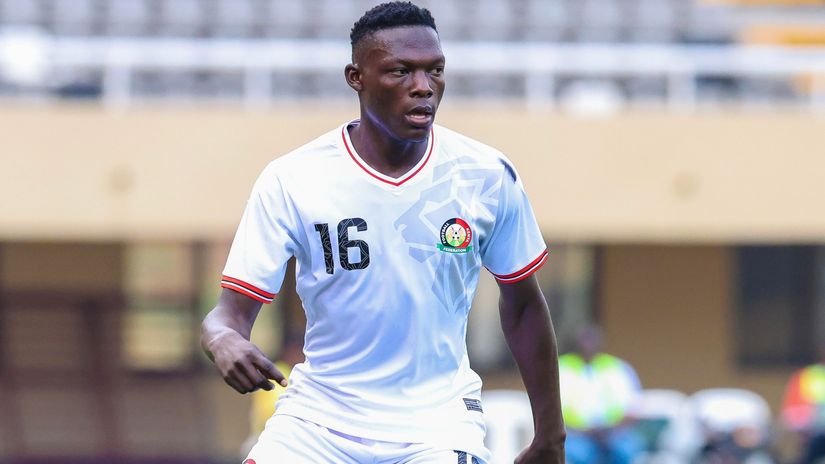
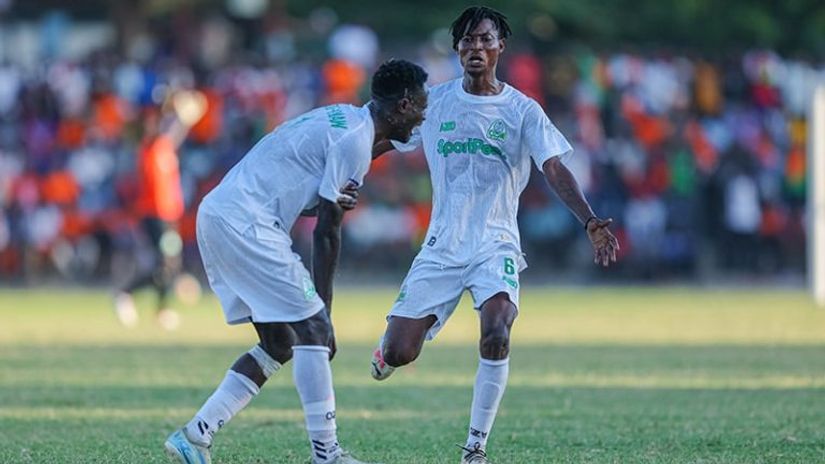
The match kicked off with Kibera asserting control through targeted attacks via the left half-space, leaning heavily on wide triangles and fluid overlaps.
Okewa, Shamallah, and Kipkirui combined frequently on that flank, exploiting MOFA’s shifting structure to create numerical superiority.
In these moments, Kibera’s fullbacks pushed high, joining with the wingers and central midfielders to create overloads and stretch the MOFA back line.
MOFA, however, maintained a well-drilled buildup phase, often utilizing the goalkeeper to create a plus-one in the first line.
Their build-up pattern frequently involved a dropping pivot , with Akumu playing a key role in launching deep switches of play to progress through pressure.
In possession, MOFA preferred third-man combinations and triangular passing in midfield to access wide zones before delivering early balls into the channels.
Kibera’s off-ball shape was aggressive.
They dropped into a 4-4-2 structure out of possession, and pressed aggressively in wide areas using man-oriented marking to suffocate MOFA’s flanks.
Interestingly, Kibera used back-passes as pressing triggers, timing their press to collapse on MOFA players when the ball was recycled backwards.
This disrupted MOFA’s rhythm and forced several long balls, which Kibera’s centre-backs dealt with confidently.
In attacking transitions, Agwenge and Odhiambo played pivotal roles.
They frequently looked to switch play to the right wing, bypassing midfield congestion and creating space for Wekesa and Ochieng to attack.
One such transition late in the first half led to the breakthrough: the ball was recycled from the left, and Odhiambo, arriving late on the edge of the box, struck a stunning long-range effort that beat Pal Odhiambo - a crucial goal just before halftime.
The second half saw a tactical shift from MOFA.
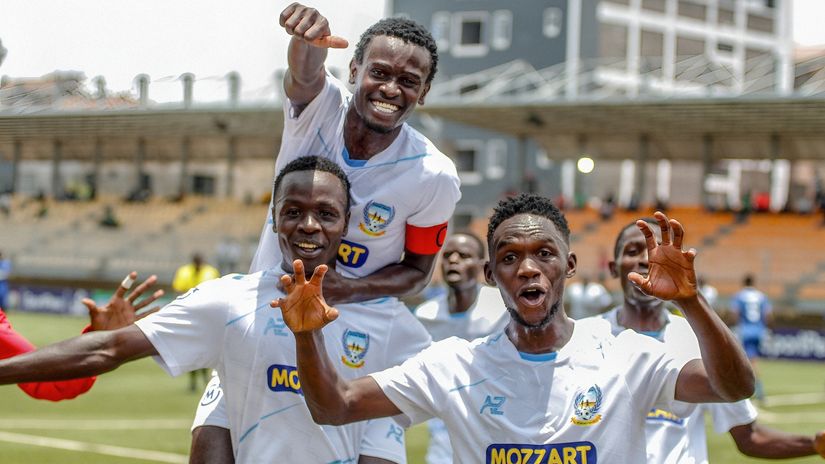
They began to employ central overloads, drawing Kibera’s midfield inward before switching quickly to the flanks.
Their best chance came in the 59th minute when a clever overload allowed Steve to deliver a cross that found Laban Otieno in a dangerous area, but Elvis Otieno produced a sharp save to preserve the lead.
MOFA continued to create moments through positional play, using coordinated movements and quick switches, but they lacked the clinical edge.
Kibera remained dangerous, particularly through counter-attacks. In the 65th minute, Jephter Bundi dribbled past the MOFA right back to face the goalkeeper one-on-one, but again, Paul Odhiambo stood tall to deny a second goal.
Just minutes later, a well-worked move from the right saw the winger and fullback combine for a cross that was smothered by the goalkeeper just before reaching the striker.
As the match wore on, the slippery pitch began to affect both sides, disrupting smooth positional play and leading to a more direct approach.
Kibera adapted better, shifting to a more compact defensive block, while selectively engaging transitions.
MOFA introduced Tatizo Nyota, a lively left winger who came close to scoring with two chances from outside the box - one hit the post, the other went a few meters off the post - but their growing pressure lacked the final touch.
Defensively, Kibera showed maturity.
.jpg)
They maintained a tight, back-compact shape, limiting spaces in the box and closing down crossing lanes. MOFA’s late attempt to break through via flank-crossing patterns - right-back to winger to cross - was met with resolute defending.
Kibera’s use of transitional attacking rather than full commitment up the pitch helped them manage the game, control territory, and see out the final minutes with composure.
Ultimately, it was a game won in the margins - one where Kibera’s tactical execution, especially in wide areas and transitions, made the difference.
MOFA’s improved second-half performance and structured build-up deserved more, but Kibera’s pressing, positional intelligence, and defensive compactness earned them a deserved victory.