


What is wrong with Juventus?
.jpg)
Reading Time: 7min | Tue. 28.10.25. | 13:13
The beginning of the end was in 2018 when Ronaldo came to the club
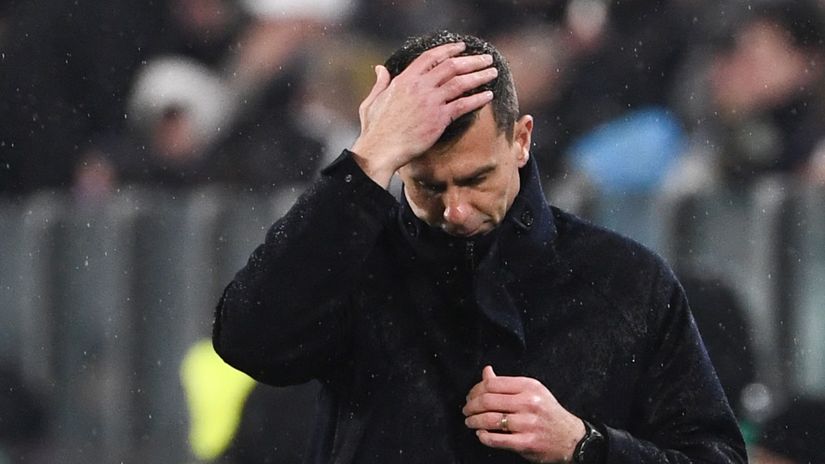
It‘s been over a month since Juventus last scored a goal in Serie A. In the meantime, they’ve scored twice against Villarreal in the Champions League, but since they didn’t win, that’s hardly an accomplishment. It’s clear that with such poor attacking output, the Old Lady can’t hope for much in terms of points. That is why, among other things, Igor Tudor was sacked and Luciano Spalletti is now in frame to become the next boss. For a club whose motto is “winning isn’t everything—it’s the only thing that matters,” a streak of eight winless matches is a tragic record. Alarms have been going off for a while, but there’s no solution in sight—or at least, no real one.
❗️Juventus fans banner outside the Allianz Stadium: ‘The fish always stinks from the head’.
— Forza Juventus (@ForzaJuveEN) October 27, 2025
Igor Tudor is one of us. pic.twitter.com/K7jUTumbl0
Igor Tudor ended up in that position almost by accident. He took over last season from Thiago Motta as a temporary solution, but after Juventus failed to land Antonio Conte or another big-name coach, the Croatian stayed on with only artificial backing. He’s the third Juventus manager in three years—three completely different ones. After the rigid Massimiliano Allegri came the eccentric Thiago Motta with his revolutionary ideas, and he “died trying.” Tudor is more flexible than Allegri, less risky than Motta, but he too failed to awaken the team. So many coaches and so many styles—and yet, no better results. Maybe it’s not just the coaches. Maybe the problem lies more with the club and the players.
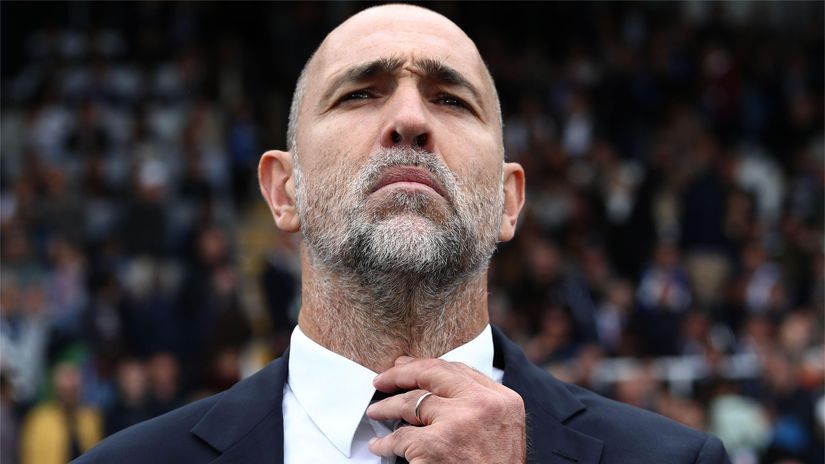
Juventus’ decline began when Beppe Marotta left his director’s post in the fall of 2018. He refused to approve the costly Cristiano Ronaldo adventure—and as it turned out, he was right. Juventus continued to dominate Serie A with Ronaldo, but that was largely thanks to the strong foundations built by Marotta, Conte, Allegri, and the locker-room leaders (Buffon, Chiellini, Bonucci…)—and to weak competition. The ultimate goal, the Champions League trophy, never came. Marotta didn’t want to be a part of this new setup, but his longtime assistant Fabio Paratici did—and agreed to the financial manipulations needed to sustain the Ronaldo project. As a result, he ended up in court and was handed a two-and-a-half-year football ban.
They thought Allegri was the problem and looked for a different kind of coach for Ronaldo, they missed with Sarri and Pirlo, only to bring Allegri back once Paratici, Ronaldo, and Buffon had left and the long-built system had fallen apart. Paratici’s last big move was signing Dušan Vlahović from Fiorentina—the most expensive winter signing in Italian football history. When the walls started closing in, Paratici fled to Tottenham. Allegri’s return couldn’t rebuild what had taken years to construct and was dismantled in months. Paratici was succeeded by his assistant, Federico Cherubini—two steps down from Marotta. He lasted two years and also ended up in court. The next sporting director was Cristiano Giuntoli, the architect of Napoli’s first modern Scudetto, but he didn’t last two seasons either. This June, Damien Comolli took over—a rather shady figure with a history of underwhelming tenures.
Since September 2021, Juventus have spent 700 million euros on signings! Milan have spent over 550 million, Napoli nearly 500 million, and Marotta’s Inter under 350 million. In that span, Inter have won two league titles, reached two Champions League finals and a Europa League final, and established themselves as Italy’s most stable, well-run club. Napoli won two Scudetti, Milan one. Juventus? One third place, three fourths, and one seventh. Two Coppa Italias, and not a single Champions League quarterfinal. Despite spending the most, Juventus have failed to turn money into success—and it’s only getting harder as their rivals grow stronger.
Juventus’ most expensive transfers in the last five years:
Dusan Vlahovic (Fiorentina) – 83.5 million euros
Teun Koopmeiners (Atalanta) – 58.4 million
Douglas Luiz (Aston Villa) – 51.5 million
Bremer (Torino) – 46.9 million
Federico Chiesa (Fiorentina) – 44.6 million
Francisco Conceicao (Porto) – 41.5 million
Moise Kean (Everton) – 37 million
Nicolas Gonzalez (Fiorentina) – 36.5 million
Manuel Locatelli (Sassuolo) – 36.4 million
Weston McKennie (Schalke) – 21.9 million
Few of these players have truly made a difference on the pitch, and Juventus have lost money on nearly all of them. Chiesa left cheaply for Liverpool, Kean was sold as surplus to Fiorentina for 13 million, and Vlahović will likely leave as a free agent. Douglas Luiz and Gonzalez departed after a year, with their current clubs set to buy them permanently for less than Juve paid. Locatelli’s and McKennie’s market values have plummeted. Add to that the massive salaries—Vlahović is the league’s highest-paid player, costing 22 million euros gross this season. Big contracts also went to free agents like Pogba, Di María, and this August Jonathan David. There have been costly loan flops too—Veiga, Kolo Muani, Alcaraz, Paredes… and soon they’ll owe another 42 million for Lois Openda, who hasn’t scored in two months.
.jpg)
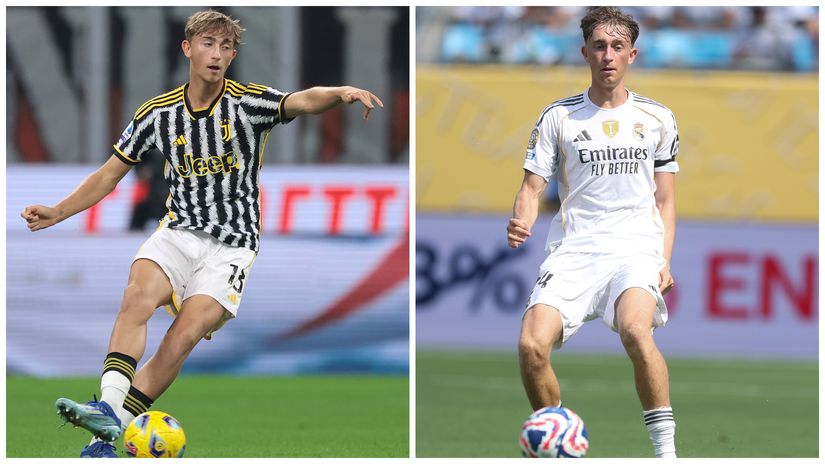
At the same time, Juventus have sold promising young players for peanuts—Cristian Romero (17 million), now one of the best defenders in the world; Radu Dragusin (9.7), Dean Huijsen (19.7), Koni De Winter (11), and Matías Soule (25.6 million euros). Fortunately, they didn’t sell Kenan Yıldız—though they considered it. Too many mistakes in five years of waiting for the Scudetto. Not only are they nowhere near first place, but repeating last season’s fourth place would now count as success.
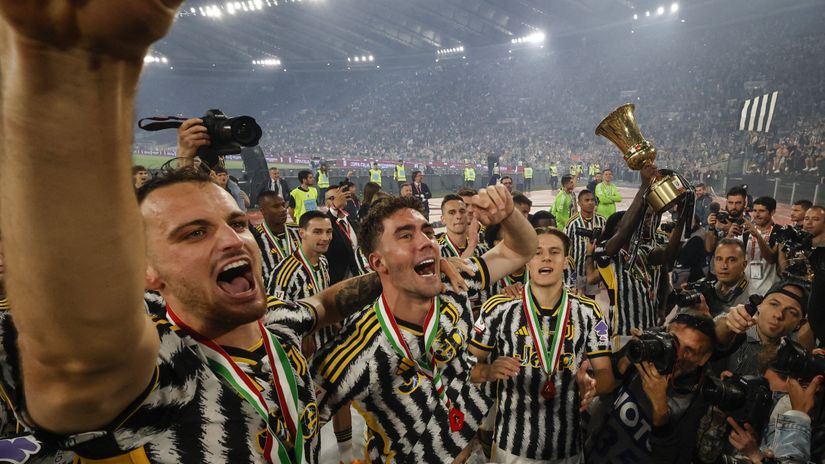
Names like Luciano Spalletti, Roberto Mancini, and Raffaele Palladino (a Juventus youth product and promising coach, but likely too inexperienced for this job) are being mentioned as replacements. But whoever comes next will face the same problems: players who can’t handle the weight of the Juventus shirt. Juventus have one decent center-back who’s often injured, overrated full-backs, a directionless midfield, and forwards who can’t score. They share the blame just as much as Tudor.
“Juventus don’t have a coaching problem. I know Tudor as a person and as a coach. The situation is much more complex. This team won’t win the league even with a new manager. Juventus still don’t have a defined starting eleven. Not because Tudor doesn’t want one, but because these players can’t play consistently well. Look at Europe’s top teams—they all have clear starting elevens,” said club‘s legend Alessandro Del Piero. And he’s probably right. Juventus are no longer made up of winners and warriors like under Lippi in the ’90s or Conte and Allegri in the 2010s. Few of today’s players have the winning mentality needed in a club where “winning isn’t important—it’s the only thing that counts.”
_(1).jpg)
Among Juventus’ key players, few have ever actually won much—neither at club nor international level. Kalulu was a champion with Milan, David in France with Lille, Koopmeiners won the Europa League with Atalanta, Conceicao was a league champion with Porto. That’s it for the starters. Among the bench players, Kostic won the Europa League, Rugani was a squad player in Juve’s past title teams—and that’s all. Goalkeeper Di Gregorio came from Monza, who fought relegation; defenders Bremer, Gatti, and Kabal played for Torino, Frosinone, and Verona—clubs without ambition. The midfield (McKennie, Locatelli, Thuram) and attack (Yıldız, Vlahović, Openda, Zhegrova) have a few minor trophies—nothing close to Juventus’ standards.
.jpg)
Juve have simply missed too many times when building their team in the past five years. There’s hardly a coach alive who can fix that. Juventus used to be what Del Piero is talking about—when black and white shirts were worn by real champions: Deschamps, Jugovic, Nedved, Davids, Peruzzi, Trezeguet, Zidane, Inzaghi, Camoranesi, Zambrotta… later Buffon, Chiellini, Pirlo, Tevez, Bonucci, Mandzukic, Vidal, Evra—a collection of winners. Look at how one such player, Modric, just turned Milan upside down. But Juventus also used to be made up of warriors: Montero, Ferrara, Conte, Di Livio, Pessotto, Tacchinardi, Birindelli, Iuliano, Barzagli—not all world-class talents, but fighters with a winning spirit. Soldiers who would turn the locker room upside down if the team went a month without scoring or six weeks without a win. Igor Tudor was one of them—and he probably knows just how deep Juventus’ character problem runs.
SERIE A ROUND 9
Tuesday
20.30: (6.75) Lecce (3.80) Napoli (1.57)
22.45: (2.70) Atalanta (3.40) Milan (2.75)
Wednesday
20.30: (1.60) Como (3.60) Verona (6.50)
20.30: (1.48) Juventus (4.40) Udinese (8.00)
20.30: (1.53) Roma (4.25) Parma (7.00)
22.45: (1.80) Bologna (3.60) Torino (5.10)
22.45: (1.90) Genoa (3.50) Cremonese (4.70)
22.45: (1.40) Inter (4.60) Fiorentina (8.00)
Thursday
20.30: (2.60) Cagliari (3.25) Sassuolo (3.00)
22.45: (3.70) Pisa (3.45) Lazio (2.15)
*** odds are subject to change
----------------------------------------------------------