


Why Kenya continues to struggle at CECAFA Youth Tournaments
.jpg)
.jpg)




Reading Time: 3min | Thu. 11.12.25. | 09:30
Lugalia, a CAF C license holder and winner of the Cleo Malalah Cup with Lirhembe Arsenal, says Kenya’s poor youth structures are the root cause of repeated failures
A top Kenya Secondary Schools Sports Association (KSSSA) coach has offered a candid assessment of why Kenya’s U15 and U17 national teams continue to struggle at CECAFA competitions.
Follow Our WhatsApp Channel For More News
Clifftone Lugalia, who guided Musingu High School to back-to-back national finals and East Africa appearances, believes Kenya has only itself to blame for the disappointing outings in Ethiopia and Uganda.
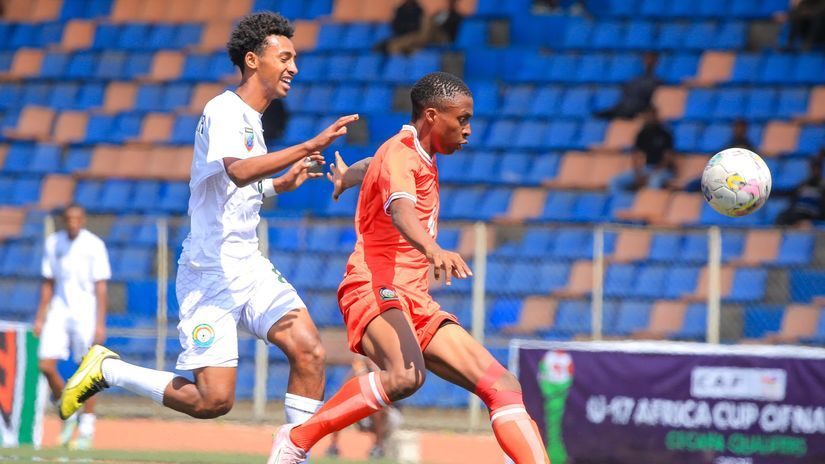
The Junior Stars failed to qualify for next year’s U17 Africa Cup of Nations in Morocco after a 3-0 defeat to Ethiopia in the playoff decider.
That loss ended Kenya’s bid for the region’s final AFCON slot, piling pressure on a group that had already endured a demanding qualification campaign.
With Tanzania and Uganda having sealed their places through semifinal victories, Kenya had to win the playoff to stay alive.
Kenya’s U17s had opened their campaign with a 1-1 draw against Somalia before beating Rwanda 2-1 and South Sudan 2-0.
Their only group-stage loss came against Ethiopia, but they still progressed to the semifinals as runners-up, only to fall 3-1 to Tanzania.
In Uganda, the U15 boys’ and girls’ teams were eliminated at the group stage after chaotic preparations that saw the squads assembled just a day before departure and travel by road to Kampala.
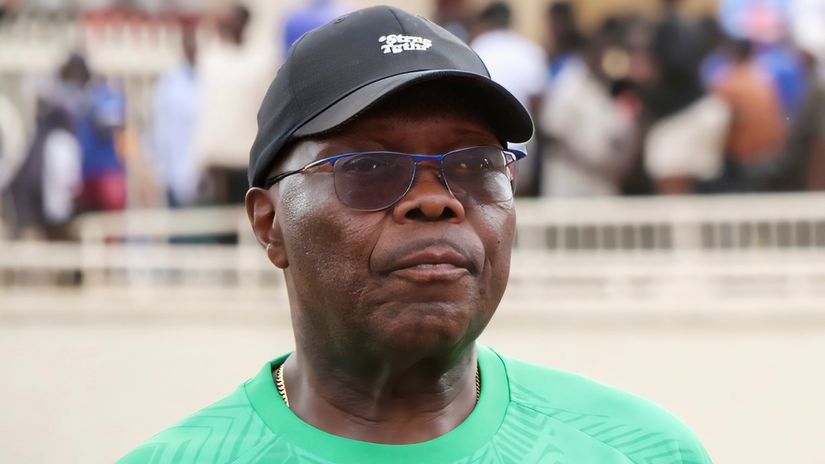
Lugalia, a CAF C license holder and winner of the Cleo Malalah Cup with Lirhembe Arsenal, says Kenya’s poor youth structures are the root cause of repeated failures.
“Kenyan football structures are in a bad place,” he told Mozzart Sport. “I thought what former Sports CS Ababu Namwamba started, monitoring under-10s and under-15s and following them through the ranks, was a good initiative. That is what we need to build on.”
Lugalia argues that Kenya’s selection approach remains flawed and reactive.
“Right now, someone just asks if you have a U17 or U15 player, then you pick him because he’s in an academy. That doesn’t make sense,” he said. “These players should be trained consistently to reach the levels needed to represent the country.”
He further points out that coaches for the recent youth assignments were appointed too late, giving them little time to understand their squads.
William Muluhya handled the U17s, while Leonard Odipo led the U15s, both named close to the tournaments.
“FKF should pick coaches early and allow them to work with the same age groups for a long time,” Lugalia said.
“A coach who handles the U13s should follow them into U15s and U17s. That continuity is what countries like England use to stay ahead.”
Lugalia believes establishing a proper academy system would be a game-changer.
“If we had a national academy where kids go during school holidays, train for a month, then return to school, it would transform everything. Coaches would monitor them regardless of whether they’re at Kisumu Day or any other school,” he explained.
His comments come just days after the Football Kenya Federation (FKF) launched an ambitious nationwide scouting program targeting U14 players.
The initiative, developed with Acakoro, aims to identify talent across five regions, with top prospects earning full scholarships at Acakoro’s high-performance residential academy in Homa Bay.
The 25-acre facility will combine elite football development with CBC-aligned academics, a step aimed at ending the last-minute preparations Lugalia criticizes.
“Of course, the boys were not prepared,” he said of the recent CECAFA outings. “They didn’t even know they were going. It was like they were ambushed. You can’t assemble a team in a week and expect them to compete at the U15 level. These are young kids. If it were U23, maybe, but not U15.”
Lugalia warns that if Kenya continues down this path, regional rivals will keep pulling away.
“Uganda and Tanzania are already moving ahead of us,” he said. “If we don’t change, we will remain behind, yet we are a bigger country with bigger potential.”