


.jpg)
Inside the power struggle at FKF: How internal divisions now threaten the CEO’s position




Reading Time: 4min | Thu. 11.12.25. | 12:20
According to insiders who spoke to Mozzart Sport, coordinated online attacks on Ndege by individuals linked to FKF staff are part of a broader scheme to undermine his leadership
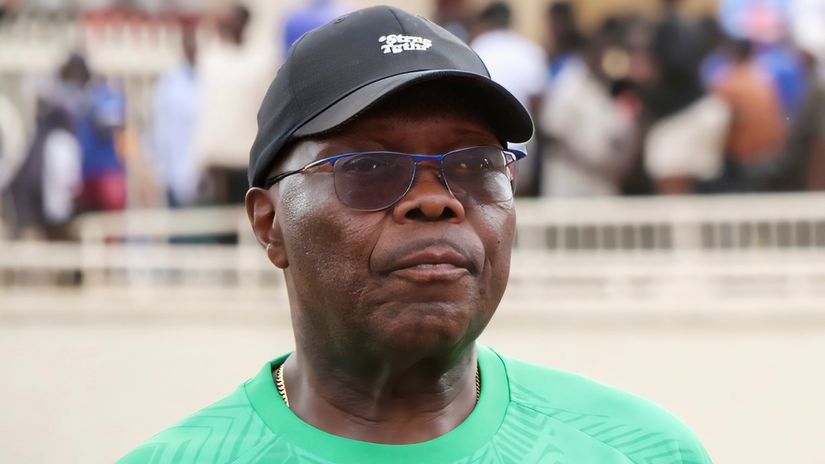
When the Football Kenya Federation (FKF) unveiled Harold Ndege as its new CEO on 15 February last year, the appointment was widely celebrated as a fresh start.
Follow Our WhatsApp Channel For More News
For the first time in a long while, former footballers seemed to be stepping into influential administrative roles, a development many believed would steer Kenyan football into a more progressive era.
Eleven months later, however, the optimism appears to be fading, with what started as a “bed of roses” having slowly morphed into tension and uncertainty, fuelled by growing internal divisions and online chatter suggesting a plot to remove Ndege from office after barely a year.
According to insiders who spoke to Mozzart Sport, coordinated online attacks on Ndege by individuals linked to FKF staff are part of a broader scheme to undermine his leadership.
“All is not well at Goal Project,” a senior insider said. “There is a real power struggle. The FKF President Hussein Mohammed and CEO Ndege are no longer reading from the same script.”
Sources close to the situation describe what they term “administrative problems” stemming from overlapping roles and blurred lines of authority.
“The president feels the CEO is not executing his mandate properly,” revealed one source. “At the same time, some NEC members believe the president is taking over duties that should be handled by the CEO. Yes, the CEO has areas he must improve, but it’s also true that the president is meddling in his responsibilities.”
The insider further admitted that governance lapses at the federation have slowed operations, with some staff feeling restricted and unable to execute their roles.
“There is a governance issue that must be fixed,” the source added. “The secretariat should be empowered. Decision makers need the freedom to work independently and be held accountable for their outcomes.”
Despite the simmering tension, the general feeling within NEC circles is that there is no immediate plan to replace Ndege, but they insist he must step up.
“The CEO needs to up his game,” another senior official noted. “He must take responsibility. NEC will play its oversight role, but he has to deliver on his mandate.”
It is understood that the recent disappointing performances of Kenya’s U17 and U15 teams have further increased scrutiny on Ndege’s office, particularly regarding preparation timelines and logistics.
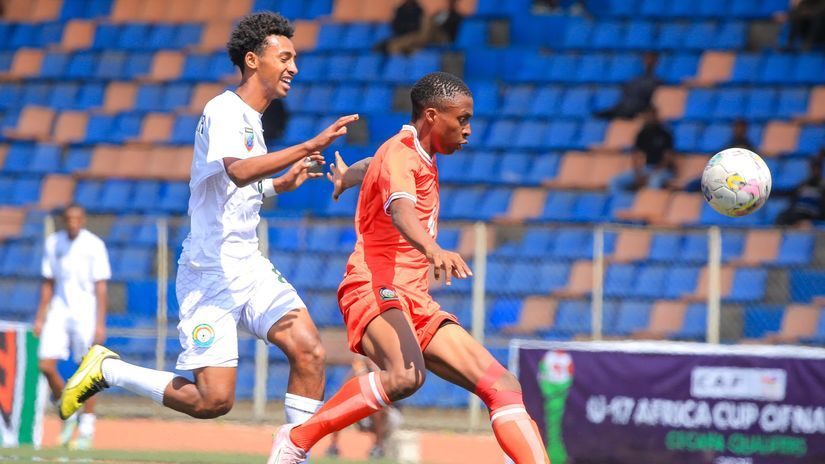
Kenya failed to qualify for the U17 Africa Cup of Nations after a 3-0 loss to Ethiopia in Addis Ababa, while both U15 boys’ and girls’ teams were bundled out in the group stages in Uganda after last-minute preparations that saw the teams assembled just a day before departure.
“These are administrative matters,” a source said. “CAF and FIFA release calendars early. It is up to the CEO to plan. You know when teams should assemble, when scouting should begin, and when coaches should be appointed. These are basics.”
FKF is said to have accepted responsibility for the youth teams’ shortcomings but has been advised to invest more in nationwide scouting, early planning, and proper age-grade structures.
“You already know you’ll need coaches; appoint them at least three months earlier,” the source added. “Scouts should be out during school games collecting data. MRI tests should be done. You can’t wait until the tournament week to assemble boys and expect results.”
The insider stressed the need for treating every national assignment as a structured project.
“If AFCON is in March, by December, you should already have your project team: the technical bench, procurement people, accounts, logistics, and the entire framework. That’s how serious nations operate.”
On the alleged rift between the FKF's top two leaders, apart from the CEO, insiders insist the federation must rise above internal politics.
“The president has NEC support for now, and he must deliver,” one source noted. “Ambition will always exist; someone may want to rise or contest later, but for now, he is in charge. Let him lead.”
According to the source, NEC is committed to supporting the federation’s broader objectives, but unity is essential.
“We cannot be derailed by internal battles. Hussein is the president; we support him until his term ends. After that, anyone can contest. For now, let’s deliver.”
When reached for a comment, Ndege opted not to speak on the matter.