



PLAYER COMPARISON: Breaking down Kariobangi Sharks’ Otiala and Bandari’s Majabe defending traits


.jpg)
.jpg)
Reading Time: 7min | Mon. 04.05.26. | 16:27
Two of the most intriguing profiles currently anchoring backlines are Kariobangi Sharks’ Kevin Luke Otiala and Bandari’s Shariff Majabe
In modern Kenyan football, the role of a centre-back has evolved from a purely destructive force into a dual-purpose engine of both security and creativity.
Two of the most intriguing profiles currently anchoring backlines are Kariobangi Sharks’ Kevin Luke Otiala and Bandari’s Shariff Majabe. While both are physically imposing and tactically astute, they represent two different schools of thought regarding the defensive arts.
Download our MozzartSport app for more news
Otiala is the proactive, vocal conductor of a high-wire build-up system, while Majabe is the reactive, long-range specialist who excels in a more conservative, structural shell.
To understand their impact, we must look beyond basic clean sheets and dissect how they manipulate time and space across the various phases of play.
Build up
In the initial phase of play - the build-up - Otiala and Majabe offer vastly different technical options.
Otiala is the heartbeat of the Kariobangi Sharks' "low phase" build-up, a tactical setup designed to invite opponent pressure deep in their own territory to create space further up the pitch.
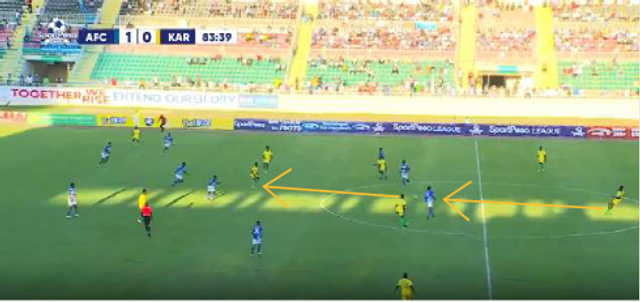
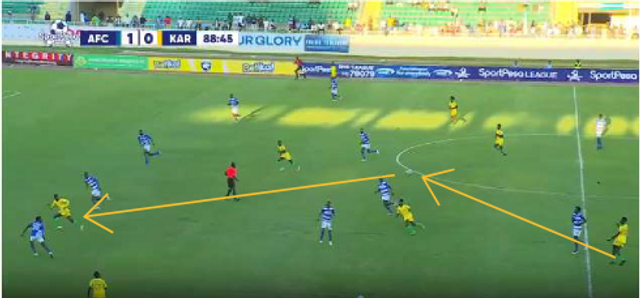
Otiala’s standout trait here is his ambipedal nature; he is effectively "two-footed," meaning he can strike the ball with either foot with equal proficiency. This technical ability makes him incredibly press-resistant - the ability to keep the ball under heavy pressure from opponents.
When an opponent triggers a press, most defenders are forced onto their weaker side. He, however, simply shifts the ball and threads a verticality-rich line-breaking pass.
In contrast, Majabe operates with a more expansive, "quarterback" style of distribution at Bandari. While Otiala focuses on short-to-medium verticality through the centre, Majabe utilises his positioning as a right centre-back to open up the pitch horizontally.
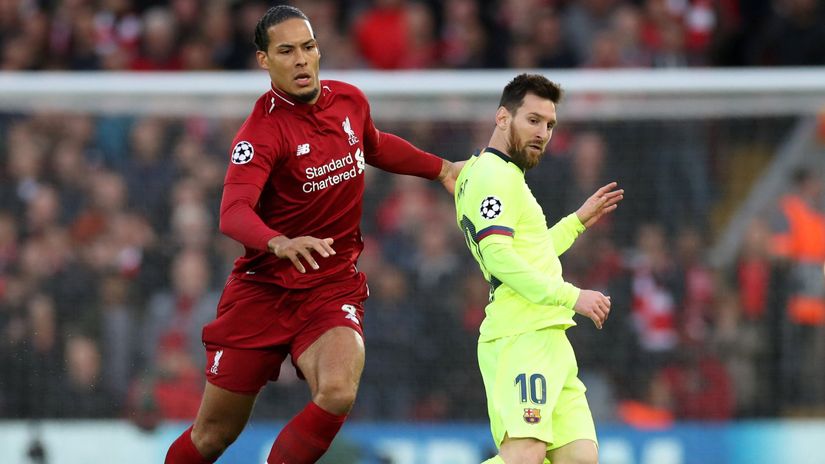
He possesses a long-range passing arsenal that is fundamental to Bandari’s system, often targeting wingers on either flank with raking diagonal balls.
Where Otiala looks to play through the press, Majabe looks to play over or around it. His body orientation - the way a player's hips and shoulders are turned to receive the ball - is coached to maximise his vision of the entire width of the pitch.
This allows him to progress the ball from low-quality chance areas to high-value attacking zones in a single stroke, whereas Otiala prefers a more incremental, rhythmic approach to dismantling a press.
Defensive philosophies
When the action moves into the "18-yard box," the psychological and physical demands shift from creativity to survival.
Here, we see a polar opposite in defensive philosophies. Otiala is an "aggressor" in the box. He uses a high degree of tenacity and tight marking, often establishing "chest-to-shoulder" contact with strikers to minimise their decision-making window.
His aerial combativeness is not just about winning the ball; it is about "threading" passes with his head, turning a defensive header into a controlled pass to a teammate. This requires immense neck strength and mental composure.
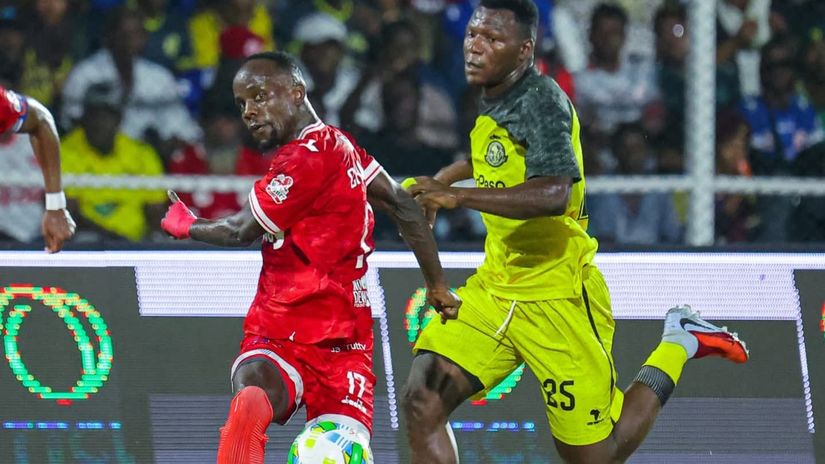
Majabe, conversely, adopts the profile of a "shield player." His style is more conservative and reactive - defending only when strictly necessary rather than hunting the ball. Majabe excels in "blocking shots and clearing crosses," functioning as a secondary layer of protection for his goalkeeper.
There is a visible chemistry and high-level communication between Majabe and his keeper, ensuring that the Bandari goal is a "closed shop." While Otiala might frustrate an attacker by never letting them touch the ball, Majabe frustrates them by being the immovable object that deflects the "offensive blows" just as the shot is taken.
Majabe’s reading of the flight and trajectory of the ball in aerial duels is elite, often allowing him to win headers through superior positioning rather than raw physical grappling.
Defending transitions
The chaotic moments when possession changes hands reveal the most about a centre-back’s physical and tactical recovery. Otiala thrives in a high line.
His primary weapon here is his rest-defence positioning. Because Otiala is so spatially aware, he recognises "pressing cues" instantly. When a counter-attack ignites, he is often already in a position to cut the passing lanes before the break gains momentum.
He is a master of the "aggressive step-out," abandoning the defensive line to confront a striker and force them to play backwards.
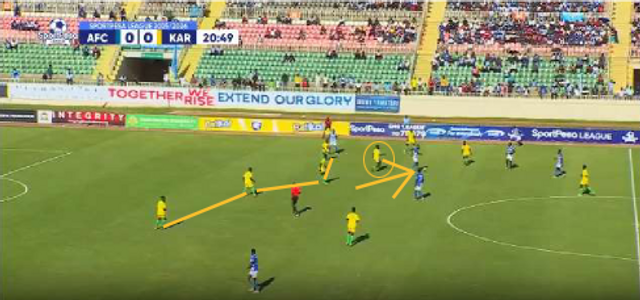
Majabe’s role in defending space is more specialised, particularly when paired with an aggressive partner like Andrew Juma or Brian Odera.
In Bandari’s system, Majabe often acts as the "safety net." While Juma\Odera acts as the "spear" who steps out to challenge the ball, Majabe retains his position at the back to sweep up heavy touches or win second balls.
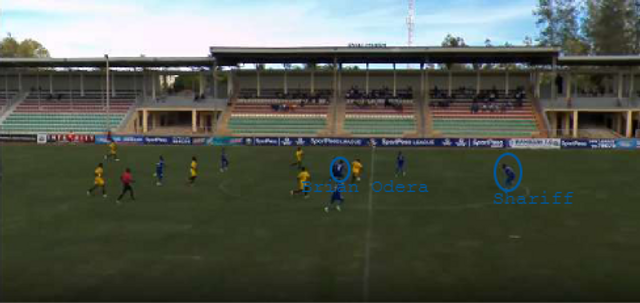
This "front-and-back" partnership allows Majabe to utilise his ball recovery skills without being exposed to 1v1 footraces in wide channels.
However, when the situation demands it, Majabe can step out decisively, showing a keen awareness of the time and space available to the opponent. He is less of an "interceptor" than Otiala and more of a "recoverist," excelling at tidying up the danger after the initial defensive trigger has been pulled.
Tackling technique
The physical profile of these two players dictates their tackling technique. Otiala is a high-tenacity marker. His game is built on physicality and "handling" - the subtle use of arms and body weight to unbalance an opponent.
His 1v1 defending is superb because he denies the attacker time; he is a "smothering" defender. His timing in the tackle is often aggressive, looking to dispossess the opponent entirely and immediately look for a line-breaking pass.
Majabe’s physical profile is more geared toward "defensive solidity" through frame and timing. He is less likely to "dive in" than Otiala. His aggression is tempered by a more "conservative" style, preferring to jockey and block rather than lunge.
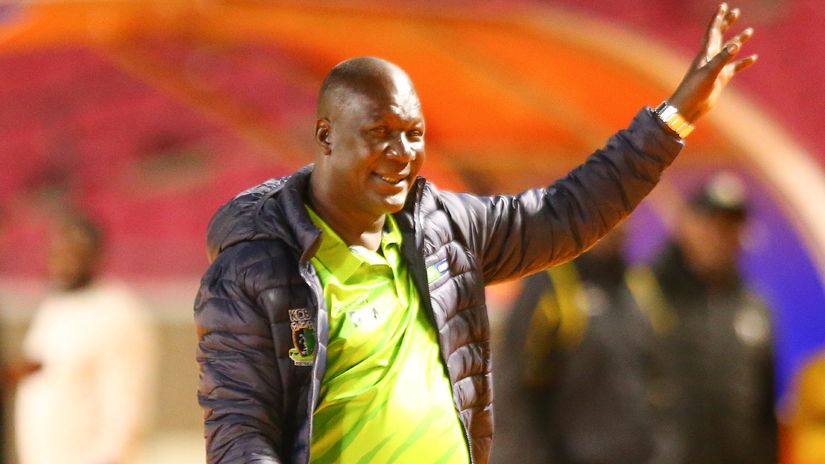
Majabe’s physicality is most evident in the air, where his aerial win percentage is a cornerstone of his statistical output. He uses his height and reading of the ball to dominate "aerial combat," whereas Otiala uses his body to prevent the opponent from even jumping.
This is a classic contrast: Otiala plays the man, while Majabe plays the ball.
Mental traits
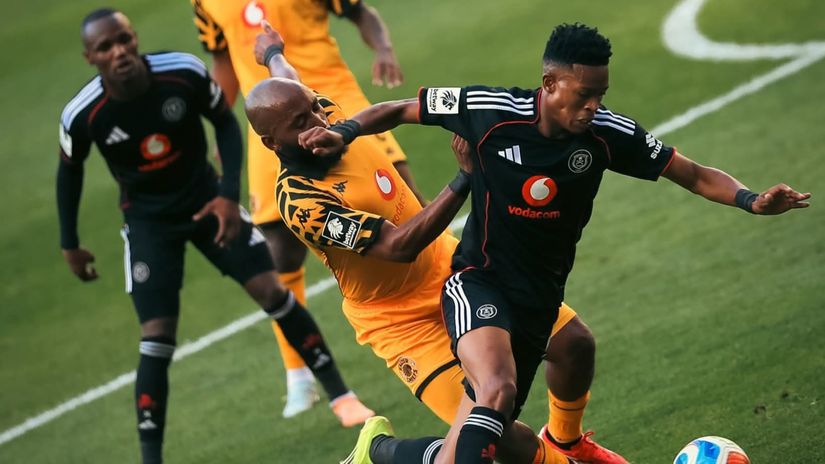
This is the hardest to quantify but the easiest to see. As the captain of Kariobangi Sharks, Otiala is an elite communicator. He uses both vocal and non-verbal cues (pointing, body language) to direct teammates and organise the line.
By angling his body correctly, Otiala can mark two players at once - the one he is facing and the one he is blocking the pass to.
This allows his team to maintain a stable "rest-defense" even when they are committing many bodies forward.
Majabe’s intelligence is reflected in his "chemistry-driven" decision-making. He is a player who understands the collective unit.
His awareness of his teammates’ positions allows him to fill gaps before they become dangerous. While Otiala is the "leader" who commands the line, Majabe is the "organiser" who ensures the structural integrity of the block remains intact.
Majabe’s ability to recognise when to drop and when to hold is vital for Bandari’s more reactive system, ensuring that they are rarely caught out by a simple ball over the top.
Set-pieces
In the final phase of play - set-pieces - the two players offer different values. Otiala is a defensive specialist in these moments. He uses "tight close body marking" to neutralise opponents who are aerially dominant.
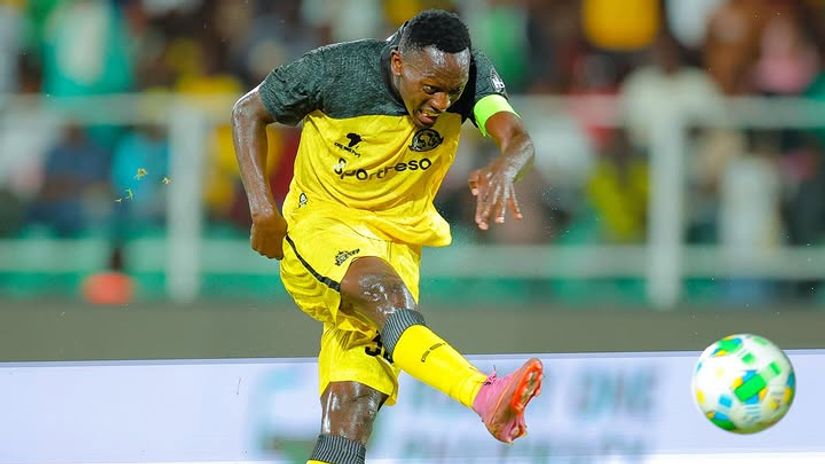
By establishing contact early, he prevents the attacker from gaining the momentum needed to win a header. He is the ultimate "denial" defender in zonal or man-marking schemes.
Majabe, however, is a genuine offensive weapon. In corners and free-kicks, he consistently generates high xG.
His ability to read the flight of the ball makes him a constant threat to score headers in the opponent’s box. While Otiala provides "defensive solidity" and "calmness" during set-pieces, Majabe provides the "attacking threat" that can break a deadlock.
The choice between Kevin Luke Otiala and Shariff Majabe ultimately depends on the tactical identity of the team.
Pick Otiala if your team plays a high line and aims to dominate possession. His two-footedness, ability to thread line-breaking passes, and aggressive “step-out” defending make him an ideal modern libero for sides that invite pressure and build through it. He suits a coach who wants a vocal leader to orchestrate a complex, proactive system.
Pick Majabe if your approach is more structured, relying on counter-attacks or a mid-to-low block. His long-range distribution, elite shot-blocking, and threat from set pieces make him a reliable “shield” defender.
He is the better fit for a coach who prioritises positional discipline and a safety-first approach in transitions.
.jpg)
Ultimately, Otiala is the sword that pierces the press, while Majabe is the shield that weathers the storm. Both are essential, but their brilliance shines in entirely different tactical lights.