



TACTICAL ANALYSIS: How Sharks picked up first win against Mathare in Slum Derby

.jpg)




Reading Time: 5min | Tue. 07.10.25. | 21:34
Kariobangi Sharks entered the match with a clear tactical plan to dominate the central areas through a fluid 3-4-3 shape that shifted into a 3-5-2
The FKF Premier League served up another tantalising fixture in the shape of the Slum Derby as Mathare United hosted Kariobangi Sharks at Kasarani Annex.
Follow our WhatsApp channel for more news
The encounter offered an intricate battle of tactical wit, positional strategies, and in-game adaptability.
From the first whistle, it was evident that both sides approached the match with deliberate tactical blueprints that dictated the rhythm, control zones, and transition dynamics.
Sharks emerged 2-1 winners, but the real battle was won in the nuanced details of build-up structures, midfield overloads, and defensive resilience.
Both teams initiated play with their goalkeepers involved in the build-up phase, an early sign of structured play starting from the back.
Kariobangi Sharks set up in a 3-4-3/3-2-5 in possession, a system that sought to control central areas by creating midfield superiority.
Their midfield box of four consistently outnumbered Mathare United’s fluctuating 4-4-2/4-2-4 system, especially in central areas.
Mathare attempted to press high with a well-structured defensive line, but the spacing in midfield left them vulnerable.
Steve Kimari, playing as a central midfielder for Mathare, often found himself caught in two minds - tasked with covering two Sharks midfielders in a 3v4 overload scenario.
This imbalance was a recurring theme throughout the half and was capitalised on by Sharks through positional rotations and sharp switches of play.
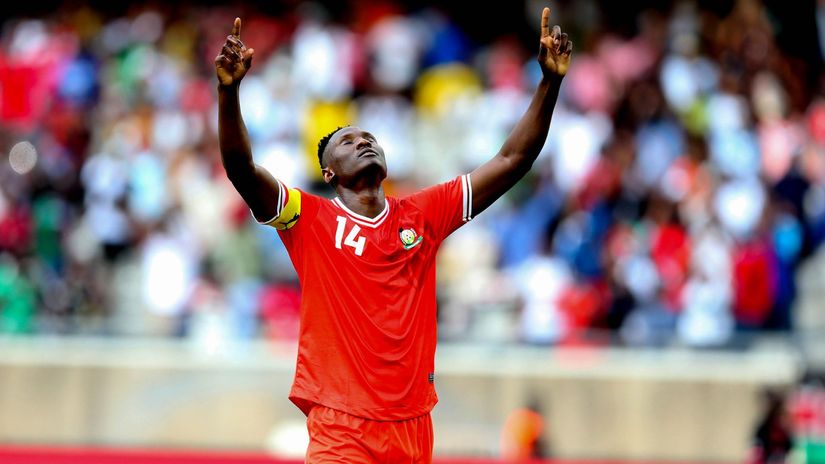
Sharks' offensive shape morphed into a hybrid, with wingers holding width to stretch the field and create vertical lanes.
They frequently bypassed the pressing lines through long diagonal balls, particularly toward the right wing, exploiting the high line of Mathare.
Markvivan Kesa, in particular, was instrumental in these patterns, making aggressive runs behind the backline.
His intelligent movement, fed by Andreas Odhiambo from midfield, led to the opening goal - a shot into the area that resulted in an own goal by Paul Kinyanjui, under heavy pressure.
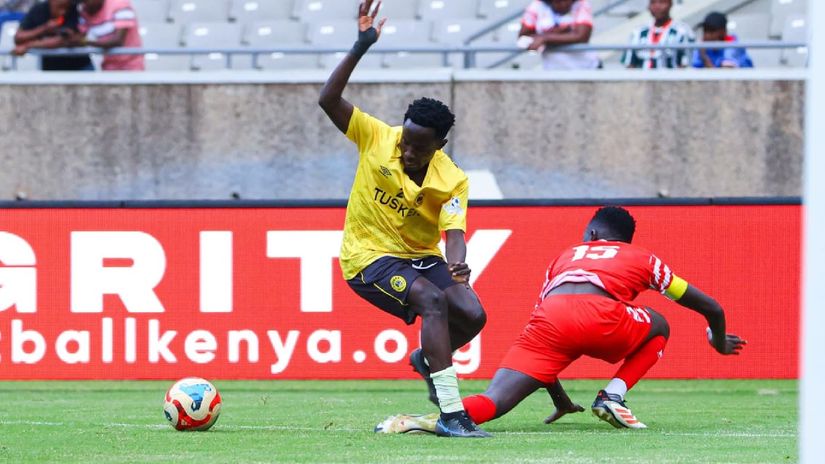
Defensively, Sharks alternated between a compact 4-4-2 and a 4-1-4-1 shape out of possession (OOP), depending on the pressing trigger.
This compactness denied Mathare access through central lanes, forcing them to attack through the flanks.
Mathare responded by using their right winger, Kinyanjui, to tuck into the half-space while the attacking midfielder Brian Ouru overlapped.
However, their fullback on the same side(right), Sammy Imbuye, remained conservative to guard against the threat posed by Zablon Kutela on the Sharks’ left side.
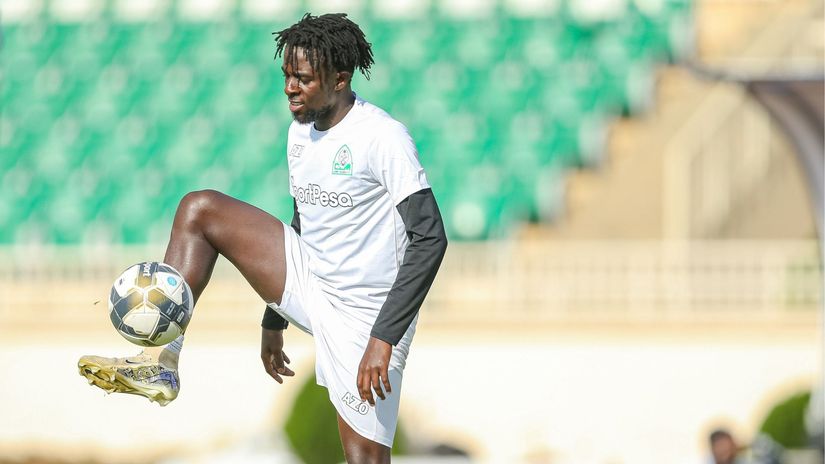
In response to Sharks' midfield dominance, Mathare attempted a mid-half tactical tweak - dropping Ouru deeper to help Kimari and Mohamed Kilume match the four-man Sharks midfield.
This eventually shifted Mathare’s in-possession shape closer to a 4-3-3/4-2-3-1, depending on player roles, but the effectiveness remained limited due to Sharks’ ability to quickly transition and reset defensively.
As the first half wore on, Sharks showed a fluid transition, reinforcing the midfield even further.

Mathare’s best moment came near halftime when their midfield trio finally broke the Sharks’ press, progressing into the final third.
Kimari, now pushed higher, unleashed a long-range effort that forced the Sharks’ keeper into a fine save.
From the ensuing corner, Sharks revealed their set-piece setup - three zonal markers (covering near post and six-yard box), one guarding the short play option, and five tight man-markers.
Mathare began the second half with intent, introducing Eli Asieche and Meshack Ochieno to inject fresh energy and creativity.
![A look at the almost complete Ksh700m new stadium set to host Mashujaa Day [PHOTOS]](https://cdn3.mozzartsport.co.ke/upload/825x464/News/Image/2025_10/1759849577271_Untitled_design_-_2025-10-07T180213.489.jpg)
Their pressing strategy evolved - now actively triggered by any poor touch or delay by the Sharks' goalkeeper.
The press was more aggressive, and central defender Cetric Asango played a pivotal role, stepping up with precision to intercept or delay wide transitions to Sharks’ wingers.
Ouru dropped deeper again, linking up with Kilume in an attempt to establish control and orchestrate from deeper zones.
Mathare emphasised wing play as a primary method of chance creation.
Fullback Herit Mungai advanced high, delivering quality crosses, though these lacked a decisive finisher in the box.
Despite improved dynamics in wide areas, Sharks maintained their defensive shape, transitioning into a 5-2-3 and later a more defensive 5-4-1 out of possession.
Around the 63rd minute, Sharks adapted their strategy again - reducing reliance on build-up play and prioritising long balls to avoid central congestion and high-risk zones near their box.
This adjustment paid off.
After Herit Mungai lost possession in an advanced position, substitute Victor Ngume capitalised with a swift transition, laying the ball to Kesa, who exploited the vacated right channel.
With the Mathare keeper off his line, Kesa lofted a composed finish to double Sharks’ lead.

Mathare responded with urgency. Their wide players continued to fire in crosses while supporting runs from deep attempted to exploit the half-spaces.
Their offensive approach in the final 15 minutes revolved almost exclusively around wide penetration and second-ball recovery in advanced areas. However, Sharks’ compact shape blunted these attacks.
Their back five remained narrow, preventing Mathare from playing through the centre while the double pivot in front offered screen protection.
In a final twist, Asieche delivered a well-placed free kick from the left flank in the dying minutes to pull one back for Mathare.
Despite the late goal, Sharks’ defensive structure, maintained discipline, and effective time management saw them through to a 2-1 win.
Kariobangi Sharks entered the match with a clear tactical plan to dominate the central areas through a fluid 3-4-3 shape that shifted into a 3-5-2, enabling consistent midfield overloads against Mathare United’s setup.

Their first-half build-up was structured and composed, using wide play and intelligent runs - particularly from Kesa - to exploit Mathare’s defensive line.
Defensively, Sharks adapted between various compact shapes, using pressing traps and, in the second half, switching to a more direct, vertical style to protect their lead and capitalise on transitions.
Mathare United, meanwhile, focused on width and high positioning but were consistently outnumbered in midfield.
As the game progressed, they adapted into 4-3-3/4-2-3-1 shapes, with Ouru dropping deeper to support possession.
Their attacking emphasis in the second half centred on wing play and crosses, but they lacked precision in the final third. Defensively, their high line left them vulnerable to long balls.
Ultimately, Sharks' tactical flexibility and execution outmatched Mathare’s evolving strategy.