


Youth development coach details strategy to safeguard Harambee Stars' future


.jpg)
Reading Time: 5min | Wed. 06.05.26. | 19:10
The experienced youth coach further stressed the importance of empowering FKF sub-branches, which he believes are key to building competitive grassroots leagues
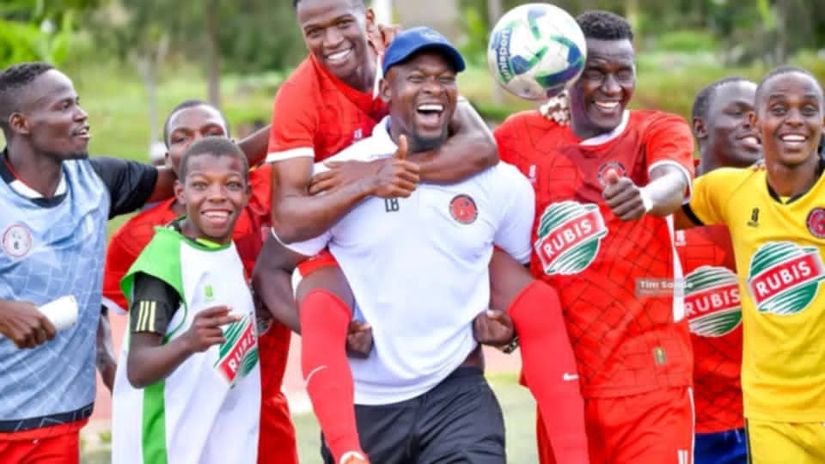
Kibera Black Stars head coach and Ligi Ndogo Academy mentor, Iddi Badi, has opened up on what he believes Kenya must urgently do to secure the future of youth football and fully unlock the country’s vast talent potential.
Download our Mozzart Sport app for more news
Kenya has,over the years, continued to produce talented young footballers across different age categories, with many showing promise in regional and continental competitions.
However, the country has repeatedly struggled to establish stable youth structures, often assembling junior national teams at the last minute before major tournaments.
From Under-13 and Under-15 teams to Under-20, Under-23 and women’s youth sides, the inconsistency in planning and development has remained one of the biggest concerns within Kenyan football.
According to Badi, who has been involved in youth coaching since 2005 immediately after finishing high school, the country possesses enormous potential but must first streamline its development structures before expecting long-term success.
One of Kenya’s recent youth football milestones came in 2024 when the Junior Starlets became the first football team from the country to qualify for a FIFA World Cup after sealing a place at the FIFA Under-17 Women’s World Cup in the Dominican Republic.
Speaking to Mozzart Sport, the CAF B licence holder explained that while progress has been made in certain areas, the country still lacks continuity in identifying and nurturing young talent from an early age.
“I will say somehow yes, somehow still we are just there because one thing I believe, like back in 2017 when we had the Nairobi Select Team that I was part of the technical bench, we won the championship against all regions in the country,” Badi explained.
“And that is when they selected players to form the national team, so I believe for us to do better we need more of that.”
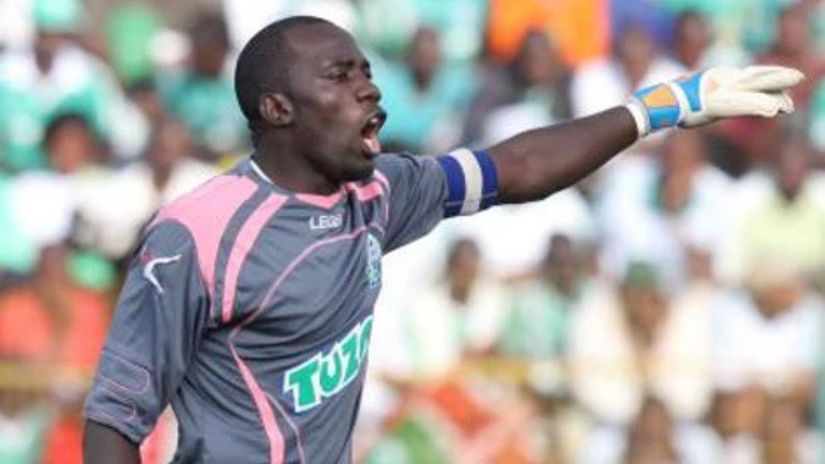
Badi was part of the technical bench that guided the Nairobi Select Under-13 side to championship glory in Nakuru in 2017.
The tournament later proved significant after 13 players from that squad earned places in the national Under-15 team, with seven of them coming from Ligi Ndogo under his guidance.
The youthful tactician believes Kenya can build stronger junior national teams by introducing long-term select programmes for players aged 12 and 13 across different counties.
“We go to selected counties, try and select especially Under-12 and Under-13 players. Imagine if you have these kids together for even five years, by the time they are 17 they will be somewhere else,” he said.
“They just need to be together every holiday, in April, August and December. Bring players from every county, even from places like Garissa, even if you pick only two players from there.”

The youthful gaffer also pointed to the proposed FKF Centre of Excellence in Machakos as a project that could significantly help the country establish a sustainable youth football model.
“I have been part of Chapa Dimba and I know there is talent down there. Go to Garissa, Marsabit, Western, Nairobi and bring these players together. A Centre of Excellence is the only way to go for us to make it. FKF is trying, but we still need more,” he added.
The experienced youth coach further stressed the importance of empowering FKF sub-branches, which he believes are key to building competitive grassroots leagues.
Currently, only a few regions including Nairobi, Kisumu, Nakuru and Kakamega have relatively active youth competitions that run consistently during school holidays.
“Yes, we need youth leagues and we need to empower the sub-branches because they are the ones running the lower leagues. Empower the coaches as well and create Under-12 and Under-13 leagues under the sub-branches while also considering the girls,” he noted.
“From those leagues you then select players, organise tournaments for select teams from different regions, bring them together and again pick another select team.”
Badi has built a coaching journey spanning over two decades, one deeply rooted in grassroots football, community transformation and international exposure.
Currently serving as the Academy head coach at Ligi Ndogo, he holds a CAF Level B coaching licence alongside several qualifications including the Whole Life Ubabalo Africa Module One coaching course in South Africa, Sports First Aid certification, CAF Level C equivalent training and Advanced Level One and Two coaching courses for selected community coaches.
.jpg)
He began coaching in 2005 immediately after high school before later pursuing a diploma in Social Work and Community Development.
That same year, he founded an Under-10 boys’ side known as Christ Ambassadors, which went on to win both the Amani Kibera and Kimta championships in 2006.
His impact extended into girls’ football as he guided an Under-15 girls’ team to victory at the Amani Kibera tournament in 2007 before conquering the East Africa tournament in 2008.
Badi also joined Ligi Ndogo in 2005 as a part-time coach, using his earnings to support grassroots football within the community through the purchase of kits, tournament registration and transport for young players.
Among the major highlights of his coaching journey came in 2014 and 2015 when he guided community teams to Kibra League titles at Under-13 and Under-15 level using the same crop of players he had nurtured from the Under-10 ranks.
His work has also taken him onto the international stage through several youth tournaments abroad.
In 2009 and 2013, he travelled to Manchester with Under-11 teams, while in 2014 he guided an Under-12 side to the knockout stages of a youth tournament in Newcastle.
Badi later took an Under-13 side to the Gothia Cup in Sweden in 2016 before participating in the Viesse Cup in Italy the same year.
One of the standout moments of his international coaching experience came in 2017 when his side stunned Italian giants Lazio in the quarter-finals before narrowly losing to AS Roma in a penalty shootout.