


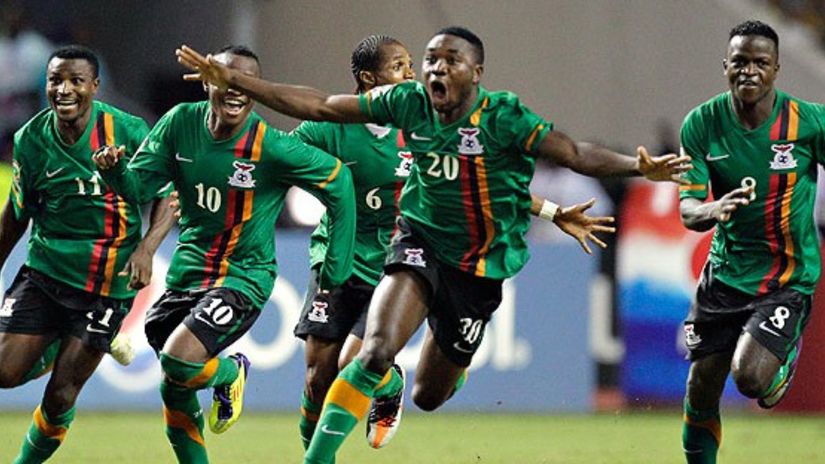
AFCON Tales: Reliving Zambia's historic 2012 triumph that carried extra significance


.jpg)
Reading Time: 6min | Sat. 09.05.26. | 16:04
The final whistle did not just crown champions—it echoed across decades, reaching back to 1993, to a team frozen in time
Before the glory, before the roar that shook Libreville, Gabon, there was silence—heavy, haunting silence that lingered for years over Zambian football.
Download our Mozzart Sport app for more news
And it began with a promise.
Zambia, a nation whose footballing heartbeat pulsed with raw passion, had steadily announced itself on the continental stage.
At the 1988 Seoul Olympic Games, a young, fearless and vibrant Zambian side stunned the world, dismantling Italy in one of the tournament’s most memorable upsets.

That same fearless spirit carried into the 1990 Africa Cup of Nations, where they finished third, signalling the arrival of a golden generation.
They were young. They were fearless. And they were only just beginning.
Then came April 27, 1993.
A routine journey to fulfil national duty became an unimaginable tragedy. A flight carrying Zambia’s national team to Dakar, Senegal, for a 1994 World Cup qualifier, plunged into the Atlantic Ocean shortly after takeoff from Libreville, Gabon. Eighteen players, along with coaches and crew, were lost. There were no survivors.
In an instant, a team was erased. A dream, interrupted.
The grief that followed was not confined to football—it swept across Zambia like a storm. Streets fell quiet. Radios spoke in sombre tones.
A nation mourned not just athletes, but sons, brothers, and symbols of hope. Outside Independence Stadium in Lusaka, a memorial would later stand in their honour—but no monument could truly contain the magnitude of the loss.
And yet, football—like life—refused to stop.
From the ashes rose a new team, improbably stitched together in the shadow of grief. At its heart was Kalusha Bwalya, the nation’s talisman, who had not been on that ill-fated flight due to club commitments in Europe.
Carrying both responsibility and remembrance, he led Zambia into the 1994 Africa Cup of Nations in Tunisia.
What followed felt almost surreal.
Against all logic, Zambia surged to the final. They played with something intangible—something beyond tactics or talent. When Elijah Litana rose to score early in the final, belief surged through a grieving nation.
But football, in its cruelty, delivered another heartbreak. Two goals from Emmanuel Amunike handed victory to Nigeria.
Zambia fell.
But they had reminded the world, and themselves, that they could rise again.
Still, the story felt unfinished. Like a book missing its final chapter.
.jpg)
Eighteen years later, destiny brought Zambia back to where it all began.
The 2012 Africa Cup of Nations unfolded with its usual blend of colour, rhythm, and continental pride.
AFCON, after all, is never just football—it is identity. It is a return home for players scattered across Europe and beyond, a moment where club allegiances dissolve, and national colours burn brightest.
For Zambia, this edition carried something deeper.
The final would be played in Libreville, Gabon—just miles from where the 1993 plane had gone down.
It was impossible to ignore the symbolism.
At the centre of Zambia’s campaign stood Hervé Renard, a coach whose journey was as unconventional as the team he led. Once a relatively unknown figure, Renard—nicknamed the “PE Teacher”—brought with him not just tactical discipline, but belief.
His Zambia side lacked the global superstars of their rivals, but what they possessed was unity, a collective spirit forged in humility and purpose.
Their journey to the final was a slow-burning statement.
They topped Group C with seven points, opening with a fearless 2–1 victory over Senegal, one of the tournament favourites.
A chaotic 2–2 draw with Libya tested their resilience on a rain-soaked pitch, before a composed 1–0 victory over the co-hosts, the Equatorial Guinea national football team sealed their place at the summit.
With each match, belief grew—not just within the squad, but across a continent that loves an underdog.
In the quarter-finals, Zambia dismantled Sudan 3–0 with authority. Goals from Jacob Mulenga, Rainford Kalaba, and Christopher Katongo sent a clear message: this was no fluke.
Then came Ghana.
The Black Stars, rich in talent and expectation, were widely tipped for glory. But Zambia played with courage and clarity. A single goal from Emmanuel Mayuka was enough to secure a famous 1–0 victory.
And just like that, Zambia were in the final! But, awaiting them was a giant.
The Ivory Coast national football team arrived with a squad that read like a who’s who of world football: Didier Drogba, Yaya Touré, and Gervinho. Experience, power, pedigree—they had it all.
Zambia had something else.
Purpose.
Goalkeeper Kennedy Mweene would later reflect on the mindset before the final: “The coach told us we weren’t the first Zambian team to reach a final. If we finished second, it wouldn’t be history. If we want to be remembered, go all the way and win it.”
🇿🇲 Zambia shocked the world by WINNING AFCON back in 2012, one of the biggest shocks in the tournaments history!
— The European Football Express (@TheEuroFE) December 22, 2025
However, since then, they’ve either not qualified or not made it out the Group Stage. They’ll be hoping to recreate some of the 2012 magic thirteen years on. pic.twitter.com/6LsVDT9lR7
The message was simple: history favours the brave.
From the first whistle, Zambia stood tall. They matched Ivory Coast stride for stride, tackle for tackle. When Drogba missed a crucial penalty in normal time, it felt as though fate itself had intervened.
Ninety minutes passed. Then extra time. Still, nothing could separate them.
“Everyone expected Ivory Coast to win,” Mweene recalled. “But we felt it was our time to make a stamp.”
And so, it came down to penalties—the cruellest, most dramatic decider in football.
But Zambia were ready.
“We’d been practising them even before the tournament. Everyone knew their job," the shot stopper recalls.
What followed was not just a shootout—it was theatre.
Zambia’s iconic 2012 AFCON victory. pic.twitter.com/JUXsLfcLCd
— VERSUS (@vsrsus) January 18, 2026
Kick after kick, both teams refused to yield. The tension became unbearable. Players who had never imagined themselves in such a moment stepped forward with history watching.
Then, in sudden death, Stoppila Sunzu converted Zambia’s eighth penalty with ice-cold composure.
Moments later, Kolo Touré stepped up, and missed.
Time stood still!

Then came the realisation. Zambia had won. 8–7. Champions of Africa.
Captain Katongo, the embodiment of leadership and resilience, lifted the trophy—later named Player of the Tournament. Around him, teammates collapsed in tears, laughter, disbelief.
But this victory was never just theirs.
“That team that perished in 1993 was way better than us,” Mweene said with disarming honesty. “They had everything.”
And yet, destiny had chosen differently.
“We were the chosen ones… the ones who could finally close the curtain.”
In the days leading up to the final, the team had visited the crash site, laying flowers, offering prayers. They did not carry the weight of expectation alone—they carried memory.
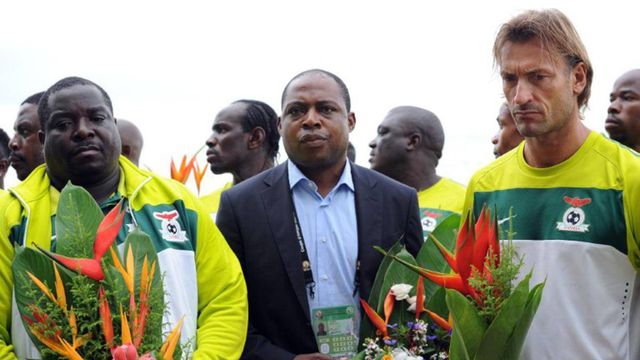
“There’s a reason why we are here… why we fight to the end. We had to close this chapter for them. And we did it.”
AFCON has always been more than a tournament. It is a stage where history, identity, and emotion collide. It is where nations find themselves—not just in victory, but in the stories they carry.
Zambia’s 2012 triumph was not just an upset. It was not just a victory against the odds. It was a reckoning with the past.
On that night in Libreville, football transcended sport. It became remembrance. It became healing. It became something eternal.
The final whistle did not just crown champions—it echoed across decades, reaching back to 1993, to a team frozen in time.
And in that echo was a message, carried on the wind over the Atlantic:
This story is complete.
Zambia did not just win the Africa Cup of Nations. They honoured the fallen. They fulfilled a promise. They turned grief into glory. And in doing so, they gave Africa one of its most powerful footballing tales—one where destiny, at last, wore copper.